How to Choose the Right Kitchen Sink
Choosing the right kitchen sink can feel overwhelming when you’re balancing limited counter space, everyday needs, and a budget. You’re not alone—many people struggle to find a sink that looks great and works well for their kitchen.
To choose the right kitchen sink, consider your space and how you use it. Single bowls save room, while double bowls make multitasking easier. Pick a durable material, such as stainless steel or granite composite, that suits your style and maintenance needs.
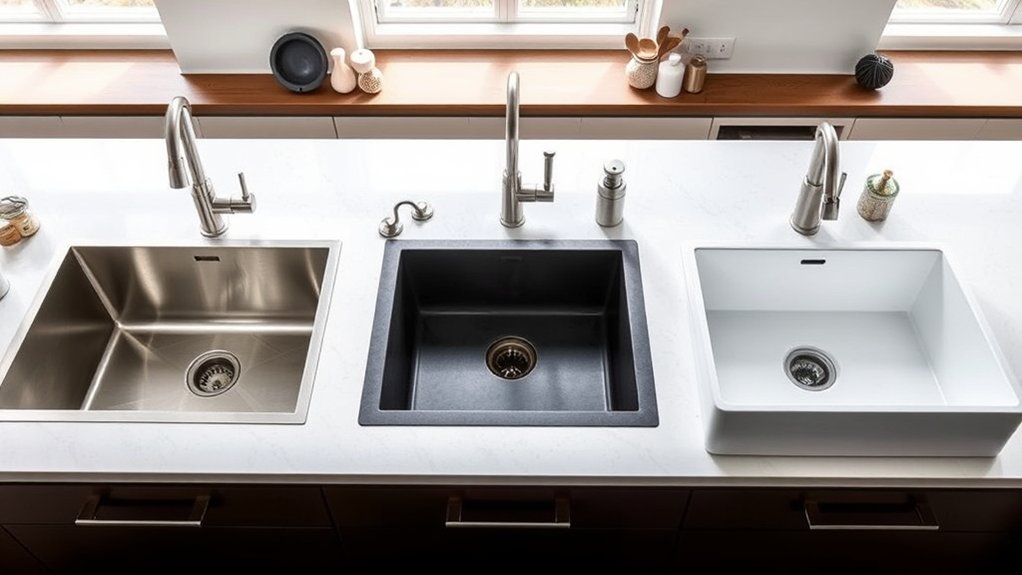
Next, consider whether an undermount, top-mount, or farmhouse sink fits your kitchen’s design and installation requirements.
Functional extras like soap dispensers or cutting boards can also make everyday tasks easier.
By weighing these factors against your budget, you can find a sink that balances form and function. Explore our picks to refine your choice further.
Key Takeaways
- Choose sink type (single or double bowl) based on kitchen size and multitasking needs.
- Match sink material and finish with countertop and faucet for durability and cohesive design.
- Select installation style (undermount, drop-in, farmhouse) considering cabinet space and ease of installation.
- Prioritize features like built-in soap dispensers or cutting boards to enhance sink functionality.
- Set a budget balancing quality, style, and installation costs for long-lasting performance.
Choose the Right Kitchen Sink Type for Your Space
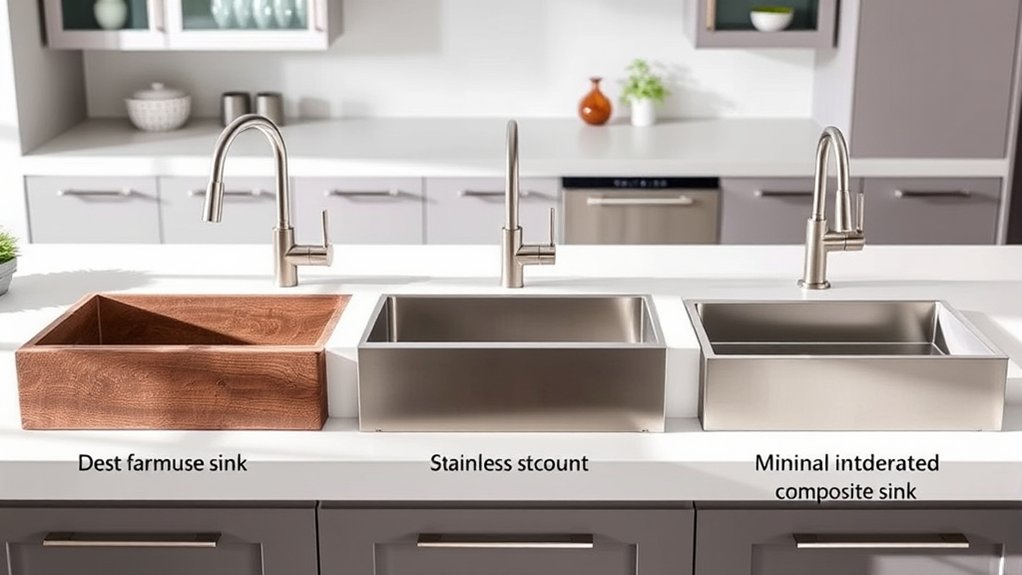
When selecting a kitchen sink, consider how much space you have and how you use it. If your kitchen is compact, a single-bowl sink might suit you best, offering more room for washing large pots without sacrificing counter space.
For bigger kitchens, double-bowl sinks remain popular, letting you multitask easily—wash dishes on one side while prepping food on the other. Design trends now favor sleek, undermount sinks that seamlessly integrate with countertops, giving your kitchen a clean, modern look.
You’ll also find eco friendly options gaining traction, such as sinks made from recycled materials or designed to conserve water efficiently. Choosing the right sink type isn’t just about size; it’s about matching your lifestyle and embracing innovations that benefit both you and the environment.
Take your kitchen’s layout and daily habits into account, and pick a sink that fits your needs while aligning with current design trends and sustainability goals.
Pick the Best Kitchen Sink Material for Durability and Style
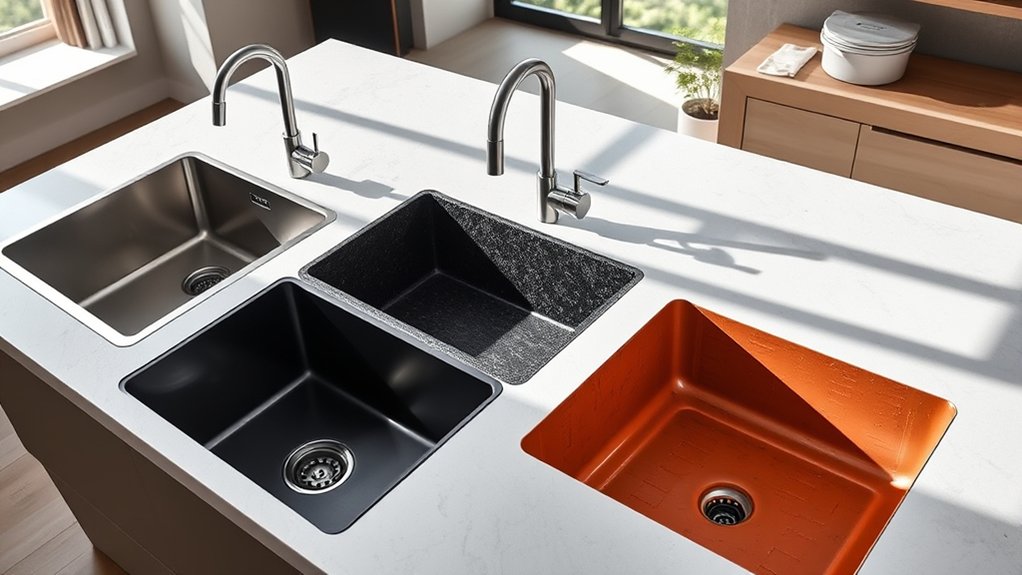
Although choosing the right sink type is important, selecting the best material will directly affect your kitchen sink’s durability and style. You want a sink that not only lasts but also complements your kitchen’s look.
Luxury finishes like stainless steel or granite composite offer sleek, modern vibes, while eco friendly options such as recycled glass or bamboo-based sinks reduce your environmental impact.
Here’s a quick guide to help you compare popular materials:
| Material | Durability | Style & Finish |
|---|---|---|
| Stainless Steel | High; resists rust | Shiny, modern luxury |
| Granite Composite | Very durable; scratch-resistant | Matte, natural stone look |
| Eco Friendly Materials | Moderate; biodegradable | Unique, natural finishes |
Which Kitchen Sink Size and Bowl Configuration Work for You?
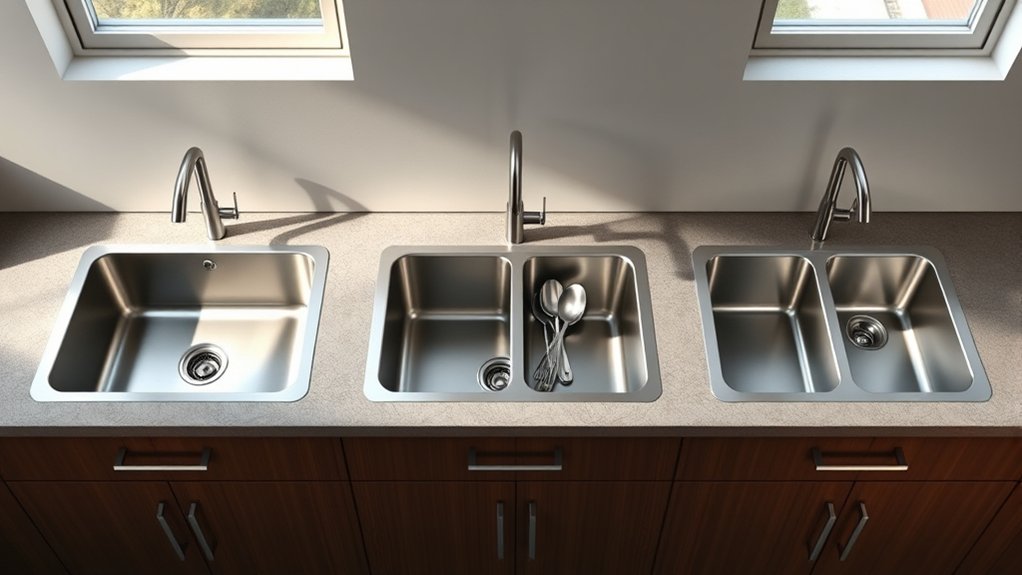
Choose a sink size and bowl configuration that suit your kitchen space and daily routine. If you’re deciding between a single or double bowl, think about how you use your sink and how much workspace you need. Keep your kitchen layout and washing habits in mind, and you’ll find the right fit.
Single vs. Double Bowls
Deciding between a single or double bowl sink depends on how you use your kitchen and what tasks you perform most often. If you prefer multitasking, a double bowl lets you wash dishes on one side while prepping food on the other.
A single bowl offers more space for large pots but may limit faucet compatibility if you want accessories like spray heads. Consider water efficiency too; double bowls might use more water if both sides run simultaneously.
Think about what suits your routine:
- Do you often soak and rinse separately?
- Need room for big cookware?
- Value easy faucet installation and water savings?
Choosing the right bowl configuration ensures your sink fits your lifestyle, making kitchen chores smoother and more enjoyable.
Sink Dimensions Matter
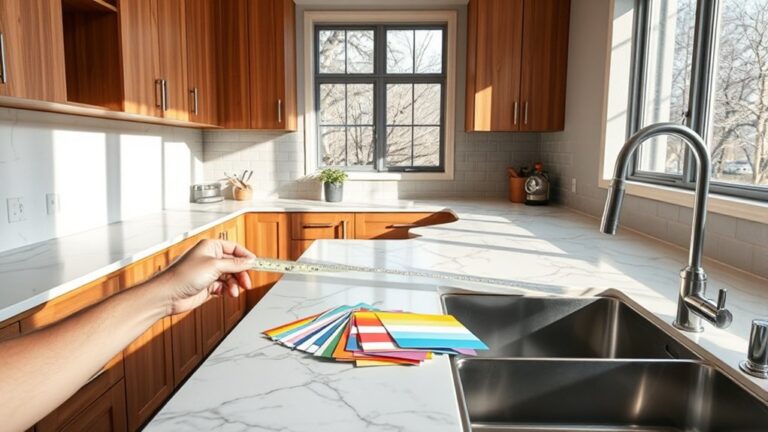
How much space do you really need in your kitchen sink? Choosing the right sink dimensions starts with measuring your available countertop compatibility—ensure the sink fits without overcrowding your workspace.
Don’t forget to check the cabinet size below; it affects both sink width and depth. Plumbing considerations also play a key role.
Larger or double-bowl sinks may require repositioning pipes or upgrading drainage, which can add to installation complexity. If your plumbing setup is limited, a smaller or single-bowl sink might be more practical.
Ultimately, pick a sink size and bowl configuration that balances your countertop space, plumbing setup, and daily kitchen tasks. This way, you avoid costly modifications and ensure your sink works seamlessly in your kitchen’s layout.
Workspace and Usage Needs
After considering the size and plumbing setup, think about how you use your kitchen and what tasks your sink needs to handle. Your sink should match your workflow and countertop compatibility, ensuring it fits seamlessly with your kitchen design. Plumbing considerations also play a role, especially if you need multiple bowls or accessories.
Ask yourself what will make your daily chores easier:
- Do you wash large pots or prep multiple ingredients at once?
- Would a double or triple bowl help separate tasks and boost efficiency?
- Is space for drying dishes or rinsing veggies important to you?
Choosing the right bowl configuration and size helps create a workspace that feels comfortable and functional, making every kitchen task less of a hassle and more enjoyable.
Decide Between Top-Mount, Undermount, and Farmhouse Kitchen Sinks
When choosing a kitchen sink, you’ll want to take into account how each style affects both function and aesthetics. Top-mount sinks, also called drop-in sinks, are popular for their easy installation and visible rim, making them a practical choice if you want quick updates or plan to swap sink accessories frequently.
Undermount sinks offer a sleek, seamless look by mounting beneath the countertop, which makes cleaning easier since crumbs and spills sweep straight into the sink without catching on edges. Farmhouse sinks, known for their distinctive apron front, bring a charming, rustic vibe to your kitchen and work well if you love the farmhouse design trend.
They’re usually deep and spacious, great for washing large pots. Keep in mind that farmhouse sinks require more cabinet space and can be heavier to install. By understanding these differences, you can pick the sink style that best suits your kitchen’s look and your daily needs.
Kitchen Sink Features and Accessories That Boost Functionality
Choosing the right type of sink is just the start; the features and accessories you add can make your kitchen tasks much easier. Kitchen sink accessories not only improve functionality but also simplify cleaning and maintenance, giving you more time to enjoy your kitchen.
Consider adding these to improve your sink’s usefulness:
- A built-in soap dispenser to keep your countertop clutter-free and make handwashing quick and easy.
- A removable cutting board that fits over the sink, turning wasted space into extra prep area.
- A sink grid that protects the bottom from scratches and allows water to drain freely, making cleaning and maintenance a breeze.
These thoughtful additions help you work smarter, not harder, keeping your kitchen organized and your sink in top shape. By choosing the right features and accessories, you transform your kitchen sink into a powerful tool that elevates every meal prep and cleanup session.
Match Your Kitchen Sink With Faucets and Countertops
Coordinate your sink and faucet styles for a seamless look. Then consider how the sink pairs with your countertop material to create a balanced design. Matching colors and finishes can help bring everything together.
Coordinating Sink And Faucet Styles
Although coordinating your kitchen sink with faucets and countertops might seem tricky, it’s essential for a cohesive look and smooth functionality. When choosing faucet styles, consider how they complement your sink’s design and materials.
Opt for vintage finishes if you want a timeless, charming vibe that pairs beautifully with classic sinks. Alternatively, eco friendly materials in both sinks and faucets can create a modern, sustainable kitchen aesthetic. Keep these tips in mind to get it right:
- Match the faucet’s finish with your sink to create harmony.
- Choose faucet styles that balance your sink’s shape and size.
- Prioritize eco friendly materials for durability and a greener home.
Complementing Countertop Materials
When matching your kitchen sink with faucets and countertops, consider how each material interacts visually and functionally. Countertop collaboration is key to creating a cohesive look and guaranteeing durability.
For example, stainless steel sinks pair well with quartz or granite countertops due to their toughness and easy maintenance. Material compatibility matters; some sinks, like cast iron, require sturdy countertops like stone or solid surface to support their weight.
Meanwhile, composite sinks work well with laminate countertops because both offer a balanced aesthetic and practical resilience. Pay attention to how materials respond to heat, moisture, and cleaning products to avoid damage.
Balancing Colors And Finishes
Matching your kitchen sink with the right colors and finishes improves the harmony you’ve created with your countertops and faucets. When you focus on color coordination and finish matching, your kitchen gains a cohesive, polished look.
Start by choosing a sink finish that complements your faucet, whether it’s matte, polished, or brushed. Then, consider how your sink’s color aligns with countertop tones to avoid clashes or blandness. Remember, subtle contrasts or matching hues can both work beautifully.
To guarantee balance, keep these tips in mind:
- Pick finishes that share similar textures for seamless integration.
- Use color coordination to highlight your kitchen’s style and mood.
- Avoid mixing too many finishes to prevent visual chaos.
Understand How Installation Affects Your Kitchen Sink Choice
Since your kitchen sink installation affects both functionality and aesthetics, you’ll want to take into account how the sink fits into your countertop and cabinetry. First, consider installation considerations like undermount, drop-in, or farmhouse styles, as each requires different countertop preparations.
For example, undermount sinks need solid surfaces for secure attachment, while drop-in sinks are easier to install but may show edges. You should also verify plumbing compatibility—check that your existing plumbing aligns with the sink’s drain and faucet placements to avoid costly modifications.
If your plumbing doesn’t match, you might need adapters or rerouting, which can add time and expense. Don’t forget to measure cabinet space carefully, since some sinks need deeper or wider cabinets.
Maintain Your Kitchen Sink by Material Type
Because different sink materials demand specific care, knowing how to maintain your kitchen sink by its material type helps you keep it looking new and functioning properly. Each material requires unique cleaning tips and material maintenance to prevent damage and preserve its beauty.
Understanding your sink’s material is key to proper care and lasting beauty.
For stainless steel sinks, avoid abrasive cleaners and wipe them dry to prevent water spots. Porcelain sinks need gentle cleaning with non-abrasive sponges to avoid chipping. Granite composite sinks benefit from mild soap and regular sealing to maintain their stain resistance.
Focus on these key maintenance actions to protect your sink:
- Use soft cloths and avoid harsh chemicals to preserve the surface.
- Clean spills promptly to prevent staining or corrosion.
- Regularly inspect and maintain seals and caulking to avoid leaks.
Set a Budget for a Quality Kitchen Sink
How much should you spend on a kitchen sink without compromising quality? Setting a budget upfront helps you focus on options that balance durability and style without overspending. Start by researching budget options that fit your overall kitchen remodel or upgrade plan.
Don’t assume a higher price always means better quality. Some mid-range sinks offer excellent performance and long-lasting materials. Compare the costs of different sink types, like stainless steel, composite granite, or fireclay, to see which fits your price range and needs.
Factor in installation costs too, as these can vary widely. Choosing a sink within your budget doesn’t mean sacrificing functionality or aesthetics. Instead, be strategic: prioritize the features you want and avoid unnecessary extras.
Find the Best Places to Buy Kitchen Sinks
Finding the best places to buy kitchen sinks can save you time, money, and hassle. You want a reliable source that offers quality, variety, and expert advice to find the perfect sink for your space.
Look for sellers who provide eco friendly options if sustainability matters to you. Also, consider places that allow custom design so your sink fits your style and needs perfectly.
Here are three great places to start your search:
- Specialty kitchen and home stores with knowledgeable staff
- Online retailers offering extensive selections and customer reviews
- Local artisans or workshops that create custom design sinks
Frequently Asked Questions
How Do Kitchen Sink Warranties Typically Work?
Kitchen sink warranties typically cover defects in materials and workmanship for a set period. You’ll want to check what the warranty coverage includes—some cover finishes, others don’t.
If you spot an issue, you contact the manufacturer or retailer to start the repair process. They’ll usually evaluate the problem and either repair, replace the sink, or offer a refund.
Always keep your purchase receipt to make this smoother.
Can Kitchen Sinks Be Recycled or Eco-Friendly?
You’re giving your kitchen a fresh start, and yes, kitchen sinks can be part of that green journey. Many sinks are crafted from eco friendly materials like recycled stainless steel or sustainably sourced composite granite.
Plus, recycling programs often accept old sinks, turning them into new products instead of landfill waste. By choosing these options, you’re not just upgrading your kitchen—you’re supporting a healthier planet with every splash.
What Are Common Kitchen Sink Odors and How to Fix Them?
Common kitchen sink odors usually come from food debris, grease buildup, or bacteria in the drain and garbage disposal. To fix them, you should regularly clean with baking soda and vinegar, followed by hot water to break down residue.
For odor prevention, avoid letting food scraps sit in the sink and use strainers to catch debris. Also, run the disposal with cold water frequently and clean it with lemon peels or specialized cleaning techniques to keep smells away.
How Do Hard Water Conditions Affect Kitchen Sinks?
Hard water can feel like it’s trying to turn your kitchen sink into a rock sculpture! It causes mineral buildup that leads to hard water damage, making your sink look dull and clogging drains.
You’ll notice stains and reduced water flow. To fight this, you should consider water filtration systems—they help soften the water and protect your sink from damage.
Don’t let hard water ruin your kitchen’s heart!
Are There Smart Kitchen Sinks With Technology Features?
Yes, you’ll find smart kitchen sinks with technology integration that make your daily tasks easier. These sinks often include smart features like touchless faucets, built-in water filtration, and temperature control. Some even have sensors to monitor water usage or alert you to leaks. By choosing one with these smart features, you can boost convenience, save water, and keep your kitchen more hygienic without extra effort.
Conclusion
Picture your kitchen sink as the heart of your space, where style meets function seamlessly. By choosing the right type, material, size, and installation, you can create a sink that looks stunning and handles daily tasks with ease.
Don’t forget the little extras that make a big difference. With a clear budget and smart shopping, you can choose the right kitchen sink to bring beauty and durability to your kitchen.