

Where to Put a Microwave in a Small Kitchen
Finding a place for a microwave in a small kitchen can feel like a puzzle. You’re not alone—many people struggle to free up counter space without making the room harder to use. This roundup explores practical ideas for where to put a microwave in a small kitchen.
You’ll want to place your microwave where it’s easy to reach without blocking movement, like built-in cabinets, wall-mounted shelves, or under cabinets to free up counter space. Make sure there’s proper ventilation and a nearby power outlet to prevent overheating.
Using vertical spots or portable carts can save space and keep your kitchen organized. Keep your microwave accessible and stylish, matching your kitchen’s look. There are smart ways to maximize your small kitchen’s functionality.
Key Takeaways
- Place the microwave within easy reach to ensure accessibility without obstructing kitchen movement.
- Use vertical space by installing microwaves above cabinets or on wall-mounted shelves to save counter space.
- Integrate microwaves into built-in cabinetry or kitchen islands for a seamless, space-efficient design.
- Ensure proper ventilation and safety by avoiding enclosed spaces and selecting models suited for built-in or over-the-range use.
- Consider portable microwave carts or rolling stands for flexible placement and added storage in small kitchens.
Key Factors for Choosing the Best Microwave Spot in a Small Kitchen

Although small kitchens often have limited options, you can still find the perfect spot for your microwave by considering key factors like accessibility, ventilation, and proximity to power outlets. You want your microwave within easy reach but not in a cramped area that blocks movement.
Proper ventilation is essential to prevent overheating, so avoid enclosed spaces without airflow. Make sure there’s a nearby power outlet to keep the setup neat and functional.
Don’t forget color coordination when choosing the spot; matching the microwave’s color with your kitchen’s palette creates a cohesive look. Also, think about appliance maintenance. Placing the microwave where you can easily clean and service it will save you time and hassle.
If it’s too high or tucked away, regular upkeep gets complicated. By balancing these factors, you’ll optimize your small kitchen’s space without sacrificing convenience or style.
Vertical Space Solutions for Microwaves
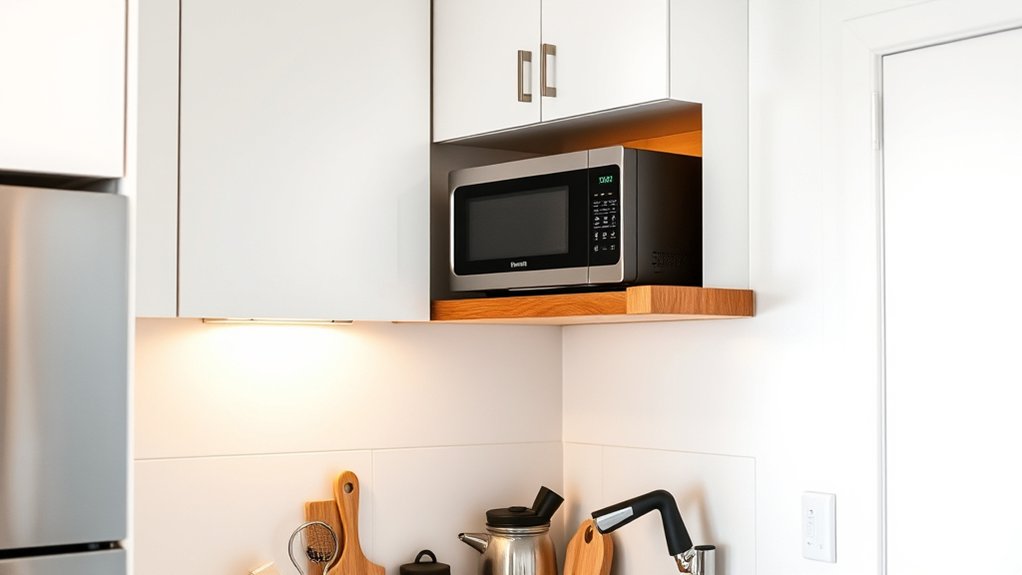
Maximizing your small kitchen’s layout means looking beyond the countertop for microwave placement. Vertical space solutions can free up valuable surface area while enhancing microwave aesthetics. When considering vertical options, think about how the microwave’s design and color coordination complement your kitchen’s style.
Optimize small kitchens by using vertical space for microwave placement, enhancing both function and style.
Here are some smart vertical space ideas to try:
- Above-cabinet installation: Place the microwave on a sturdy shelf above cabinets to keep it out of the way yet accessible.
- Built-in microwave cabinet: Integrate the microwave into a tall cabinet, matching cabinet colors for seamless coordination.
- Wall-mounted microwave units: Use brackets or mounts to secure the microwave at eye level, saving counter space and boosting visual appeal.
Microwave Shelves for Easy Access

A wall-mounted microwave shelf can free up valuable counter space while keeping your microwave within easy reach. Choose one with an adjustable height so you can position it just right. Space-saving designs also help keep your kitchen organized without crowding your workspace.
Wall-Mounted Microwave Shelves
When space is tight, wall-mounted microwave shelves offer a smart solution that keeps your countertop clear and your microwave within easy reach. These shelves maximize vertical space, making your kitchen feel less cluttered. When choosing a shelf, consider these key points:
- Ensure the shelf supports your microwave’s weight to maintain microwave durability and prevent accidents.
- Position the shelf near an outlet to manage power consumption efficiently without using long extension cords.
- Opt for materials that resist heat and moisture, extending your microwave’s lifespan and keeping your kitchen safe.
With the right wall-mounted shelf, you’ll enjoy a practical setup that preserves valuable counter space while keeping your microwave accessible and secure.
Adjustable Shelf Heights
Although space-saving is essential, adjustable shelf heights give you the flexibility to position your microwave at the perfect level for easy access and comfortable use. Adjustable shelves let you customize the setup based on your kitchen’s layout and your height, so you won’t have to reach too high or bend too low.
When selecting an adjustable shelf, prioritize shelf stability to guarantee it can safely support your microwave’s weight without wobbling. A stable shelf not only protects your appliance but also makes daily use safer and more convenient.
With the right adjustable shelves, you can create a microwave station that fits seamlessly into your small kitchen, improving both functionality and comfort without sacrificing valuable space.
Space-Saving Shelf Designs
Adjustable shelves provide the flexibility to position your microwave at just the right height, but choosing the right space-saving shelf design takes that convenience a step further. When picking a microwave shelf, consider these factors to maximize accessibility and safety:
- Weight capacity: Guarantee the shelf can support your microwave’s wattage and size without strain.
- Ventilation: Pick shelves that allow air circulation to prevent overheating, especially with higher microwave wattage models.
- Power cords: Opt for designs with built-in cable management or easy access to outlets to keep cords tidy and safe.
A well-chosen shelf not only frees up precious counter space but also keeps your microwave within easy reach, making your small kitchen more functional and organized.
How to Build a Microwave Nook in Your Cabinets
Start by measuring your microwave so you can make sure it’ll fit in the cabinet nook. Leave enough room for ventilation, too, to help prevent overheating. Then, customize the design to match your kitchen’s style and make the most of your space.
Measuring Microwave Space
When planning a microwave nook in your cabinets, start by accurately measuring the available space to guarantee a perfect fit. You want to verify your microwave fits comfortably without crowding surrounding cabinetry or obstructing appliance maintenance. Accurate measurements also help with color coordination, so your nook complements the overall kitchen design.
Measure the space by:
- Checking height, width, and depth inside the cabinet area.
- Leaving extra clearance for ventilation and easy access.
- Accounting for door swing or pull-out shelf mechanisms.
Taking these steps ensures your microwave nook looks seamless and functions smoothly. Proper sizing prevents damage and keeps your kitchen organized, maximizing your small kitchen’s efficiency and style.
Ventilation and Safety Tips
After measuring your microwave space carefully, it’s important to focus on ventilation and safety to keep your kitchen both functional and secure. Make sure that your microwave nook has enough clearance around the appliance to allow heat to escape; this prevents overheating and extends appliance lifespan.
Proper ventilation supports safe cooking techniques by preventing steam buildup, which can damage cabinets and affect food quality. Always follow the manufacturer’s guidelines for minimum spacing and airflow.
Regular appliance maintenance, like cleaning vents and checking for blockages, keeps your microwave running efficiently and lowers fire risks. Avoid placing flammable materials nearby, and secure electrical cords to prevent accidents.
Customizing Cabinet Design
How can you make the most of limited space while keeping your kitchen stylish and functional? Customizing your cabinet design to build a microwave nook is a smart solution that blends convenience with kitchen decor.
Start by measuring your microwave to guarantee appliance compatibility within your cabinets. Then, consider these key steps:
- Remove a cabinet shelf or section to create a dedicated space.
- Add ventilation holes or gaps to prevent overheating.
- Use trim or molding to match your kitchen’s style seamlessly.
Mounting Your Microwave Under Cabinets to Save Counter Space
Although small kitchens often struggle with limited counter space, mounting your microwave under the cabinets can free up valuable room for cooking and prepping. You’ll want to guarantee microwave safety by choosing a sturdy bracket and properly securing it to prevent accidents.
Position the microwave at a comfortable height to avoid strain or spills when handling hot dishes. This setup keeps your counters clear while adding a sleek, integrated look that improves your kitchen decor.
Plus, mounting under cabinets can help maintain an open feel in tight spaces, making your kitchen appear larger and more organized. Just double-check the manufacturer’s installation guidelines and leave enough clearance for ventilation.
Should You Put Your Microwave Above the Stove? Pros and Cons
Installing your microwave above the stove can free up valuable counter space, especially in a small kitchen. But before you choose this setup, consider safety and ventilation to make sure it works well for your cooking space. Let’s take a look at the pros and cons.
Space Saving Benefits
Wondering if placing your microwave above the stove is the best choice for saving space in your small kitchen? It can be a smart move if you want to free up valuable countertop area. This setup helps you:
- Maximize vertical space, leaving more room for food prep and other appliances.
- Maintain a cohesive look through color coordination between the microwave and stove, creating a streamlined kitchen aesthetic.
- Simplify appliance maintenance by keeping your microwave within easy reach, so you can clean and service it without hassle.
Safety And Ventilation
Installing a microwave above your stove can save space, but you need to take safety and ventilation carefully. Make sure your microwave is designed for over-the-range use to guarantee proper appliance compatibility.
These models typically include built-in ventilation systems that help remove smoke and steam, reducing fire hazards. Without adequate ventilation, heat and moisture can damage the microwave and surrounding cabinets.
Also, consider the height—placing it too high can cause spills or burns when handling hot food. Color coordination matters, too; matching your microwave with your stove and kitchen colors creates a cohesive look while maintaining functionality.
Balancing safety, ventilation, and design is key when deciding if your microwave belongs above the stove in your small kitchen.
Integrating a Microwave Into a Kitchen Island
Although kitchen islands are often the centerpiece of a small kitchen, you can make them even more functional by integrating a microwave directly into the island. This setup frees up valuable counter space and keeps your microwave within easy reach while cooking.
Plus, it creates a sleek, modern look that blends seamlessly with your kitchen design.
When planning this integration, consider:
- Positioning the microwave at a comfortable height to avoid bending or stretching.
- Choosing a model with easy-to-clean surfaces, so microwave cleaning doesn’t become a chore.
- Ensuring ventilation is adequate to prevent overheating during use.
With your microwave conveniently placed, you can quickly try new microwave recipes without interrupting your cooking flow.
Integrating the microwave into your island also keeps it accessible for family and guests, making mealtime smoother in your small kitchen.
Creative Microwave Corner Placement Ideas
When you’re short on space, utilizing kitchen corners for your microwave can be a smart and stylish solution. Placing your microwave in a corner frees up valuable counter space and can blend seamlessly with your kitchen color schemes. Consider installing a corner shelf or a built-in cabinet that matches your cabinetry’s hue, creating a cohesive look that keeps the space visually open.
Make sure the corner spot offers good ventilation to support appliance maintenance and prevent overheating. A microwave tucked into a corner with easy access allows you to keep your kitchen organized and functional. You might also add under-cabinet lighting to brighten the corner, making it a practical and inviting cooking area.
Portable Microwave Carts and Rolling Stands for Flexibility
If you need to maximize your kitchen’s versatility, portable microwave carts and rolling stands offer a fantastic solution. These mobile units let you position your microwave wherever it best fits your workflow, freeing up precious counter space.
When choosing a cart, consider how it complements your microwave color schemes—matching or contrasting colors can elevate your kitchen’s look. Also, think about microwave branding; some stands are designed to snugly fit specific brands, ensuring stability and style.
Here’s why portable microwave carts and rolling stands work well for you:
- They provide extra storage for kitchen essentials, keeping everything within reach.
- Their mobility lets you easily move your microwave for cleaning or hosting guests.
- Many come with adjustable shelves to accommodate different microwave sizes and styles.
Tips for Organizing Your Microwave Space in a Small Kitchen
Since space is limited in a small kitchen, organizing your microwave area efficiently can make a big difference in both functionality and appearance. Start by choosing color schemes that blend your microwave with surrounding cabinetry or walls to create a seamless look.
Keep the area clutter-free by using vertical storage or small shelves nearby for microwave-safe dishes and utensils. Regular appliance maintenance, like cleaning vents and wiping surfaces, ensures your microwave works well and lasts longer.
Here’s a quick guide to organizing your microwave space:
| Task | Tip |
|---|---|
| Color Schemes | Match microwave with cabinets |
| Storage | Use vertical shelves or racks |
| Maintenance | Clean vents and surfaces often |
Frequently Asked Questions
What Wattage Microwave Is Best for Small Kitchens?
You’ll want a microwave around 700 to 900 watts for small kitchens—it’s powerful enough without taking up too much space or energy.
When considering microwave placement, think about countertop vs built-in options. Countertop models offer flexibility but use valuable surface space, while built-in microwaves save counter room and create a streamlined look.
Choose wattage based on your cooking needs, but keep placement in mind to maximize your kitchen’s efficiency.
How to Clean a Microwave With Minimal Effort?
Don’t worry if you think cleaning your microwave is a hassle—it’s easier than you expect! Place a microwave-safe bowl with water and a few tablespoons of vinegar inside. Run it on high for five minutes, letting steam loosen grime. Then, wipe down the interior with a cloth.
This simple cleaning technique saves time and keeps your microwave fresh. Proper microwave placement guarantees easy access, making regular cleaning a breeze.
Are Countertop Microwaves Safer Than Built-In Models?
You’ll find countertop microwaves and built-in models just as safe if you follow proper microwave placement and safety considerations. Countertop units offer flexibility, letting you move them away from water sources or heat, reducing risks.
Built-in microwaves require professional installation to guarantee safety and proper ventilation. So, whichever you choose, focus on correct placement and maintenance to keep your microwave use safe and efficient.
Can a Microwave Affect Wi-Fi Signals in the Kitchen?
A microwave can affect Wi-Fi signals in the kitchen like a sudden storm shaking a calm lake. When it’s running, you might experience Wi-Fi interference and signal disruption because microwaves operate at a frequency similar to some Wi-Fi channels.
To avoid this, you can place your router or microwave farther apart or switch your Wi-Fi to a 5 GHz band, which is less prone to interference from your microwave.
What Are the Energy-Saving Tips for Microwave Use?
To boost energy efficiency and reduce power consumption, you should avoid overcooking food in your microwave. Use the microwave’s power settings instead of full power for gentler heating. Defrost food using the microwave’s defrost feature instead of thawing at room temperature. Also, keep the microwave clean to maintain efficiency, and only heat what you need—smaller portions save energy. These steps help you cut down on wasted power and save money.
Conclusion
You might worry that finding space for your microwave in a small kitchen means sacrificing style or convenience. But with these ideas, like mounting it under cabinets or using a rolling cart, you can save counter space without adding clutter.
Think vertically or create a dedicated nook to keep your kitchen functional and organized. Don’t let limited space hold you back. These smart solutions can help you find the perfect place for a microwave in a small kitchen while creating a sleek, efficient space that fits your lifestyle.


