Where Is Hell’s Kitchen Located?
Finding your way around Manhattan can be confusing, especially when neighborhood boundaries overlap. You’re not alone—many visitors wonder where Hell’s Kitchen is located.
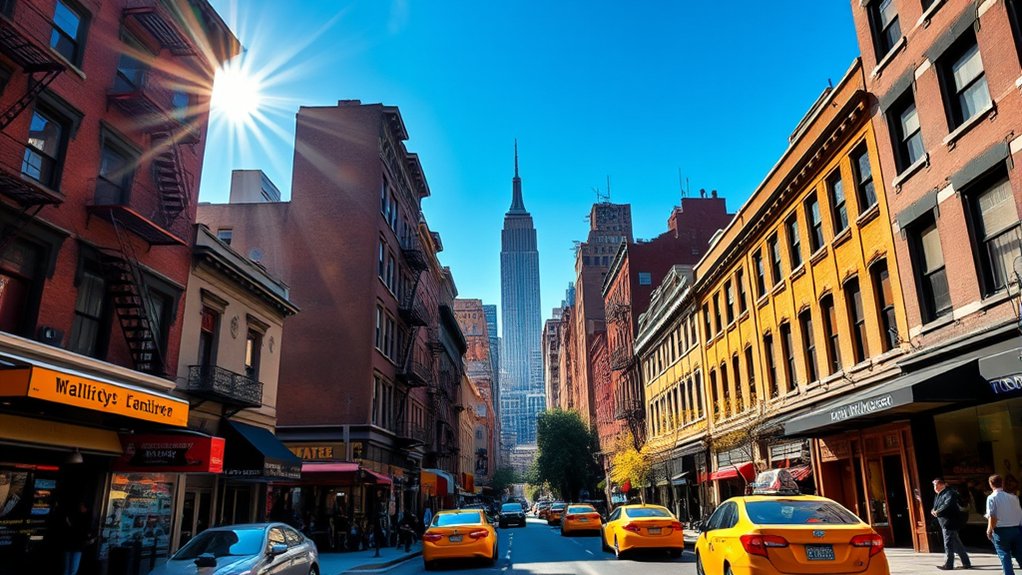
Hell’s Kitchen is on Manhattan’s West Side, stretching from 34th Street to 59th Street. It’s bounded by Eighth Avenue to the east and the Hudson River to the west, next to Midtown’s business district.
Along its western edge, you’ll find waterfront views of New Jersey. Eighth Avenue separates Hell’s Kitchen from the nearby Theater District, and its boundaries help shape the neighborhood’s distinctive character.
Key Takeaways
- Hell’s Kitchen spans Manhattan’s West Side, between 34th St and 59th St.
- Eighth Avenue forms its eastern boundary, separating it from the Theater District.
- The Hudson River marks its western edge, offering waterfront views of New Jersey.
- It sits close to Midtown Manhattan’s business district, making it centrally located.
- Subway access via A, C, E and 1, 2, 3 trains connects the neighborhood citywide.
Where Hell’s Kitchen Sits Within Manhattan’s West Side

Because it occupies a prime stretch of Manhattan’s West Side, Hell’s Kitchen sits between 34th Street and 59th Street, running from Eighth Avenue west to the Hudson River. You’ll find this location puts you minutes from Midtown’s business district while still offering a distinct neighborhood feel.
As you walk through the area, you’ll notice Historical landmarks dot the streets, remnants of its working-class roots as a port and rail hub in the 19th century.
You’ll also experience Cultural diversity at every turn, with longtime residents, artists, and newcomers shaping the neighborhood’s identity. Eighth Avenue serves as the eastern boundary, separating Hell’s Kitchen from the Theater District, while the Hudson River marks its western edge, giving you waterfront access and views of New Jersey.
This positioning between major transit lines and cultural institutions makes Hell’s Kitchen a connector between uptown and downtown Manhattan, blending accessibility with a neighborhood identity all its own.
Hell’s Kitchen’s Exact Boundaries and Cross Streets
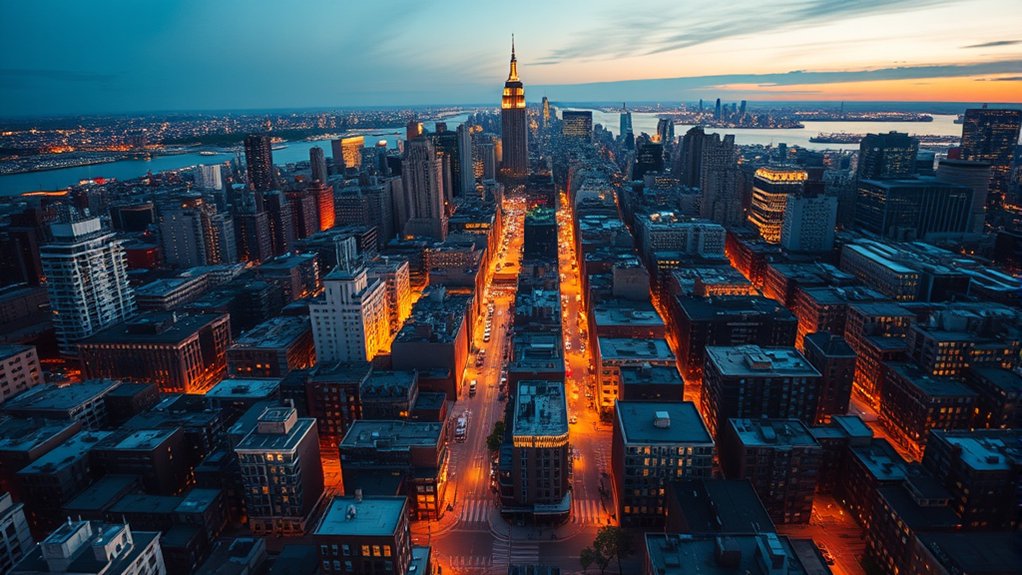
Pinning down Hell’s Kitchen’s exact borders helps you navigate the neighborhood with confidence. You’ll find it stretching from 34th Street up to 59th Street, giving you a solid 25-block span to investigate. On the east side, Eighth Avenue marks your boundary, while the Hudson River closes things off to the west.
Walking these streets, you’ll cross paths with historic landmarks like the Clinton Court stables and the former tenements that once housed dock workers. These structures tell the story of a neighborhood built on grit and industry long before it became trendy.
Today, you’ll also spot celebrity hotspots scattered throughout, as actors from nearby Broadway theaters grab coffee or dinner between shows. Ninth and Tenth Avenues serve as your main commercial corridors, packed with restaurants and bars. Knowing these cross streets—34th, 59th, Eighth Avenue, and the river—gives you everything you need to pinpoint exactly where you stand.
How Hell’s Kitchen Differs From Chelsea Next Door
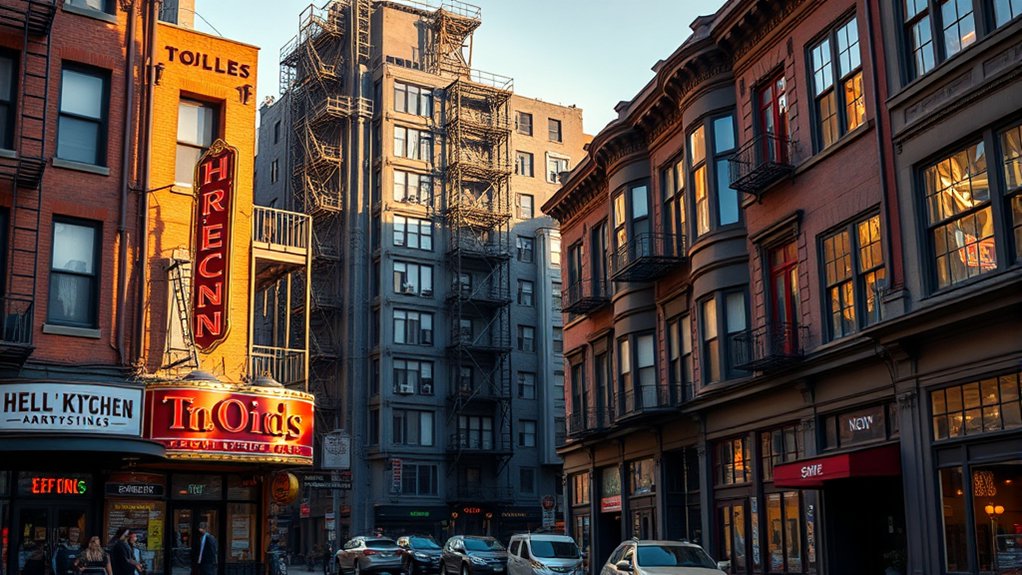
Cross Eighth Avenue, and the neighborhood changes fast. Hell’s Kitchen is known for its walk-up tenements, while Chelsea has converted warehouses and sleek high-rises. The buildings reflect different histories: Hell’s Kitchen grew as a working-class immigrant neighborhood, while Chelsea’s industrial past helped shape its gallery scene.
The nightlife has a different feel, too. Hell’s Kitchen draws theatergoers to its bars and offers food from around the world. In Chelsea, you’ll find polished cocktail lounges and restaurants tied to the art scene.
Architecture And Building Styles
Walk west from Chelsea’s gallery-lined blocks and you’ll notice the shift immediately: Hell’s Kitchen trades converted warehouses and polished loft conversions for scrappy tenement walk-ups and modest pre-war apartment buildings. You’ll spot five-story brick tenements from the 1900s, their fire escapes zigzagging across weathered façades, standing shoulder-to-shoulder with newer high-rises.
The skyline silhouettes here feel less uniform than Chelsea’s. Older buildings puncture gaps between glass towers, creating a jagged, lived-in profile rather than a curated one.
Look closer and you’ll catch architectural details that tell Hell’s Kitchen’s working-class history: ornate cornices, pressed-tin ceilings, and narrow stoops that haven’t been stripped for minimalist renovations. Chelsea’s buildings feel intentional and gallery-ready; Hell’s Kitchen’s feel organic, shaped by decades of immigrant labor rather than design trends.
Dining And Nightlife Vibe
The buildings tell one story, but the streets at dinnertime tell another. You’ll walk down Ninth Avenue and hit a wall of restaurant row energy that Chelsea simply doesn’t match. Hell’s Kitchen leans loud, dense, and theatrical, while Chelsea stays polished and gallery-quiet after dark.
Here’s what sets the vibe apart:
- Density — You’ll find more restaurants per block here than almost anywhere in Manhattan.
- Gourmet cuisine — You can grab global flavors, from Thai to Peruvian, without walking two blocks.
- Bar scene — You’ll notice pre-theater crowds spilling into bars long before curtain time.
Chelsea feels curated; Hell’s Kitchen feels alive. If you want energy with your meal, you’re in the right neighborhood.
Where Hell’s Kitchen Ends and the Theater District Begins
Although locals often blur the line between the two neighborhoods, you’ll notice Hell’s Kitchen’s grittier, residential character giving way to the Theater District’s glitzy marquees somewhere around 42nd Street. As you walk north past this point, apartment buildings and corner delis start thinning out, replaced by ticket booths, neon signs, and tourist-packed sidewalks.
Eighth Avenue serves as a rough dividing line, with Hell’s Kitchen stretching west and the Theater District claiming the blocks closer to Broadway.
You’ll feel the historical influences shift here, too. Hell’s Kitchen’s industrial, working-class roots contrast sharply with the Theater District’s long-standing identity as Manhattan’s entertainment hub. Cultural diversity remains strong on both sides, but the flavor changes. Hell’s Kitchen offers ethnic restaurants and local bars, while the Theater District caters more to pre-show dinners and souvenir shops.
Why Hell’s Kitchen Got Its Unusual Name
Ask ten New Yorkers how Hell’s Kitchen got its name, and you’ll likely get ten different stories. Historical legends and local folklore swirl together, making it nearly impossible to pin down one definitive origin.
What’s clear is that the name stuck because it captured the neighborhood’s rough, chaotic reputation in the 19th century.
Some popular explanations you’ll hear include:
- The rookie cop story: A veteran officer reportedly told his young partner, “This place is hell itself,” and the rookie replied, “Hell’s a mild climate. This is hell’s kitchen,” referring to the area’s brutal crime and poverty.
- The gang connection: A notorious criminal gang supposedly operated under this name, lending it to the surrounding blocks.
- The industrial angle: Factories and tenements packed into tight spaces created sweltering, hellish conditions for workers.
Whichever version you believe, the name reflects a neighborhood that’s always had grit and character.
What Hell’s Kitchen Looks and Feels Like Today
Walk through Hell’s Kitchen today, and you’ll see a neighborhood balancing its past with its reinvention. Pre-war tenements sit beside sleek high-rises, while trendy restaurants and lively nightlife spots line Ninth Avenue. But turn onto a quieter residential street, and the city’s buzz gives way to a more neighborly feel. It’s a reminder that this corner of Manhattan has room for several identities at once.
A Blend of Eras
When you step onto Ninth Avenue today, you’ll notice how century-old tenement buildings now share block space with sleek glass condos that didn’t exist twenty years ago. This juxtaposition isn’t accidental—it’s the neighborhood’s defining trait. You’re walking through layers of historical significance, where Irish immigrant roots meet modern luxury development, and nobody seems bothered by the contrast.
The cultural influences here run deep, shaping everything from the food to the architecture you’ll encounter:
- Old-world facades standing beside newly constructed high-rises
- Family-run delis operating next to trendy wine bars
- Original fire escapes still clinging to buildings with renovated interiors
You’ll find this blend creates genuine character rather than forced nostalgia. It’s authentic because the neighborhood never erased its past. It simply built around it, giving you a living timeline you can actually walk through.
Trendy Restaurants and Nightlife
Why does Ninth Avenue buzz louder after dark than it does at noon? You’re walking past packed patios, clinking glasses, and chefs plating dishes that turn heads. Hell’s Kitchen thrives on culinary innovations, with restaurants pushing boundaries across global cuisines—Thai, Italian, Korean, and fusion concepts you won’t find elsewhere in the city.
You’ll notice intimate wine bars sitting beside rooftop lounges, each drawing a different crowd as the sun sets.
When you’re ready to explore nightlife hotspots, you’ll find speakeasies tucked behind unmarked doors and dance floors that stay packed until dawn. Theater-goers spill out after curtain calls, filling nearby bars for late dinners.
You’re never far from a DJ set, a jazz trio, or a craft cocktail list worth savoring.
Residential Streets, Urban Energy
Step away from the bars and restaurants, and you’ll find a different rhythm entirely. Hell’s Kitchen’s residential blocks pulse with their own urban energy, offering a quieter, lived-in side of the neighborhood you won’t see on a typical night out.
Walk west toward Eleventh Avenue, and you’ll notice:
- Tree-lined blocks dotted with brownstones and walk-up apartments
- Local street art that transforms blank walls into neighborhood landmarks
- Small urban parks where residents walk dogs, read, or grab a quiet moment
You’ll spot locals chatting outside bodegas, kids heading to school, and longtime residents who remember the neighborhood before its glow-up. It’s this contrast, grit meeting gentrification, that gives Hell’s Kitchen its authentic, unmistakable character.
The Best Subway Stops to Reach Hell’s Kitchen
Since Hell’s Kitchen sits squarely between Midtown and the Hudson River, you’ve got several reliable subway options for getting there. The A, C, and E trains run along Eighth Avenue, placing you right in the heart of the neighborhood with stops at 42nd, 50th, and 59th Streets. If you’re coming from the east side, the 1, 2, and 3 trains along Seventh Avenue offer a short walk west into Hell’s Kitchen’s core.
Subway accessibility here is excellent, and transit connections make exploring the rest of Manhattan effortless.
| Subway Line | Key Stop | Area Served |
|---|---|---|
| A, C, E | 42nd St-Port Authority | Southern Hell’s Kitchen |
| 1, 2, 3 | 50th St | Eastern edge/Theater District |
| N, Q, R, W | 57th St-7th Ave | Northern border |
Pick whichever line matches your starting point, and you’ll land close to restaurants, theaters, and residential blocks alike.
Getting to Hell’s Kitchen by Bus, Car, or Ferry
If the subway isn’t your style, you’ve got plenty of other ways to reach Hell’s Kitchen. Several bus routes run through the neighborhood, and drivers can find parking garages throughout the area. For a more scenic trip, hop on a ferry and dock just a short walk from the action.
Bus Routes and Stops
Because Hell’s Kitchen sits right in the heart of Manhattan, you’ve got plenty of options for reaching it by bus. The public transportation network here makes *orienteering* to the neighborhood simple, even if you’re unfamiliar with the area.
Several bus routes run directly through Hell’s Kitchen, dropping you off just steps from restaurants, theaters, and apartments.
You’ll find these options especially convenient:
- M11: Travels along 9th and 10th Avenues, cutting straight through the neighborhood
- M42: Runs crosstown on 42nd Street, connecting you to Times Square and the Port Authority
- M50: Covers 50th Street, giving you quick access to Midtown attractions
Each route offers frequent stops, so you won’t have to walk far once you hop off.
Driving and Parking Options
Driving into Hell’s Kitchen gives you more flexibility than buses, though you’ll want to plan ahead for parking. The West Side Highway and Ninth Avenue offer the quickest driving routes from most directions, while Tenth Avenue works well if you’re coming from the north or south. Street parking exists but fills up fast, especially during evening hours, so you shouldn’t count on finding a spot right away.
Here’s a quick look at your parking options in the neighborhood:
| Parking Type | Average Cost | Best For |
|---|---|---|
| Street Parking | Free (metered) | Short visits |
| Parking Garage | $15-$40/hour | Longer stays |
| Lot Parking | $20-$35/day | All-day events |
| Valet Service | $25-$50 | Hotel guests |
Book garage spots early if you’re visiting during peak times.
Ferry Terminals Nearby
Since Hell’s Kitchen sits right along the Hudson River, you’ll find ferry travel a scenic and surprisingly efficient option. NY Waterway operates several ferry terminals along the west side, putting you just a short walk from the neighborhood’s core. You’ll skip traffic entirely and enjoy views of the Manhattan skyline during your commute.
Nearby docks worth knowing include:
- Pier 79 (W 39th Street): The main hub, serving multiple New Jersey routes.
- Hoboken/Weehawken connections: Quick 10-minute rides across the river.
- Midtown ferry landing: Connects you directly to West 42nd Street, steps from Hell’s Kitchen’s restaurants and theaters.
You’ll appreciate how these terminals link commuters and visitors alike, making ferry travel a practical alternative to buses or driving.
Top Streets and Landmarks That Define the Area
When you walk along Ninth Avenue, you’ll find the true spine of Hell’s Kitchen, lined with restaurants, bars, and small shops that give the neighborhood its lived-in character. Tenth and Eleventh Avenues shift toward industrial grit, while 46th Street, nicknamed “Restaurant Row,” packs in diverse dining options steps from Broadway theaters.
Historic landmarks anchor the area’s identity. The Intrepid Sea, Air & Space Museum sits along the Hudson, while St. Paul the Apostle Church reflects the neighborhood’s deep-rooted cultural influences and immigrant history.
Here’s a quick reference to key spots:
| Landmark/Street | Type | Highlight |
|---|---|---|
| Ninth Avenue | Street | Dining and shops |
| Restaurant Row | Street | Pre-theater meals |
| Intrepid Museum | Landmark | Naval history |
| St. Paul the Apostle | Landmark | Architecture |
| Eleventh Avenue | Street | Industrial charm |
Together, these streets and sites make Hell’s Kitchen instantly recognizable.
Where to Stay When Visiting Hell’s Kitchen
Because Hell’s Kitchen sits so close to Midtown’s biggest attractions, you’ll find lodging options ranging from budget-friendly hostels to upscale boutique hotels within a few blocks of each other. You can walk to Times Square in minutes or catch a show on Broadway without needing a cab. Staying here puts you near historical landmarks like the USS Intrepid while keeping you close to local cultural festivals that pop up throughout the year.
From hostels to boutique hotels, Hell’s Kitchen puts Times Square, Broadway, and the USS Intrepid just steps from your door.
When choosing where to stay, think about what matters most to you:
- Budget travelers can find hostels along 9th Avenue offering shared rooms and communal kitchens.
- Mid-range visitors often pick chain hotels near 42nd Street for reliable amenities and easy subway access.
- Luxury seekers gravitate toward boutique hotels near the river, which offer skyline views and quieter streets.
Whatever you choose, you’ll stay minutes from everything that makes this neighborhood worth visiting.
Frequently Asked Questions
Is Hell’s Kitchen a Safe Neighborhood to Visit or Live In?
Yes, you’ll find Hell’s Kitchen a generally safe neighborhood to visit or live in! Crime rates have dropped considerably over the past few decades, and today you’re walking through a well-populated, lively area with plenty of foot traffic day and night. Community safety efforts, active local organizations, and a strong police presence all contribute to this transformation. Like anywhere in NYC, you should stay alert, but you shouldn’t feel unsafe exploring or settling here.
What Is the Average Cost of Rent in Hell’s Kitchen?
Want luxury without the luxury price tag? That’s Hell’s Kitchen for you. You’ll find rents averaging around $3,200-$4,000 for a one-bedroom, though you can still snag deals if you’re flexible on location within the neighborhood.
Rental market trends show prices climbing steadily, but you’ll notice some affordable housing options tucked between high-rises. If you’re budget-conscious, you’ll want to act fast—this market moves quickly, and good deals don’t last long here.
Is Hell’s Kitchen the Same as Clinton, NYC?
Yes, you’ll find that Hell’s Kitchen and Clinton are actually the same Manhattan neighborhood—Clinton’s simply the more formal, historical name some longtime residents and city planners still prefer.
As you investigate the area, you’ll notice it’s packed with historical landmarks reflecting its working-class roots, alongside a vibrant sense of cultural diversity. Whether locals call it Hell’s Kitchen or Clinton, you’re experiencing the same dynamic, multicultural stretch of the West Side.
What Zip Code Covers Hell’s Kitchen?
You’ll find Hell’s Kitchen wrapped primarily in the 10019 zip code, like a vibrant patchwork quilt stitched into Manhattan’s West Side. As you wander these streets, you’ll bump into historical landmarks standing shoulder-to-shoulder with trendy galleries fueling the local art scene. You’re never far from a mural, a theater marquee, or a century-old building. Grab a coffee, investigate a bit, and you’ll feel the neighborhood’s gritty charm instantly.
Are There Good Restaurants and Nightlife in Hell’s Kitchen?
Yes, you’ll find an amazing mix of local cuisine and nightlife hotspots throughout Hell’s Kitchen! You can sample everything from authentic Thai and Italian eateries to trendy fusion restaurants lining Ninth Avenue.
When the sun sets, you’re never far from a lively bar or late-night lounge. You’ll also uncover cozy speakeasies and rooftop venues perfect for drinks with a view.
Whether you’re craving great food or an exciting night out, you won’t be disappointed here.
Conclusion
So there you have it: you’ll find Hell’s Kitchen wedged between the West 30s and 50s, from Eighth Avenue to the Hudson, somehow surviving its demonic name despite being full of brunch spots and dog spas. You won’t find actual fire and brimstone, just overpriced parking and tourists clutching subway maps. Hop off at 42nd Street, dodge a few food carts, and congratulations, you’ve conquered one of Manhattan’s most dramatically named neighborhoods. Now you know where Hell’s Kitchen is located.