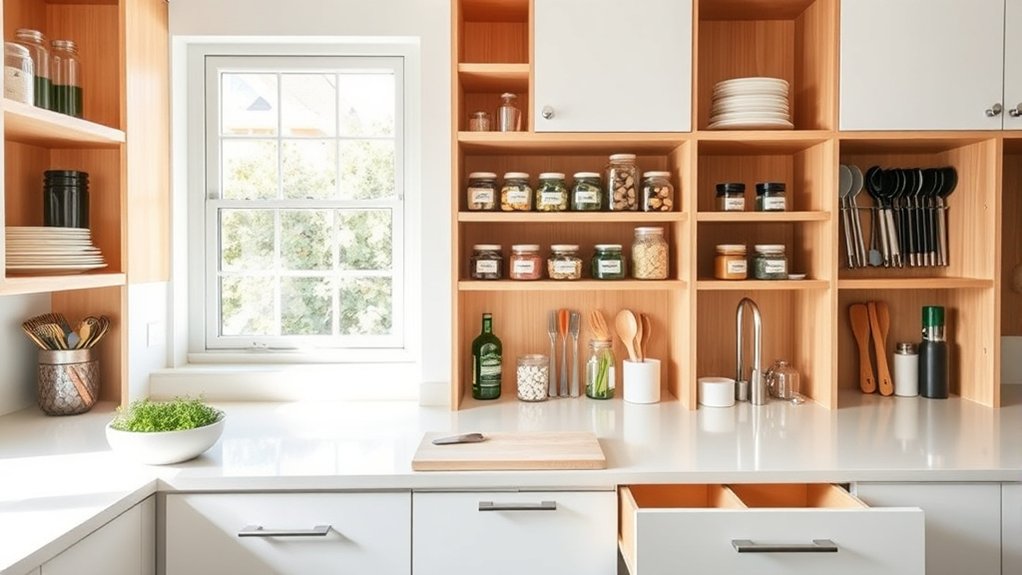
How to Organize Kitchen Cabinets and Drawers in 3 Steps
Cluttered cabinets and messy drawers can make cooking feel more stressful than it needs to be. If finding the right pan or spice feels like a daily struggle, you’re not alone. These simple steps for organizing kitchen cabinets and drawers can help you make the most of your space and keep everything easy to find.
Start by clearing out your cabinets and drawers, grouping items like cookware, utensils, and spices while discarding duplicates or expired goods.
Next, maximize space with organizers tailored to your needs, like inserts and labels that keep everything accessible and tidy.
Finally, develop simple daily habits like wiping surfaces and returning items to their spots to maintain order. Taking these steps will make your kitchen more functional and set the stage for easy upkeep and efficiency.
Key Takeaways
- Empty all cabinets and drawers, then sort items into categories like cookware, utensils, and pantry staples.
- Discard duplicates, expired, or rarely used items to reduce clutter and maximize space.
- Create functional zones based on cooking and cleaning needs for better accessibility.
- Use organizers and custom inserts to keep items separated and prevent shifting.
- Label storage areas clearly to encourage proper placement and maintain long-term organization.
Clear Out and Categorize Your Kitchen Items
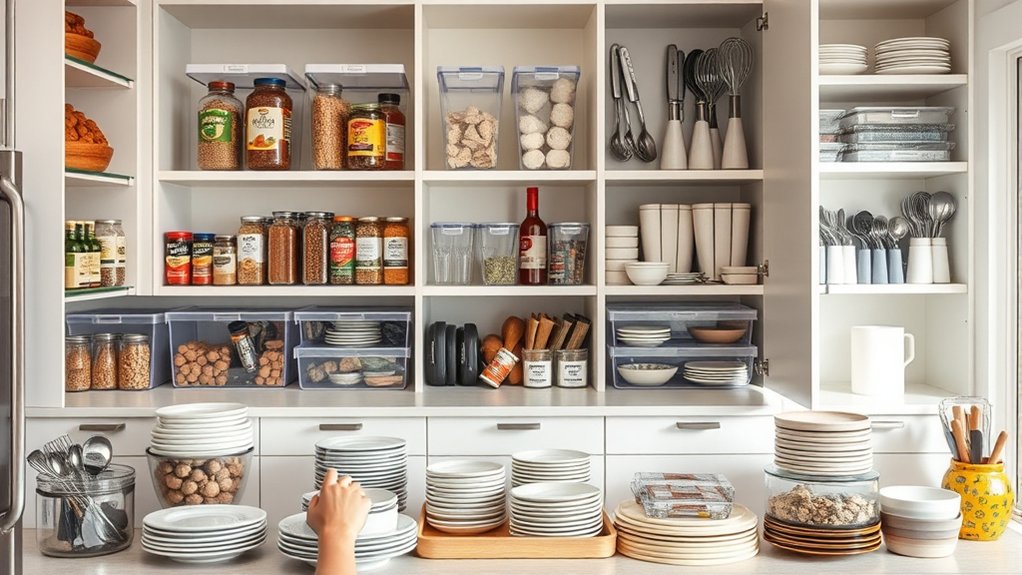
Before you begin organizing, clear out everything from your kitchen cabinets and drawers so you can see what you have. This step is essential for streamlining your meal prep and improving your cleaning routines.
Start by emptying your kitchen cabinets and drawers to clearly see and streamline your meal prep and cleaning.
Once emptied, categorize your items into groups like cookware, utensils, spices, and pantry staples. Doing this helps you identify duplicates, expired products, or things you rarely use, making it easier to decide what to keep or donate.
Sorting also allows you to create zones based on how you cook and clean, so everything you need is within reach when prepping meals or tidying up. Keep frequently used items handy to speed up your meal prep, and separate cleaning supplies from food-related items to maintain hygiene.
This clear-out and categorizing process sets a solid foundation for the next steps in organizing your kitchen efficiently. Taking the time now will save you frustration later and make your kitchen a more functional space.
Maximize Space With the Best Cabinet and Drawer Organizers
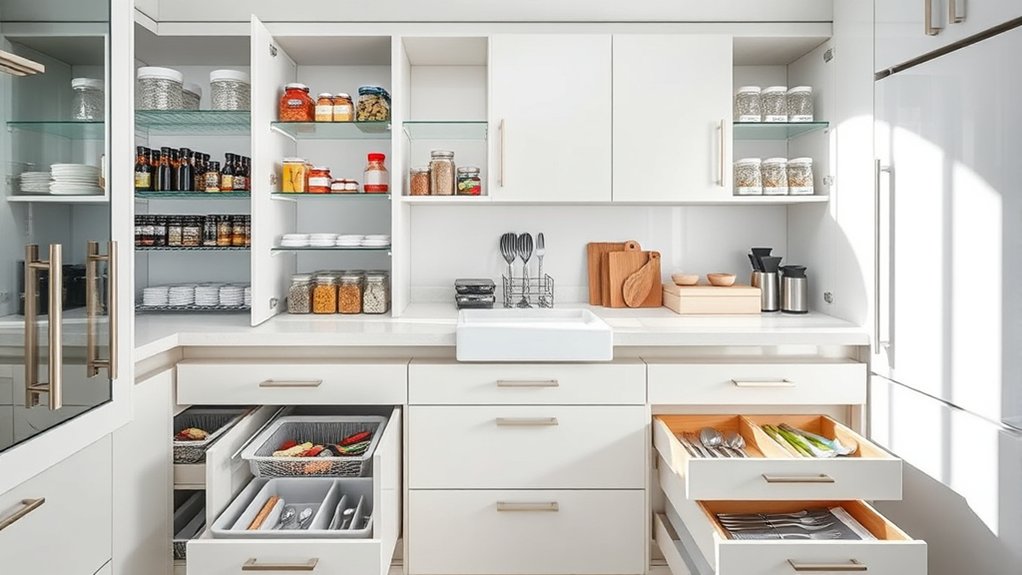
When you’ve sorted your kitchen items, choosing the right organizers can transform cluttered cabinets and drawers into efficient storage spaces. Start by installing custom inserts tailored to your utensils, pots, and spices. These inserts keep everything in place, preventing items from shifting or piling up. You’ll find that custom inserts make it easier to access what you need quickly and maintain order.
Next, use clear labeling systems to identify each section, especially in drawers and deep cabinets. Labels help you and anyone else in your household find items without digging through clutter. They also encourage you to put things back correctly, preserving your organization over time.
Simple Daily Habits to Keep Your Kitchen Organized
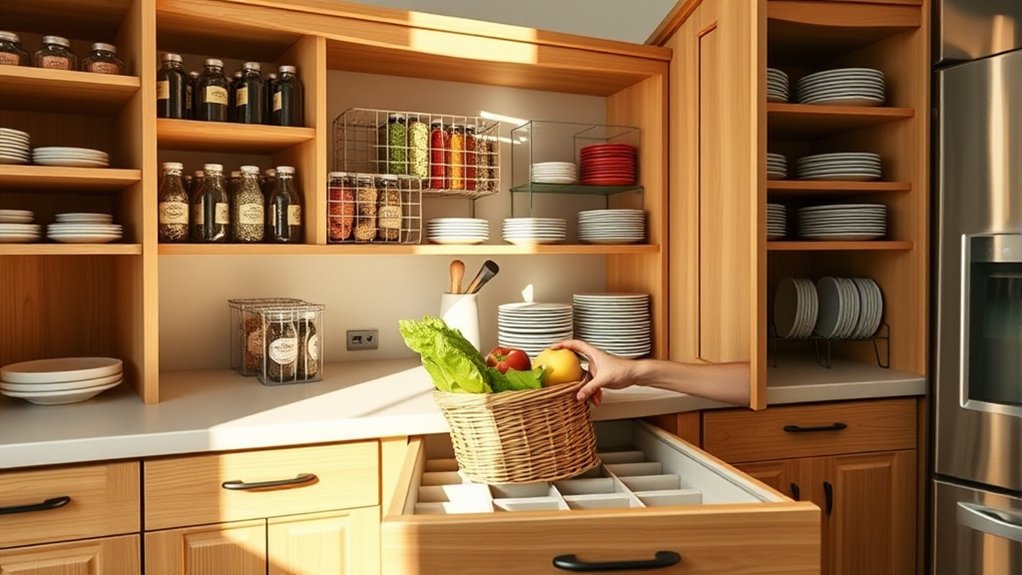
Although organizing your kitchen cabinets and drawers takes effort, maintaining that order daily is much easier with simple habits. Start by incorporating quick cleaning routines each day, like wiping down surfaces and putting items back in their designated spots right after use.
This prevents clutter from piling up and keeps your kitchen functional. During meal prep, stay mindful of where you place utensils and ingredients, returning them immediately to their organized homes once done.
This habit not only saves time but also reduces mess. Make it a habit to check your cabinets and drawers at the end of each day, removing any unnecessary items and ensuring everything remains in order.
Frequently Asked Questions
What Materials Are Best for Cabinet and Drawer Liners?
You’ll want to pick cabinet and drawer liners that balance material durability with eco friendly choices. Materials like natural rubber or recycled silicone offer great durability and are gentle on the environment. Bamboo liners are another excellent eco friendly option, providing sturdy protection while being biodegradable. Avoid cheap plastic liners—they wear out quickly and aren’t sustainable. Choosing these materials helps keep your cabinets neat and supports a greener home.
How Often Should I Deep Clean Kitchen Cabinets?
You should deep clean your kitchen cabinets every three to six months to keep them spotless and in great shape. Stick to a cleaning schedule that fits your lifestyle, whether monthly or quarterly.
Maintenance tips include wiping spills immediately and using gentle cleaners to protect surfaces. Regular upkeep prevents grime buildup and extends your cabinets’ life, making your kitchen more pleasant and organized. Don’t skip this essential step!
Can Organizing Kitchen Cabinets Improve Cooking Efficiency?
Imagine trying to cook like a symphony without the right instruments at hand. Yes, organizing kitchen cabinets can boost your cooking flow considerably. When you arrange utensils and tools logically, you reduce the time spent searching, making your cooking smoother and faster. Studies show that well-organized spaces cut meal prep time by up to 30%. With easy utensil access, you’ll enjoy a more efficient, stress-free cooking experience every time.
What Are Eco-Friendly Options for Kitchen Storage Solutions?
You can choose recycled containers made from glass or BPA-free plastic to store your kitchen items sustainably. They’re durable and reduce waste. Also, biodegradable bags are great for organizing snacks or produce while minimizing environmental impact.
Using bamboo or cork drawer dividers adds a natural touch and breaks down easily when discarded. These eco-friendly options help keep your kitchen organized and reduce your carbon footprint without sacrificing style or function.
How Do I Childproof Kitchen Cabinets and Drawers?
Did you know over 60% of home injuries in kids happen in the kitchen? To childproof your cabinets and drawers, install child safety cabinet locks that are sturdy yet easy for adults to open. You can choose magnetic or adhesive locks depending on your preference.
Keep dangerous items like knives and cleaning supplies out of reach, and regularly check that locks stay secure. This way, you’ll guarantee your kitchen stays safe for your little ones.
Conclusion
Remember, “a place for everything, and everything in its place.” By clearing out and categorizing your kitchen items, you set the foundation for an organized space. Maximize your cabinets and drawers with the right organizers to make the most of every inch. Finally, stick to simple daily habits to keep your kitchen tidy and functional.
With these steps, you’ll know how to organize kitchen cabinets and drawers and enjoy a clutter-free kitchen that works for you every day.