How to Unclog a Double Kitchen Sink in 5 Steps
A clogged double kitchen sink can bring meal prep and cleanup to a frustrating halt. You’re not alone—many people struggle to clear a blockage when both basins are backed up. This guide to how to unclog a double kitchen sink walks you through practical steps to get the water flowing again.
First, clear standing water and debris from both basins, then remove and scrub the stoppers clean.
Next, plunge each drain separately, sealing the opposite side for pressure.
If water’s still stuck, open the P-trap under the sink to clear trapped gunk, checking for damage along the way.
For stubborn clogs, snake the line to break through buildup.
Stick around for the full breakdown of each step.
Key Takeaways
- Clear standing water and visible debris from both basins before starting any cleaning or unclogging process.
- Remove sink stoppers, scrub away buildup, then reinstall after clearing trapped debris.
- Plunge each drain separately while sealing the opposite side to maximize suction pressure.
- Detach the P-trap, empty and inspect it, then clean and reattach securely.
- Snake the drain line to break up stubborn clogs, then flush with hot water.
Remove Standing Water and Debris First
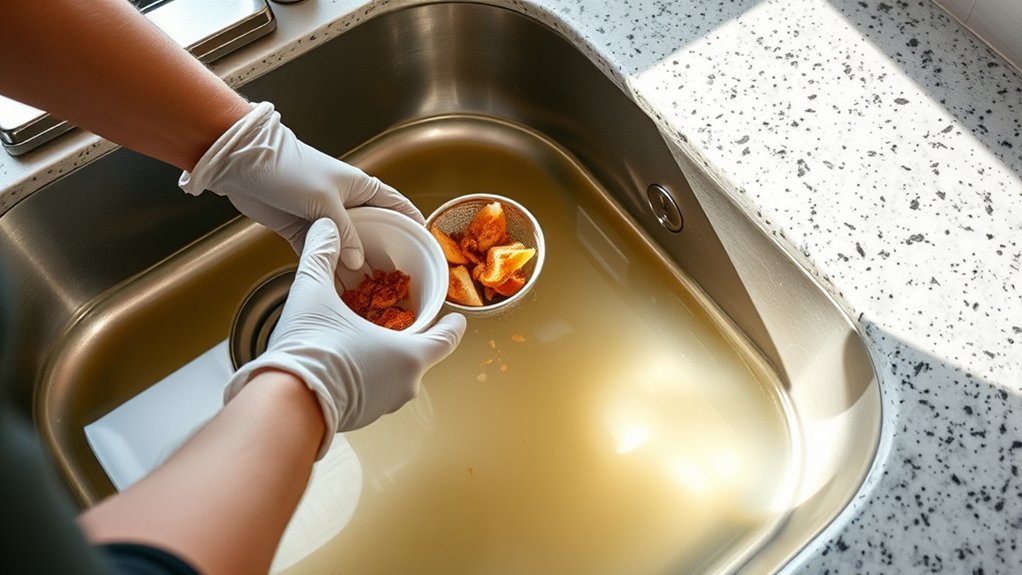
Before you touch a plunger or snake, clear out any standing water sitting in both basins—it’ll only slosh around and make a mess once you start working. Grab a small cup or bowl and scoop the water into a bucket until both sides are mostly dry. If you’ve got a wet-dry vacuum, use it instead; it’s faster and handles grease-laden water better than scooping by hand.
Water level management matters because excess liquid hides the clog’s location and dilutes any cleaning solution you apply later. Once the basins are empty, check the drain openings for visible debris—food scraps, grease clumps, or small objects that fell in. Pull out what you can by hand or with needle-nose pliers.
This step supports debris prevention too: removing loose gunk now keeps it from washing back down and recreating the blockage after you’ve cleared the pipe. Starting dry gives you a clear view of what you’re actually dealing with.
Remove and Clean the Sink Stoppers

With the basins dry and clear of loose debris, check the stoppers themselves—they’re often the real culprit behind slow drains. Twist or lift each stopper depending on your sink’s design; most pop out with a quarter-turn or a firm upward pull. If yours has a pivot rod underneath, reach under the sink and disconnect it before pulling the stopper free.
Once removed, you’ll likely find a tangled mess of grease, food particles, and gunk coating the mechanism. Scrub it with an old toothbrush and dish soap, rinsing thoroughly under hot water until it’s spotless. Pay attention to the grooves and hinges where buildup hides.
Stopper removal gives you direct access to the drain opening, letting you spot clogs sitting just below the surface. This simple step is a core part of regular sink maintenance, preventing slow drainage before it becomes a full blockage. Reinstall the clean stopper once you’ve cleared any visible debris.
Plunge Each Side of the Double Sink
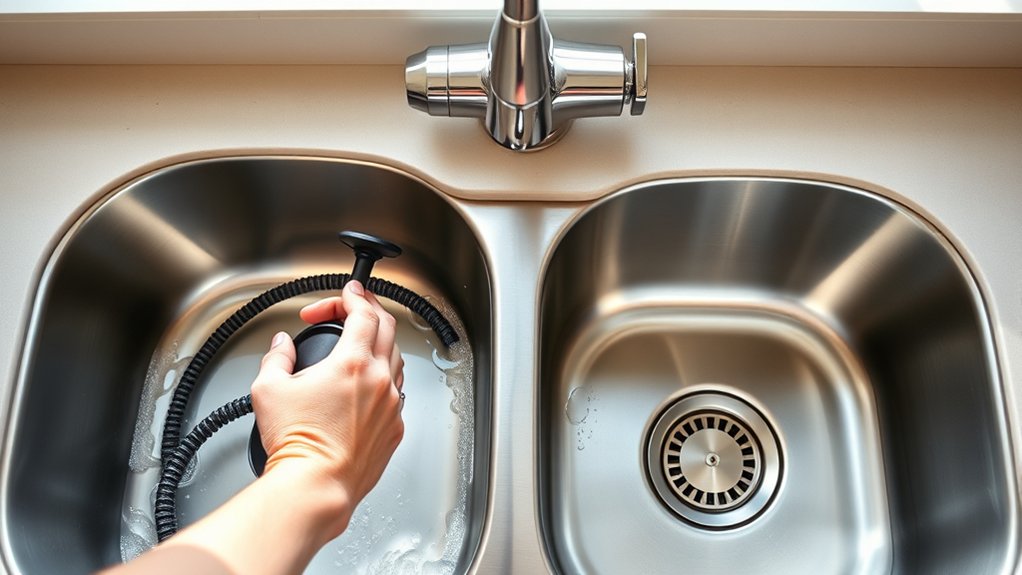
Because double sinks share a connected drain line, plunging just one side often pushes air around the clog instead of through it. To fix this, seal the opposite drain tightly with a wet rag or a second plunger before you start pumping. This forces water pressure directly into the clogged pipe rather than letting it escape through the other basin.
Fill the sink with a few inches of water to create a seal around the plunger cup, then push down firmly and pull up sharply, repeating 10 to 15 times. Keep the seal on the other drain snug throughout, or you’ll lose the suction you need to break up the blockage.
If water drains slower than before or you notice a lingering drain odor, the clog may have shifted but not cleared fully. Switch sides and repeat the process to clear the connected line completely.
Open Up the P-Trap Under the Sink
Why does plunging sometimes fail to clear a double sink? The clog often sits deeper, lodged in the P-trap, that curved pipe beneath the sink. A thorough P trap inspection helps you confirm this before moving forward.
Start by placing a bucket under the trap to catch water and debris. Loosen the slip nuts on both ends with pliers or by hand, then slide the trap off carefully.
Dump its contents into the bucket and check for grease, food particles, or other buildup clogging the bend.
While you’re at it, inspect the pipe’s condition. Cracks, corrosion, or warping signal it’s time for pipe replacement rather than reinstallation.
If the trap looks solid, rinse it out with water, clear any residue, and check the connecting pipes too. Once everything’s clean, reattach the trap securely before testing the drain.
Snake the Drain Line for Stubborn Clogs
If the P-trap’s clean but water still won’t drain, a stubborn clog likely sits further down the line. Grab a drain snake (also called an auger) and feed it into the pipe through the open P-trap connection or a cleanout fitting if you have one.
Crank the handle clockwise while pushing forward, letting the cable work its way through the bends. When you feel resistance, keep cranking. You’re breaking through the clog, not just pushing past it. Slowly pull the snake back out and clear off any gunk it brings with it.
Skip chemical drain cleaners here. They rarely reach clogs this deep and can damage older pipes. Run hot water once you’ve cleared the line to flush out remaining debris.
If the snake won’t budge the blockage or you keep hitting the same spot, it’s time to call professional plumbing services before the problem gets worse.
Frequently Asked Questions
Why Does Only One Side of My Double Sink Drain Slowly?
You’re likely dealing with a localized clog on that specific side, not a shared pipe issue. If that side has a garbage disposal, food debris or grease might be blocking its drain line.
Check if you’ve got an air gap installed near that basin. It can clog with grime and restrict flow. Try running hot water, cleaning the disposal, and clearing the air gap first. If it’s still sluggish, you’ve probably got a deeper blockage.
Can Chemical Drain Cleaners Damage My Pipes Long-Term?
Yes, repeated use can damage your pipes, weakening joints and causing leaks over time. These chemicals can also wash into waterways and harm ecosystems.
Try gentler solutions first: a plunger or a plumber’s snake. Baking soda and vinegar may help with some clogs, but avoid mixing them with chemical drain cleaners.
Is It Normal for Both Sink Sides to Clog Simultaneously?
Yes, it’s actually quite common! Since both sides share the same drain line, a blockage downstream can back up into both basins at once. You’ll notice this happens most often when grease, food scraps, or debris accumulate at the Y-joint where the pipes connect.
To avoid it, focus on clog prevention by scraping plates before washing and running hot water after each use. Regular drain maintenance keeps both sides flowing freely.
How Often Should I Clean My Kitchen Sink Drains?
You should aim for a weekly cleaning frequency to keep both sink drains flowing smoothly. Pour hot water down each side after use, and once a week, add baking soda and vinegar to break down grease buildup.
Don’t skip monthly drain maintenance checks, either—run a flush with boiling water or a mild cleaner to prevent clogs before they start. Staying consistent with this routine saves you from bigger, messier plumbing headaches later.
When Should I Call a Professional Plumber Instead?
If you’ve tried every DIY fix known to humankind and your sink still fights back like it’s possessed, it’s time to call a professional plumber. When water backs up into both basins, you smell sewage, or you’re facing full-blown plumbing emergencies, don’t risk making things worse. You’ll also want expert help if pipes are leaking, cracked, or if clogs keep returning despite your best efforts.
Conclusion
You don’t need to be a plumbing Hercules to conquer a clogged double sink. Work through these five steps methodically, and you’ll clear the clog without breaking a sweat or your bank account.
Think of yourself as David facing Goliath. The clog might seem mighty, but you’ve got the right tools and techniques to tackle it. Once the water finally swirls away freely, you’ll feel like you’ve won your own kitchen odyssey and learned how to unclog a double kitchen sink.