How Much Does It Cost to Fit a Kitchen?
Trying to work out how much it costs to fit a kitchen can feel overwhelming, especially when quotes vary so widely. You’re not alone—many people struggle to budget for a new kitchen before they know what affects the final bill.
Fitting a kitchen in 2024 typically costs between £1,500 and £15,000+, depending on size and finish. A small kitchen runs £1,500–£3,000, a standard-sized one £2,500–£4,000, and larger, bespoke designs can exceed £15,000.
Your final bill depends on layout complexity, materials, and whether you need plumbing or electrical work done. Understanding what drives these costs can help you budget accurately and avoid nasty surprises once the work’s underway.
Key Takeaways
- Kitchen fitting typically costs £1,500–£6,000+, with standard-sized kitchens averaging £2,500–£4,000.
- Costs scale with size: small kitchens £1,500–£3,000, medium £4,000–£8,000, and large £8,000–£15,000+.
- Extra expenses include plumbing (£150–£800), electrical work (£150–£300), and flooring (£20–£120/m²).
- Layout, materials, and bespoke features like handleless units can significantly increase overall fitting costs.
- Use fixed-price contracts and itemised quotes to avoid hidden costs and budget surprises.
Average Kitchen Fitting Costs in 2024
Since kitchen sizes and installation complexity vary so widely, you’ll find fitting costs ranging from £1,500 for a small, straightforward job to £6,000 or more for a larger, bespoke installation. For a standard-sized kitchen, you’re likely looking at somewhere between £2,500 and £4,000, depending on your layout and the trades you need.
Several factors push these figures up or down. If you’re reconfiguring plumbing or electrics, expect higher labour costs than a simple like-for-like swap. Your choice of kitchen storage solutions also matters, as custom cabinetry and pull-out units cost more to fit than basic units.
Appliance brands play a role too, as integrated, high-end models often require specialist installation. Worktop material, flooring, and whether you need plastering or tiling work all add to your total. Getting multiple quotes from fitters helps you understand what’s realistic for your specific project before committing to a budget.
Size, Materials, and Labour: What Drives Kitchen Fitting Costs
Those headline figures only tell half the story, so it’s worth breaking down what actually drives the price up or down.
The real cost of a kitchen isn’t in the headline number—it’s hidden in the layout, materials, and labour behind it.
- Kitchen layout: A galley kitchen costs far less to fit than an L-shaped or island design, since more units and worktop joins mean more labour hours.
- Materials: Solid wood and quartz worktops push costs well above laminate or MDF alternatives. Your chosen design aesthetics, such as handleless units, bespoke finishes, or integrated lighting, also add to the final bill.
- Labour rates: Fitters charge differently based on experience and location, with tradespeople in London and the South East typically commanding higher day rates than those elsewhere.
You’ll find that combining a complex layout with premium materials and skilled labour pushes you toward the top end of any quote. Strip back the design aesthetics or simplify the layout, and you’ll cut costs markedly without sacrificing functionality.
Kitchen Fitting Costs by Size: Small, Medium, and Large
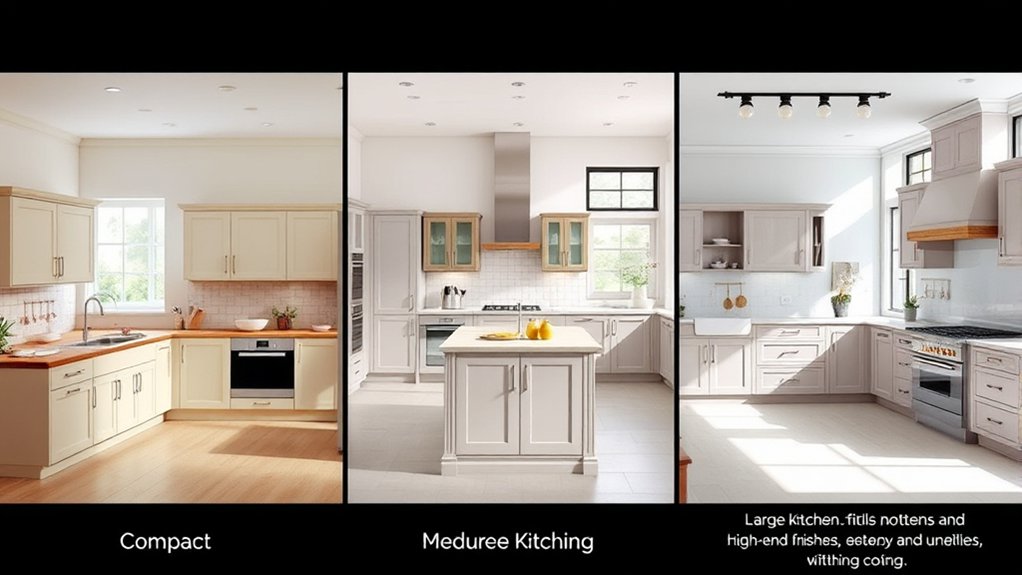
The size of your kitchen has a big impact on the final fitting bill. A small galley kitchen will usually cost much less to fit than a spacious open-plan kitchen, because it needs fewer units, less worktop space, and less labour.
Small Kitchen Fitting Costs
Wondering what you’ll pay to fit a small kitchen? Expect to spend between £1,500 and £3,000, depending on the layout and materials you choose. Small kitchens often cost less overall, but careful planning still matters to avoid overspending on unnecessary extras.
Here’s what typically affects your final bill:
- Kitchen decor – Simple finishes keep costs down, while premium worktops or splashbacks raise your budget quickly.
- Storage solutions – Built-in cupboards and clever shelving maximise space but can add to labour and material costs.
- Layout complexity – Straight-line kitchens are cheaper to fit than L-shaped or galley designs.
Choosing durable materials and efficient storage helps you get the most value from a compact kitchen space.
Medium Kitchen Fitting Costs
How much should you budget for a medium-sized kitchen? For a space between 100 and 150 square feet, you’ll typically spend between £4,000 and £8,000 on fitting, depending on materials and labour rates in your area. This covers more cabinetry, worktops, and often a mix of fitted units with freestanding pieces that complement your kitchen decor.
You’ll likely need additional electrical points for appliances and may face higher plumbing costs if you’re relocating sinks or adding an island. Budget extra for appliance maintenance considerations too, as fitters should ensure proper installation and ventilation for ovens, hobs, and extractors.
Expect the fitting process to take one to two weeks, with costs rising if you choose bespoke joinery or premium finishes over standard options.
Large Kitchen Fitting Costs
If your kitchen spans over 150 square feet, you’ll typically pay between £8,000 and £15,000 or more for fitting, depending on layout complexity and material choices. Large kitchens often involve multiple work zones, custom cabinetry, and premium kitchen organization features like pull-out pantries and corner storage solutions, all of which add labour time and cost.
Key factors that drive expenses in large kitchens include:
- Appliance installation – Fitting multiple ovens, warming drawers, or an additional sink requires specialist electrical and plumbing work.
- Island units – Adding a kitchen island increases both material and labour costs markedly.
- Extended worktops – Larger surface areas mean higher costs for stone, quartz, or wood finishes.
Planning ahead helps you manage these expenses effectively.
Budget vs Mid-Range vs Luxury Kitchen Costs
Because your budget shapes nearly every decision you’ll make, it pays to know what separates a basic kitchen from a luxury one before you start planning.
Budget kitchens typically cost £3,000-£8,000 and focus on functional kitchen design with laminate worktops, standard cabinets, and entry-level appliance selection. You’ll get a working space without many customisation options.
Mid-range kitchens run £8,000-£15,000, offering better materials like quartz worktops, soft-close cabinetry, and upgraded appliances including integrated fridges and multi-function ovens. This tier balances quality and cost, giving you more design flexibility.
Luxury kitchens start at £15,000 and can exceed £30,000. You’re paying for bespoke cabinetry, premium stone surfaces, and high-end appliance selection from brands like Miele or Sub-Zero. Fitting costs rise too, since intricate designs demand skilled installation.
Your choice ultimately depends on how long you’ll stay in your home and how much daily use your kitchen gets.
How Much Do Units, Worktops, and Appliances Cost?
Your kitchen budget usually comes down to three main things: units, worktops, and appliances. Unit prices can vary a lot depending on the materials and construction, from affordable flat-pack options to bespoke joinery. Worktops and appliances can also make a big difference to the total, so it’s worth understanding what affects the price of each before you set your budget.
Kitchen Unit Price Ranges
Since kitchen units come in such varied materials and finishes, prices can swing wildly depending on what you choose. Your kitchen design vision and renovation planning budget will largely determine which tier you fall into. Here’s a quick breakdown:
- Budget range (£1,500–£3,000): Flat-pack or laminate units, basic hinges, and simple handles. Ideal for rental properties or tight budgets.
- Mid-range (£3,000–£7,000): Solid wood doors, soft-close mechanisms, and better-quality carcasses. Popular with homeowners wanting durability without overspending.
- High-end (£7,000+): Bespoke joinery, premium finishes like handleless designs, and custom storage solutions tailored to your space.
Your choice should reflect both your kitchen’s function and your long-term renovation planning goals, balancing style with practicality.
Worktop Material Costs
Worktops can make or break your kitchen’s overall look, and the material you pick will have a big impact on your final bill. Laminate offers budget-friendly style but falls short on worktop durability.
If you want long-lasting performance, granite and quartz handle heat, scratches, and daily wear far better, justifying their higher price tags.
Material customization also plays a role. Natural stone offers unique patterns, while engineered quartz lets you choose consistent colours and finishes to suit your design.
| Material | Price per Metre | Durability |
|---|---|---|
| Laminate | £50–£150 | Low |
| Granite | £200–£400 | High |
| Quartz | £250–£450 | Very High |
Choose wisely based on your budget, lifestyle, and how much wear your worktop will realistically face daily.
Appliance Pricing Breakdown
Once you’ve settled on units and worktops, appliances round out your kitchen budget and deserve just as much attention. Built-in ovens, hobs, and extractor fans typically cost £400-£1,500 each, while integrated fridges and dishwashers add another £300-£900.
Brand comparisons matter here. Premium names like Bosch or Siemens cost more upfront but often last longer and run more efficiently.
Before you buy, consider:
- Energy ratings – A-rated appliances cost more initially but save money on bills over time.
- Warranty length – Longer warranties reduce future repair costs.
- Appliance maintenance – Factor in servicing and parts availability when choosing brands.
Balancing upfront cost against durability and running expenses helps you avoid overspending while still getting reliable, efficient appliances that suit your kitchen’s needs.
Kitchen Fitter Labour Costs Explained
When you hire a kitchen fitter, you’re typically paying between £150 and £250 per day, though rates vary depending on your location and the fitter’s experience. For a standard kitchen fit, expect to pay anywhere from £1,500 to £3,500 in total labour costs, depending on the complexity of your kitchen layout and how many days the job takes.
Fitters in London and the South East often charge more than those in northern regions or smaller towns. Complex layouts involving structural changes, moving pipework, or rewiring will push costs higher, as will appliance installation for integrated units like dishwashers, ovens, and fridges.
Most fitters quote a fixed project price rather than a daily rate once they’ve assessed your kitchen. This gives you a clearer picture of total costs upfront. Always get at least three quotes, and ask what’s included. Some fitters charge extra for appliance installation or electrical work, while others bundle it into their overall price.
Extra Costs for Plumbing, Electrics, and Flooring
Beyond the fitter’s labour charge, you may need to budget for extra work to bring your kitchen up to spec. For example, moving pipework or upgrading the wiring to support new appliances can add several hundred pounds to the bill. Flooring is another cost to consider, as it’s usually not included in a standard fitting quote.
Plumbing Relocation Costs
Because moving your sink, dishwasher, or washing machine to a new spot means relocating pipework, you’ll face extra costs that a straightforward refit won’t involve. These charges depend on distance from existing supply lines, wall or floor type, and whether you need new drainage routes cut in.
Your kitchen design dictates how much relocation you’ll need, especially if appliance integration means shifting plumbed units away from their original positions. Expect costs to rise with complexity, so plan layouts carefully before committing.
Typical extra costs include:
- Short-distance pipe moves – £150–£300 for minor adjustments
- Full relocation – £300–£800 when moving sinks or appliances across the room
- New drainage installation – £400–£1,000 for complex rerouting
Get quotes early to avoid budget surprises.
Electrical Wiring Upgrades
Since modern kitchens demand more sockets, dedicated circuits, and better lighting than older setups provide, you’ll likely need an electrical upgrade alongside your refit. You’ll want extra sockets for appliances like dishwashers, ovens, and extractor fans, plus dedicated circuits to prevent overload. Expect to pay £150-£300 per socket or circuit added, depending on wall access and cable runs.
Lighting design adds another layer of cost. Under-cabinet lighting, spotlights, and pendant fixtures typically run £200-£600, depending on the number of points and switch configurations you choose.
Investing in proper wiring also supports long-term appliance maintenance, reducing the risk of tripped circuits or electrical faults. Budget for a qualified electrician’s certification too, usually £100-£200, since all kitchen wiring work must meet UK safety standards.
Flooring Installation Expenses
Once you’ve sorted your wiring, flooring costs deserve equal attention, as the material you choose dramatically affects your budget. Your flooring choice should complement your kitchen decor while standing up to spills, heat, and daily foot traffic.
Here’s what typically drives your costs:
- Vinyl or laminate: You’ll pay £20-£40 per square metre, including fitting, making it a budget-friendly choice that still looks great.
- Tiles: Costs range from £30-£70 per square metre, plus you’ll need proper subfloor preparation for a lasting finish.
- Natural wood or stone: Expect £60-£120 per square metre, reflecting premium materials and skilled installation.
Don’t forget appliance maintenance access points. You’ll want flooring that allows easy removal if you need to service units underneath without causing damage.
Should You Hire a Professional or Fit a Kitchen Yourself?
Although fitting a kitchen yourself can save you a decent chunk of cash, it’s worth weighing that saving against the risk of costly mistakes. Plumbing, electrics, and cabinet alignment all demand precision—get them wrong, and you’ll pay more to fix them than you’d have paid a professional in the first place.
If you’re confident with tools and have experience in home improvement, DIY can work well for simpler tasks like painting walls, fitting handles, or styling kitchen decor. However, structural work, gas connections, and electrical wiring should always go to a certified tradesperson.
When it comes to budget planning, factor in your skill level honestly. Hiring a professional costs more upfront but guarantees safety compliance, a warranty, and a polished finish. DIY suits small, low-risk jobs, while larger renovations benefit from expert hands. Balancing your budget against your abilities will help you decide which route makes the most financial and practical sense.
Even with careful planning, kitchen fitting costs can spiral once work gets underway. Hidden costs often lurk behind walls, floors, and old pipework, and they can hit your wallet hard if you’re not prepared.
Hidden costs don’t knock before entering—they emerge once walls open, revealing the surprises your budget never saw coming.
- Structural surprises: Removing a wall or cabinet can reveal damp, rot, or weak flooring that needs fixing before fitters continue.
- Electrical and plumbing updates: Older homes rarely meet current safety standards, so you might need rewiring or new pipework to pass inspection.
- Disposal and waste fees: Skip hire, rubbish removal, and recycling old units all add costs that many homeowners forget to budget for.
To avoid these budget pitfalls, set aside 10-15% of your total budget as a contingency fund. Ask your fitter to inspect the space beforehand, and get everything in writing before work begins. A little foresight saves you from nasty surprises later.
How to Get Accurate Kitchen Fitting Quotes
Because quotes vary so wildly between fitters, you need a clear system for comparing them fairly. Start by giving every tradesperson the same kitchen design and spec sheet, right down to appliance models and worktop materials. Vague requests invite vague numbers you can’t compare.
Ask for itemised quotes that break down labour, materials, and any subcontracted work like electrics or plumbing. This makes spotting discrepancies much easier than with one lump sum.
Get at least three quotes, and insist on an in-person survey rather than a phone estimate. Fitters who quote without seeing your space often revise prices upward once work begins.
Build your renovation planning around fixed-price contracts wherever possible, with clear terms on what counts as extra work. Ask each fitter directly what’s excluded from their quote. This single question often reveals hidden costs before they become disputes.
Frequently Asked Questions
How Long Does It Take to Fit a Complete Kitchen?
You’ll typically wait one to three weeks for a complete kitchen fit, depending on its size and complexity. Your budget considerations play a big role here—rushing installation often costs more. Material selection also affects timing; some finishes need extra curing or delivery time.
If you’re after a quick turnaround, you’ll want to choose readily available materials and plan carefully with your fitter before work begins, avoiding costly delays.
Do I Need Planning Permission to Fit a New Kitchen?
Think of your kitchen as a quiet stage where you’re simply swapping actors, not rebuilding the theatre. No, you don’t need planning permission for a standard refit. You’re free to install new kitchen appliances, reconfigure units, and update your design without council approval, as long as you’re not altering structural walls or extending your home’s footprint.
Still, book a design consultation early. It’ll catch any surprises, like load-bearing walls, before they become costly plot twists.
Will I Need to Move Out During Kitchen Fitting Work?
You usually won’t need to move out completely, but you’ll want to plan your moving logistics carefully. Most kitchen fittings take one to three weeks, and you’ll face disruptions like no running water or cooking facilities.
Consider setting up a temporary kitchen elsewhere in your home, or if that’s not possible, arrange temporary accommodations with family or friends. It really depends on the scope of your renovation and how much mess you can handle!
What Warranty Should I Expect From a Kitchen Fitter?
A solid warranty is the safety net beneath your kitchen’s tightrope walk. You shouldn’t need it, but you’ll be glad it’s there. You should expect at least one to two years’ warranty coverage on workmanship, separate from manufacturer guarantees on appliances and materials.
Always check fitter reputation before signing anything. Read reviews, ask for references, and confirm coverage in writing. A trustworthy fitter won’t hesitate to back their work.
How Much Does Removing an Old Kitchen Typically Cost?
You’ll typically pay between £300 and £600 to remove an old kitchen, depending on its size and how complicated the disconnection process is. If you’ve got appliances that need disconnecting safely, factor in extra time and cost for appliance installation prep too.
It’s smart to include removal costs in your budget planning from the start, so you’re not caught off guard once the fitter starts stripping everything out.
Conclusion
Funnily enough, the week you finally commit to fitting your kitchen is probably the same week your old tap decides to give up entirely, proof that timing rarely works in your favour. That’s why you can’t just budget for units and worktops; you’ve got to plan for plumbing, electrics, and the odd surprise lurking behind your walls. Get multiple quotes, ask the right questions, and you’ll avoid nasty cost spikes. Your dream kitchen’s closer than you think, and with careful planning, you can better manage how much it costs to fit a kitchen.