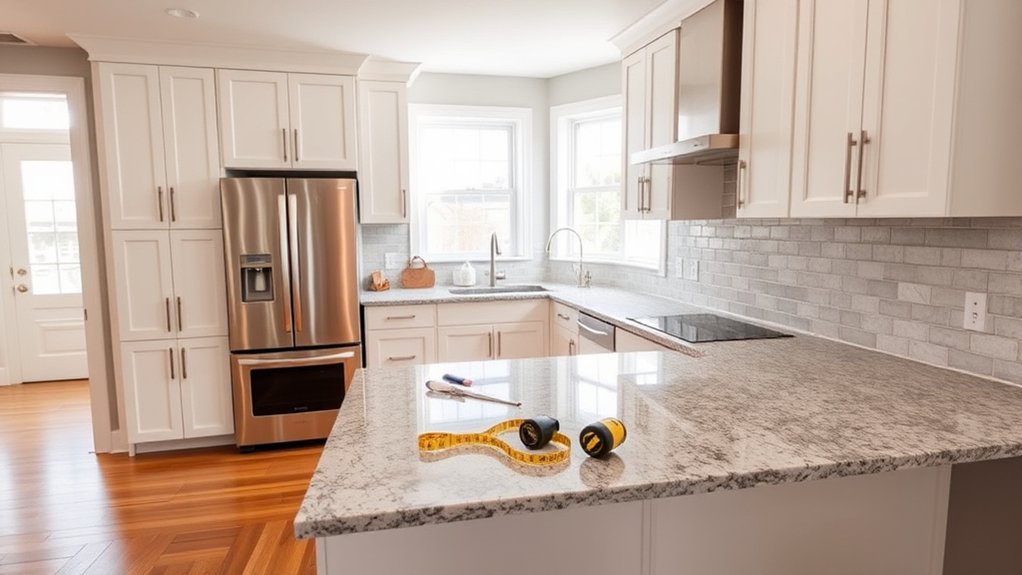
How Much Does It Cost to Install a Kitchen?
Figuring out how much it costs to install a kitchen can feel overwhelming, especially when you’re trying to balance your wish list with your budget. You’re not alone—many people struggle to know where to save and where to spend.
You’ll typically spend between $5,000 and $25,000 to install a kitchen, depending on your layout complexity, materials, and labor. Keeping appliances in the same spot helps save on plumbing and electrical costs.
Choosing stock cabinets and laminate countertops can reduce expenses, while custom options increase them. Labor, appliance quality, and kitchen size also impact your budget.
If you want to get the most value for your money, there are key factors you’ll want to take into account next.
Key Takeaways
- Kitchen installation typically costs between $5,000 and $25,000 depending on layout complexity and size.
- Cabinets range from $60 to $1,200+ per linear foot, while countertops cost $10 to $150 per square foot based on materials.
- Labor expenses vary from $2,000 to $5,000, with additional costs for plumbing ($500–$2,500) and electrical work ($800–$3,000).
- Relocating appliances and extensive utility work significantly increase installation costs.
- Cost-saving methods include using stock cabinets, retaining existing plumbing/electrical setups, and DIYing simple tasks.
How Much Does Kitchen Installation Cost on Average?

Although the cost of kitchen installation varies widely, you can expect to spend between $5,000 and $25,000 on average. Your kitchen layout plays a vital role in this cost range because it determines the complexity of the installation. A straightforward, open layout with minimal changes will cost less, while a custom or intricate layout can push the price higher.
Appliance placement also affects your expenses. If you’re relocating major appliances like the stove, refrigerator, or dishwasher, expect additional labor and possibly plumbing or electrical work, which raises costs. On the other hand, keeping appliances in their current spots helps keep installation costs down.
When planning your kitchen, focus on a functional layout and efficient appliance placement. This not only optimizes your space but also helps control installation expenses. Remember, a well-thought-out kitchen design can save you money and hassle during the installation process.
Key Factors That Affect Kitchen Installation Cost

The materials you choose can quickly raise or lower your kitchen installation cost, so look for quality that fits your budget. Labor matters, too: experienced professionals may charge more, but their expertise can help ensure the job is done right. By understanding these factors, you can make more informed choices throughout your project.
Material Quality Choices
When you choose materials for your kitchen, their quality directly impacts both the look and the overall cost of installation. Opting for eco friendly materials might cost more initially, but they offer durability and sustainability that pay off over time.
On the other hand, selecting vintage styles can add character and charm, but sourcing authentic pieces often raises expenses. You’ll find that high-end materials like solid wood or natural stone drive up your budget, while laminates and engineered products are more affordable.
Balancing aesthetics and price means deciding which materials best fit your lifestyle and vision. Ultimately, your material choices shape your kitchen’s style and budget, so weigh the benefits carefully before committing.
Labor and Expertise
Choosing the right materials sets the foundation for your kitchen’s look and feel, but the skill and experience of the professionals installing them play a huge role in the final cost.
When you hire experts, you’re paying not just for labor but for their knowledge in kitchen design and appliance selection, guaranteeing everything fits perfectly and functions smoothly. Here’s how labor and expertise affect costs:
- Licensed contractors charge more but guarantee quality and adherence to codes.
- Experienced installers reduce mistakes that could lead to costly repairs.
- Specialized skills, like custom cabinetry or complex appliance hookups, increase labor rates.
- Project complexity, driven by your kitchen design choices, directly impacts labor time and cost.
Investing in skilled labor ensures your kitchen looks great and works well.
How Much Do Kitchen Cabinets Usually Cost?

Kitchen cabinet costs can vary widely, depending on the materials and options you choose. Stock cabinets are usually more affordable, while custom cabinets offer more personalization at a higher price. Knowing the difference can help you find the right balance of style, function, and budget for your kitchen.
Cabinet Material Price Range
Kitchen cabinets typically make up a significant portion of your remodeling budget, and their cost varies widely depending on the material you pick. Choosing the right cabinet material affects both price and durability. Here’s a quick look at common cabinet material price ranges:
- Laminate: $60-$200 per linear foot – Budget-friendly and available in many finishes.
- Thermofoil: $100-$300 per linear foot – Durable with a smooth finish, but less heat-resistant.
- Solid Wood: $150-$650 per linear foot – Classic, strong, and offers a high-end look.
- Plywood with Veneer: $120-$500 per linear foot – Combines durability with an attractive wood surface.
Knowing these price ranges helps you balance style, quality, and cost effectively.
Custom vs. Stock Cabinets
Although cabinet material plays a big role in cost, whether you go with custom or stock cabinets substantially impacts your budget too. Custom cabinets offer tailored cabinet styles and maximize storage solutions, fitting your kitchen perfectly but coming at a higher price. Stock cabinets are ready-made, more affordable, and quicker to install but offer limited styles and storage options.
| Cabinet Type | Cost Range | Features |
|---|---|---|
| Custom | $500 – $1,200+ per linear foot | Personalized styles, optimized storage |
| Semi-Custom | $150 – $650 per linear foot | More style options, moderate customization |
| Stock | $60 – $200 per linear foot | Standard styles, basic storage solutions |
Choosing depends on your style preferences, budget, and storage needs.
How Much Do Kitchen Countertops Usually Cost?
Since countertops take up a significant portion of your kitchen’s surface area, they can greatly impact your overall renovation budget. When choosing, keep countertop durability and installation scheduling in mind to balance cost and function. Here’s a quick cost overview:
- Laminate: $10–$40 per square foot – Affordable but less durable, easy to install.
- Granite: $40–$100 per square foot – Durable and heat-resistant, requires professional scheduling for installation.
- Quartz: $50–$120 per square foot – Highly durable and low-maintenance, installation may take longer due to customization.
- Marble: $60–$150 per square foot – Luxurious but less resistant to scratches and stains, installation scheduling might be more complex.
Each material’s price varies based on thickness, edge style, and location. Consider how durable you want your countertops to be and plan installation timing accordingly to avoid delays. This helps you stay on budget while upgrading your kitchen’s look and longevity.
How Labor, Plumbing, and Electrical Affect Kitchen Costs
When you factor in labor, plumbing, and electrical work, your kitchen renovation costs can rise quickly. These elements are essential, especially when your kitchen layout changes or you add new appliances.
Skilled labor ensures everything fits perfectly and functions safely, but it adds to your budget. Plumbing adjustments for sinks, dishwashers, or refrigerators require professional work to avoid leaks or damage. Electrical upgrades accommodate appliance integration and lighting needs, which are critical for a modern kitchen.
| Service Type | Average Cost Range | Impact on Kitchen Layout & Appliances |
|---|---|---|
| Labor | $2,000 – $5,000 | Skilled labor needed for installation accuracy |
| Plumbing | $500 – $2,500 | Moves or adds water lines for appliances |
| Electrical | $800 – $3,000 | Supports appliance integration & wiring |
Understanding these costs helps you plan your renovation more effectively and avoid surprises.
Kitchen Flooring and Lighting Costs: What to Budget
Because flooring and lighting set the tone and functionality of your kitchen, budgeting for them carefully is essential. Choosing the right materials and fixtures not only improves your space but also impacts your overall costs. Here’s what to contemplate:
Careful budgeting for flooring and lighting shapes your kitchen’s style and functionality while managing costs effectively.
- Flooring Material: Opt for eco friendly materials like bamboo or cork for durability and sustainability. Prices range from $3 to $10 per square foot.
- Installation Costs: Professional flooring installation typically adds $4 to $8 per square foot depending on complexity.
- Lighting Fixtures: Smart lighting systems offer energy efficiency and convenience but can cost between $100 and $500 per fixture.
- Electrical Work: Upgrading wiring to support smart lighting might cost $300 to $700, depending on your kitchen’s size.
What You Can Expect to Spend on Kitchen Appliances
Although kitchen appliances are essential for daily cooking and convenience, their costs can vary widely based on brand, features, and energy efficiency. When planning your kitchen installation budget, consider that top appliance brands often come with higher price tags but offer better durability and performance.
You can expect to spend anywhere from $3,000 to $10,000 or more on major appliances like refrigerators, ovens, dishwashers, and microwaves.
Energy efficiency plays a significant role in both upfront costs and long-term savings. Appliances with high energy efficiency ratings might cost more initially but reduce your utility bills over time. Look for Energy Star-certified products to balance cost and conservation.
If you want to keep expenses down, mid-range brands provide solid performance and reasonable prices. Ultimately, your choice of appliance brands and energy-efficient models will impact your overall kitchen installation budget, so weigh your priorities carefully.
How Kitchen Size Influences Installation Costs
Choosing your kitchen appliances sets a baseline for costs, but the size of your kitchen plays a major role in determining the overall installation expenses. Larger kitchens naturally require more materials, labor, and time, increasing your budget. Open concept layouts, a popular design trend, can also affect costs since they often demand seamless integration with adjoining spaces.
Kitchen size and open layouts significantly impact installation costs through increased materials and integration needs.
Here’s how kitchen size influences installation costs:
- Material Quantity: Bigger kitchens need more cabinetry, countertops, and flooring, pushing up costs.
- Labor Hours: Installing in a larger area takes longer, which means higher labor fees.
- Complexity: Open concept designs require careful planning to maintain flow and aesthetics, sometimes adding to expenses.
- Utility Work: Expanding your kitchen’s footprint may involve additional plumbing, electrical, or HVAC work.
Understanding these factors helps you anticipate installation costs and make informed decisions aligned with current design trends.
Proven Ways to Save Money on Kitchen Installation
If you want to keep your kitchen installation costs manageable, you can take several practical steps to save money without sacrificing quality. Start by planning your kitchen decor carefully; choose materials and finishes that look great but won’t break the bank.
Opt for standard sizes in cabinets and appliances to avoid custom costs. Also, verify whether you need renovation permits before starting work—obtaining these early prevents costly fines or project delays.
Consider reusing existing plumbing or electrical setups, as relocating them can *considerably* increase expenses. Shopping during sales or using discount outlets for fixtures and appliances can cut costs further.
Finally, handle simple tasks like demolition or painting yourself, reducing labor fees. By staying organized, getting necessary permits, and making smart design choices, you’ll keep your kitchen installation affordable while still achieving a stylish, functional space.
When Should You Hire a Professional vs. DIY Kitchen Installation?
When deciding whether to hire a professional or tackle your kitchen installation yourself, consider the complexity of the project and your skill level. If your kitchen layout is straightforward and you’re comfortable with basic tools, DIY might save you money. However, if the design is intricate or involves custom cabinetry, professionals can guarantee precision. Also, if you choose high-end appliance brands, experts can handle proper installation and warranty requirements.
Here’s when you should hire a pro vs. DIY:
Consider complexity, skills, and appliance type to decide between hiring a pro or going DIY.
- Choose DIY if the kitchen layout is simple, with minimal plumbing or electrical work.
- Hire a professional for complex layouts requiring structural changes or precise measurements.
- Go pro when installing advanced appliances from premium brands to avoid damage or voided warranties.
- DIY if you have experience with similar projects and time to dedicate; otherwise, leave it to the pros.
Weigh these factors carefully to avoid costly mistakes.
Frequently Asked Questions
How Long Does a Typical Kitchen Installation Take?
A typical kitchen installation usually takes about one to three weeks, depending on the complexity and size. When planning your timeline, consider budget considerations since rushing can increase costs.
Selecting the right contractor helps keep things on schedule and prevents delays. Clear communication with your contractor ensures they understand your priorities, helping you manage expectations and finish your kitchen installation smoothly and within your planned budget.
What Permits Are Needed for Kitchen Remodeling?
You’ll need to check which permits are required before starting your kitchen remodel. Typically, permits cover electrical, plumbing, and structural changes.
Your local building department enforces building codes, so getting the right permits guarantees your project meets safety standards. Failing to obtain them can lead to fines or having to redo work.
Contact your city or county building office to find out exactly what permits you need for your specific remodel.
Can I Keep My Kitchen Functional During Installation?
Yes, you can keep your kitchen functional during installation by planning carefully. Set up a temporary cooking area with essential appliances to maintain your daily routine. This approach lets you enjoy appliance upgrades without sacrificing convenience.
While the kitchen aesthetics are being transformed, having a designated space for meal prep will reduce stress and keep things running smoothly. Communication with your installer guarantees minimal downtime and a seamless shift to your new kitchen.
What Are the Best Materials for a Kid-Friendly Kitchen?
Creating a kid-friendly kitchen is like building a safe fortress for your little adventurers. You should choose child proof cabinets to keep curious hands out and opt for non toxic finishes to guarantee their health. Materials like durable laminate, rounded-edge countertops, and soft-close drawers also help prevent accidents. By focusing on safety and durability, you’ll make your kitchen both fun and secure for your kids to investigate.
How Do I Dispose of Old Kitchen Materials Responsibly?
You can dispose of old kitchen materials responsibly by choosing eco friendly disposal methods. Start by sorting items into recyclable and non-recyclable categories. Check local recycling options for materials like metal, wood, and certain plastics.
Donate usable items to charity or repurpose them to reduce waste. Avoid dumping materials in landfills whenever possible, and consider hiring a waste removal service that specializes in eco friendly disposal to make the process easier and greener for you.
Conclusion
Installing a new kitchen can feel like a big bite to chew, but knowing the costs upfront helps you avoid surprises. From cabinets and countertops to labor and appliances, every detail impacts your budget.
By understanding these factors and deciding when to call in a pro or tackle it yourself, you’ll keep your project on track and your wallet happy. A little planning goes a long way toward making your dream kitchen a reality while keeping the cost to install a kitchen within budget.