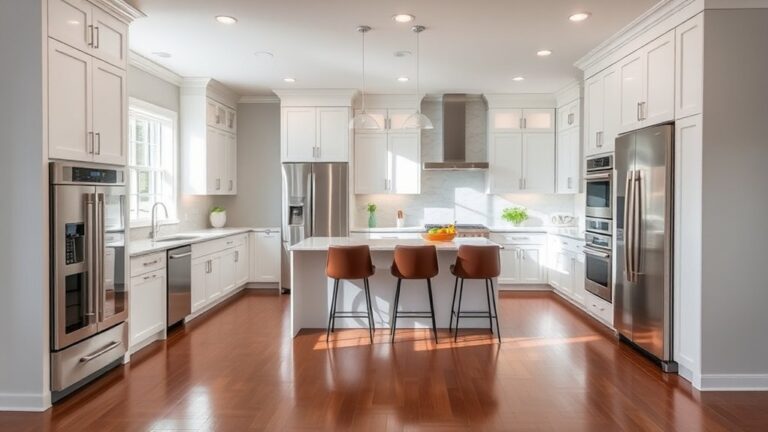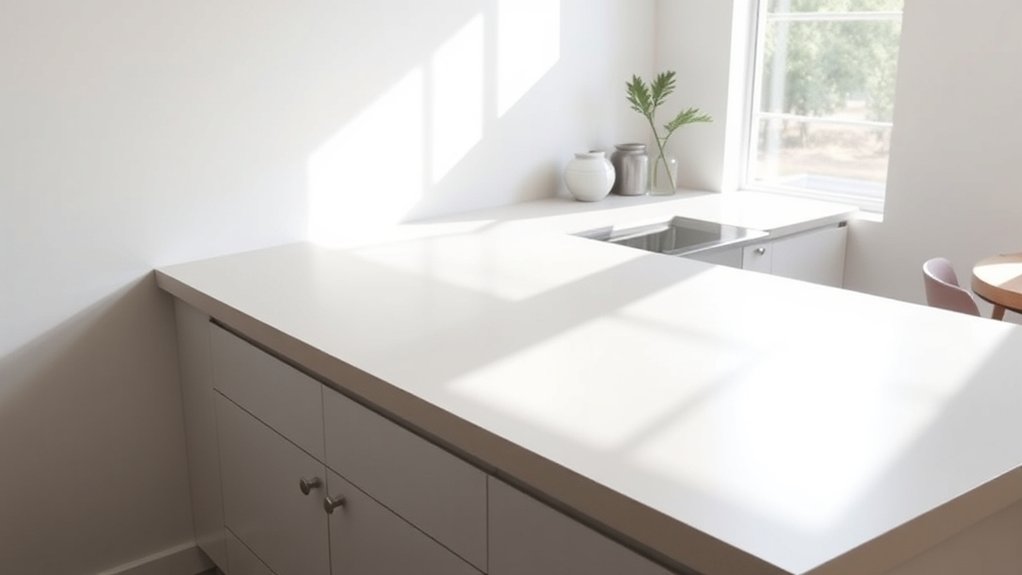
How Deep Are Kitchen Countertops?
Choosing the right kitchen countertop depth can be tricky: you want enough room to prep meals without making your kitchen feel cramped. You’re not alone; many people struggle to balance workspace, style, and appliance fit.
Kitchen countertops typically measure about 24 inches deep, giving you enough workspace while fitting standard appliances like dishwashers and ovens. Depending on your style or needs, you might choose depths from 24 to 30 inches.
Deeper countertops provide more prep space, while shallower ones can create a sleek look. Material thickness also plays a role in both strength and style.
If you want a countertop that perfectly fits your kitchen’s flow and appliances, there are smart ways to customize depth and design details to examine.
Key Takeaways
- Standard kitchen countertops are typically 24 inches deep, balancing workspace with appliance compatibility.
- Traditional kitchens often use 25-inch-deep countertops, while modern kitchens favor a sleek 24-inch depth.
- Deeper countertops, around 27 to 30 inches, offer more prep space but may affect appliance fit and ergonomics.
- Countertop material thickness varies from 0.8 inches for quartz to 2.5 inches for butcher block, influencing overall depth and durability.
- Custom countertop depths are chosen to optimize appliance fit, workspace needs, and kitchen style preferences.
What Is the Standard Depth of Kitchen Countertops?
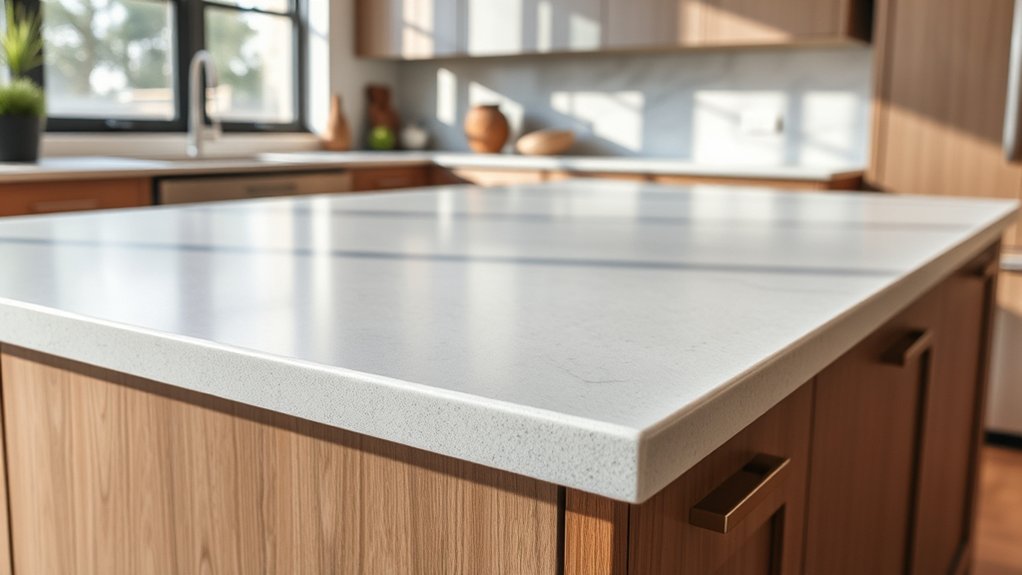
When you’re planning your kitchen layout, knowing the standard depth of countertops helps make certain everything fits perfectly. Typically, kitchen countertops measure 24 inches deep from the wall to the front edge. This depth strikes a balance, giving you enough workspace without overwhelming your kitchen. It also guarantees cabinets and appliances align properly.
You’ll find this depth supports effective countertop maintenance since it’s easy to reach all areas for cleaning and upkeep. Plus, standard depth countertops pair well with kitchen lighting, whether it’s under-cabinet LEDs or overhead fixtures, making your workspace well-lit and functional.
If your countertop is too deep or too shallow, it might disrupt your kitchen’s workflow and lighting efficiency. Sticking to the standard depth helps maintain a seamless look and practical use, ensuring both comfort and cleanliness. This simple detail can make a big difference in how your kitchen feels every day.
Why Countertop Depth Is Crucial for Kitchen Function and Style
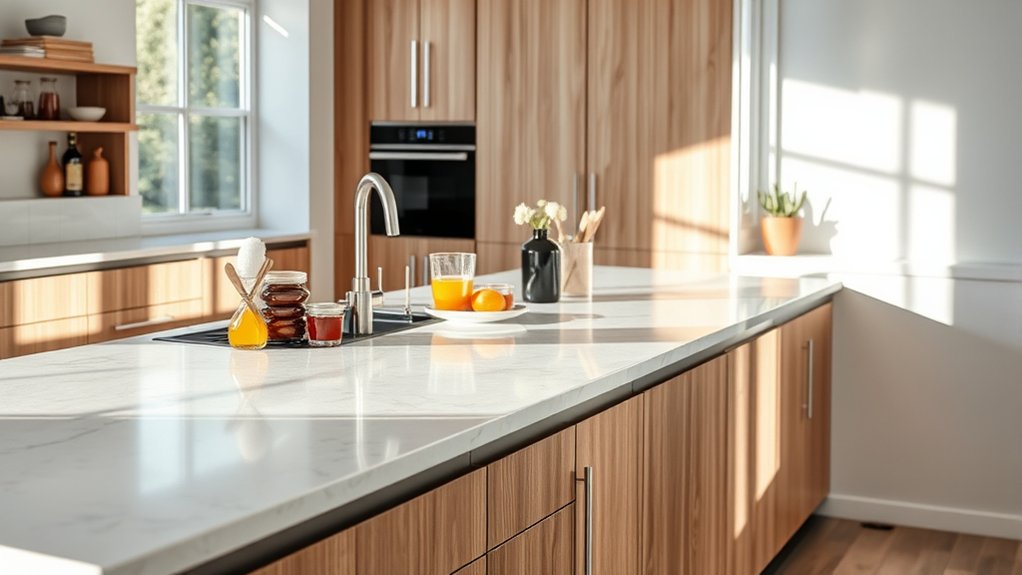
Choose a countertop depth that gives you plenty of workspace without making your kitchen feel crowded. The right depth can also shape the room’s overall look and make everyday tasks more comfortable. By considering ergonomics and accessibility, you can create a kitchen that’s both functional and stylish.
Optimal Workspace Dimensions
Although countertop depth might seem like a minor detail, it plays an essential role in shaping your kitchen’s functionality and style. Choosing the ideal workspace dimensions ensures you have enough room to prep, cook, and clean without feeling cramped. A deeper countertop offers more space for appliances and tools, making your workflow smoother and more efficient.
At the same time, you don’t want to overlook countertop aesthetics. The depth you pick should complement your kitchen’s proportions, creating a balanced and inviting look. And remember budget considerations: deeper countertops require more material, which can raise costs. By balancing your workspace needs with style and budget, you’ll create a kitchen that’s both practical and visually appealing, tailored perfectly to how you use your space.
Impact on Kitchen Design
Why does countertop depth matter so much in your kitchen’s design? It directly influences countertop aesthetics and material versatility, shaping your kitchen’s overall look and functionality. A deeper countertop offers more workspace and design options, while a shallower one can create a sleek, minimalist feel. Selecting the right depth ensures your kitchen feels balanced and stylish.
| Depth (inches) | Design Impact |
|---|---|
| 24 | Standard, versatile |
| 25-26 | Extra workspace |
| 30 | Custom, statement piece |
| 36 | Large prep areas |
| Varies | Tailored to style needs |
Ergonomics and Accessibility
Because countertop depth directly affects how easily you can reach and use your kitchen surfaces, it plays a key role in ergonomics and accessibility. If your countertops are too deep, you might struggle to access items at the back, causing unnecessary strain.
On the other hand, shallow countertops keep everything within arm’s reach, making meal prep more comfortable and efficient. When planning your kitchen, consider how depth works with your decorative accents and color schemes to create a cohesive, inviting space.
Proper depth also ensures that appliances fit seamlessly, avoiding awkward gaps or overcrowding. By balancing functionality with style, you’ll improve both the look and usability of your kitchen, making it a space where you enjoy spending time without discomfort or frustration.
When to Customize Your Kitchen Countertop Depth
If your kitchen layout feels cramped or your appliances don’t quite fit, customizing your countertop depth can make a big difference. You’ll want to contemplate adjusting depth when:
- Your standard countertops disrupt workflow or limit prep space.
- You need to accommodate oversized or non-standard appliances.
- You want to improve countertop aesthetics to better match your kitchen’s style.
- You require specific material compatibility with sinks or backsplashes that demand unique dimensions.
Customizing your countertop depth ensures a better fit for your kitchen’s unique design and functional needs. It also allows you to optimize ergonomics and accessibility, making cooking more comfortable.
Keep in mind, certain materials may have depth limitations or require special fabrication, so verify material compatibility before finalizing your choice. When you tailor the depth to your space, you get a seamless look and improved usability that standard sizes can’t always provide.
How to Measure Your Countertop Depth the Right Way
Customizing your countertop depth starts with accurate measurements to guarantee a perfect fit. First, use a tape measure to find the distance from the wall to the front edge of your current countertop or cabinet.
Measure in multiple spots, as walls or cabinets may not be perfectly straight. Record the smallest measurement to ensure your new countertop fits snugly.
Keep countertop aesthetics in mind—depth affects how your kitchen looks, so precise measuring helps maintain balance. Also, consider material selection; some materials require extra space for overhang or edging.
| Step | Measurement Tips |
|---|---|
| 1. Measure depth | From wall to front edge |
| 2. Check multiple spots | Account for uneven walls |
| 3. Note smallest size | Ensures proper fitting |
| 4. Consider material | Add space for overhangs |
How Countertop Depth Makes Your Workspace Work Better
Why does countertop depth matter so much for your kitchen workflow? Because it directly affects how efficiently you use your space. When you choose the right depth, you optimize your kitchen’s functionality and style. Here’s how:
- Maximize prep space – Deeper countertops give you more room to chop, mix, and assemble without feeling cramped.
- Streamline appliance placement – Proper depth lets you fit appliances comfortably, avoiding overcrowding.
- Enhance countertop aesthetics – The right depth balances visual appeal and practicality, complementing your kitchen design.
- Support material selection – Some materials perform better or look best at specific depths, helping you make smarter choices.
How Countertop Depth Impacts Kitchen Ergonomics
Though countertop depth might seem like a minor detail, it plays an essential role in your kitchen’s ergonomics. When you choose the right depth, you reduce unnecessary reaching and bending, which eases strain on your back and shoulders.
The ideal countertop depth works hand-in-hand with countertop height to create a comfortable workspace tailored to your body. If the depth is too large, you may find it hard to reach items at the back; too shallow, and your prep space shrinks.
Material selection also influences ergonomics. Some materials feel more comfortable to lean on or clean, affecting how you interact with the surface. For example, softer edges on certain materials can prevent discomfort during long meal prep sessions.
How Countertop Depth Affects Appliance Fit
When planning your kitchen, keep standard countertop depths in mind so your appliances fit comfortably. They need enough clearance to work properly without sticking out or feeling cramped. A little attention to these measurements now can help you avoid costly adjustments later.
Standard Countertop Depths
How deep should your kitchen countertop be to fit appliances perfectly? Standard countertop depths typically range around 24 inches, balancing appliance fit and workspace. Consider these key points:
- Most appliances like dishwashers and ovens are designed for 24-inch deep countertops.
- A 25- to 26-inch depth allows slight overhangs, enhancing countertop aesthetics.
- Deeper countertops, around 30 inches, provide extra workspace but may affect appliance alignment.
- Matching countertop depth with cabinet height ensures smooth color coordination and a cohesive look.
Choosing the right depth impacts not only how well your appliances fit but also the overall kitchen flow and style. Sticking to standard depths helps maintain functional harmony while boosting your kitchen’s curb appeal.
Appliance Clearance Requirements
Why does countertop depth matter when fitting appliances? If your countertop is too shallow, larger appliances won’t fit properly, impacting both functionality and kitchen storage. Conversely, deeper countertops may interfere with appliance doors or controls. You need to take into account countertop materials too, as some, like granite, are costly to modify after installation.
Here’s how countertop depth typically affects common appliances:
| Appliance Type | Recommended Countertop Depth (inches) |
|---|---|
| Standard Dishwasher | 24 |
| Built-in Oven | 24–25 |
| Microwave | 15–18 |
| Refrigerator | 30+ |
Choosing the right depth ensures your appliances fit seamlessly without compromising kitchen storage or countertop materials integrity.
Common Countertop Depths for Kitchen Styles
Although kitchen countertop depths can vary, most styles follow standard measurements that balance functionality and design. When choosing your countertop depth, you’ll want to take into account countertop aesthetics and material variations that complement your kitchen’s overall look.
Here are common countertop depths for popular kitchen styles:
- Traditional kitchens: Typically feature 25-inch deep countertops, offering a classic balance of workspace and comfort.
- Modern kitchens: Often use 24-inch depths for a sleek, streamlined appearance that emphasizes minimalism.
- Rustic or farmhouse styles: May go deeper, around 27 inches, to provide a more generous work surface and accommodate thicker materials.
- Custom or luxury kitchens: Sometimes exceed 30 inches, blending unique material variations with expansive designs.
Choosing Countertop Materials for Different Depths
When choosing a countertop material, consider how its thickness and durability suit your kitchen style and everyday needs. Some materials hold up better over time, especially at deeper dimensions. If standard options don’t fit your space, custom depths can help you get the look and functionality you want.
Popular Material Depths
Since countertop depth impacts both function and style, choosing the right material for your space is essential. Your choice not only affects kitchen aesthetics but also influences countertop installation ease and longevity. Here are some popular material depths you’ll encounter:
- Laminate – Usually 1.5 inches thick, fitting most standard depths and budgets.
- Granite – Commonly 1.25 inches thick, offering durability with flexible depth options.
- Quartz – Often 2 centimeters (about 0.8 inches) thick but customizable for deeper layouts.
- Butcher Block – Typically 1.5 to 2.5 inches, perfect if you want a warm, rustic look with functional depth.
Each material adapts differently to depth variations, so pick one that complements your kitchen aesthetics and suits your countertop installation needs.
Thickness and Durability
Choosing the right countertop thickness plays a crucial role in how durable and functional your kitchen surface will be. Thicker countertops generally offer greater strength and resist wear better, which is essential if you use your kitchen heavily.
When selecting materials, consider how manufacturing techniques influence thickness options. For example, engineered stone can be made thinner without sacrificing durability, while natural stone often requires more thickness for stability.
Beyond strength, thickness affects countertop aesthetics. Thicker edges can create a bold, substantial look, while thinner profiles offer a sleek, modern feel. You’ll want to balance durability with the style you envision.
Ultimately, understanding how thickness ties into both the material’s resilience and visual appeal helps you choose the best countertop for your kitchen’s depth and daily use.
Custom Depth Options
Although standard countertop depths work for most kitchens, you might want to explore custom depth options to better fit your space and needs. Choosing the right depth involves more than just measurements—it also impacts countertop aesthetics and functionality. When considering material customization, keep these factors in mind:
- Space constraints: Tailor depth to fit awkward or compact areas without overcrowding.
- Appliance fit: Ensure your countertop accommodates sinks, cooktops, and other built-ins perfectly.
- Ergonomics: Adjust depth for comfortable reach and work efficiency.
- Design preferences: Use custom depths to improve visual balance and style in your kitchen.
How to Pick the Right Countertop Depth for Your Cooking Needs
When planning your kitchen, you’ll want to take countertop depth into account carefully because it directly affects your cooking efficiency and comfort. Start by evaluating how much prep space you need. If you cook often or bake, deeper countertops give you room to spread out.
Carefully consider countertop depth to enhance cooking comfort and provide ample prep space for frequent chefs and bakers.
Think about your kitchen layout too. Narrower aisles might benefit from standard depths to keep movement smooth. Countertop aesthetics play a big role as well. Choosing a depth that complements your cabinets and appliances creates a balanced look.
Don’t forget material customization. Certain materials like quartz or granite can be tailored to specific depths, letting you match your style without compromising function. Measure your workspace and consider your daily tasks to find the perfect fit.
Ultimately, the right countertop depth improve both your kitchen’s usability and visual appeal, making meal prep enjoyable and efficient.
Frequently Asked Questions
How Much Does Countertop Depth Affect Kitchen Resale Value?
Countertop depth can slightly affect your kitchen resale value, especially if it improves kitchen ergonomics. Buyers appreciate countertops with enough depth to accommodate appliances and prep space comfortably.
Choosing quality countertop material also boosts appeal, as durable, stylish surfaces attract more interest. While depth alone won’t make or break the sale, optimizing it alongside material and layout shows you’ve considered functionality, which can increase your home’s market value and buyer satisfaction.
Can Countertop Depth Influence Kitchen Cleaning Routines?
Imagine you have a deeper countertop that extends beyond your cabinets. You’ll notice cleaning efficiency improves since you can easily wipe spills without reaching awkward spots. Plus, storage accessibility increases because deeper countertops allow for more organized items underneath, reducing clutter. This setup streamlines your kitchen cleaning routines, making it faster and less frustrating. So yes, countertop depth can definitely influence how efficiently you clean and access your kitchen storage.
What Tools Are Best for Installing Deeper Countertops?
You’ll want a few essential tools for installing deeper countertops, especially considering your countertop material. Start with a sturdy measuring tape and a level to guarantee precision.
A circular saw with a diamond blade works well for cutting stone or quartz, while a jigsaw suits laminate or wood. Clamps help hold pieces steady during installation.
Don’t forget to use proper installation techniques like securing support brackets to handle the extra weight safely.
Do Deeper Countertops Require Special Edge Treatments?
Just like a tailor adjusts a suit for a perfect fit, you’ll want to take into account special edge treatments for deeper countertops. The extra surface area means your edge design must be both durable and stylish, balancing form and function. Your material selection plays a key role here—some materials handle extended edges better than others. So, yes, deeper countertops often call for thoughtful edge design and carefully chosen materials to ensure lasting beauty and strength.
How Does Countertop Depth Impact Kitchen Lighting Choices?
Countertop depth directly affects your lighting ambiance because deeper countertops can create more shadows, requiring careful fixture placement. You’ll want to position lights so they evenly illuminate the entire surface, avoiding dark spots.
Under-cabinet lighting becomes critical with deeper counters to maintain brightness. Adjusting fixture height and angle helps balance task lighting and ambiance, ensuring your kitchen feels inviting and functional no matter the countertop size.
Conclusion
When it comes to kitchen countertops, depth isn’t just a number; it’s the heartbeat of your workspace. Choosing the right depth helps your kitchen flow smoothly, fit appliances perfectly, and match your cooking style.
Don’t settle for cookie-cutter measurements. Customize your countertop to work as hard as you do. After all, the right kitchen countertop depth can turn your kitchen from just a room into your favorite stage for culinary creativity.