How Much Does a Small Kitchen Remodel Cost?
Trying to figure out how much a small kitchen remodel will cost can feel overwhelming, especially when every choice affects your budget. You’re not alone—many people struggle to balance the upgrades they want with what they can afford.
You’ll likely spend between $12,000 and $25,000 on a small kitchen remodel, depending on your material choices, layout changes, and labor costs. Cabinets and countertops usually make up the biggest chunk, around 30–40% of your budget, while appliances and lighting add extra costs.
If you’re open to some DIY, you can save on labor, but be realistic about your skills. Exploring how these factors play out can help you plan smarter and avoid surprises.
Key Takeaways
- A small kitchen remodel typically costs between $12,000 and $25,000, depending on materials and labor.
- Cabinets and countertops usually represent 30-40% of the total remodel budget.
- Appliances account for 20-25%, with smart and high-end models increasing costs.
- Labor expenses vary based on design complexity, layout changes, and local rates.
- Unexpected issues like plumbing moves or hidden damage can raise overall remodel costs.
What Factors Drive the Cost of a Small Kitchen Remodel?

Although your kitchen is small, several key factors will influence the overall cost of your remodel. First, the materials you choose play a big role—opting for high-end finishes or custom cabinetry can raise expenses quickly.
You’ll also want to consider eco friendly upgrades like energy-efficient appliances or sustainable countertops, which might cost more upfront but save money long-term and reduce environmental impact.
Moreover, if your home has historic significance, historic preservation requirements can affect your budget. You may need to use period-appropriate fixtures or follow strict renovation guidelines, which can increase both labor and material costs.
Labor itself varies depending on the complexity of your design and local rates. Finally, layout changes, plumbing, and electrical work will add to the total cost.
Understanding these factors helps you prioritize what matters most, ensuring your small kitchen remodel fits your budget without compromising your vision.
How Much Does a Typical Small Kitchen Remodel Cost?

Before starting a small kitchen remodel, it helps to know what you might spend. Costs can vary, so breaking down expenses for cabinets, countertops, and labor can make budgeting easier. Materials and layout changes can also affect the final price.
Average Remodeling Expenses
A typical small kitchen remodel usually costs between $12,000 and $25,000, depending on the materials and scope of work you choose. You can save money by opting for eco friendly materials, which not only reduce environmental impact but often offer durability and style.
Incorporating vintage fixtures adds unique character and charm without a hefty price tag, especially if you source them from salvage yards or online markets. Labor costs, appliance upgrades, and layout changes will also influence your budget.
Cost Breakdown By Components
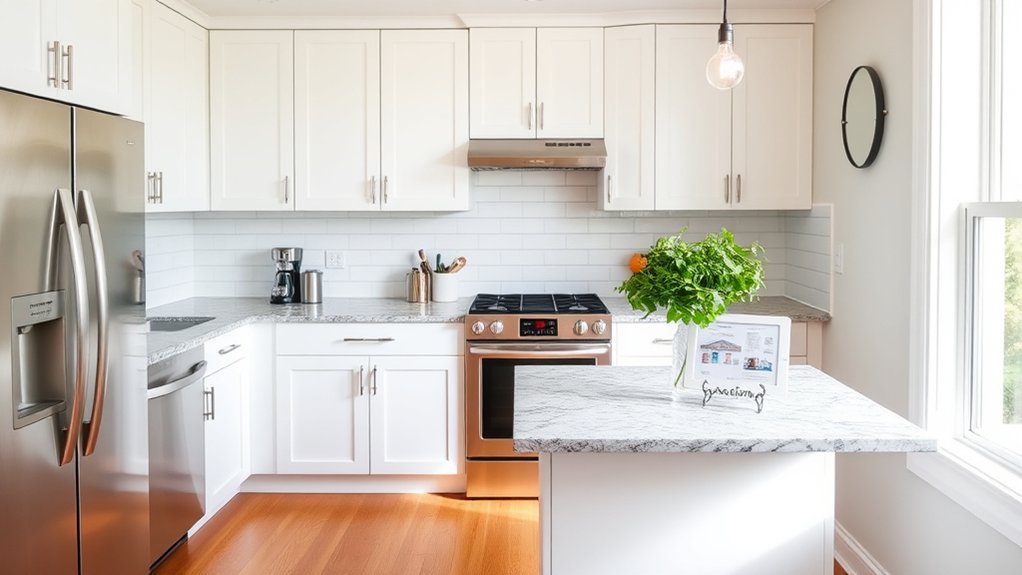
Understanding the overall cost is helpful, but breaking down expenses by each component gives you clearer control over your budget. Typically, cabinetry and countertops take up the largest share, often around 30-40% of your total cost.
You can save by choosing Eco Friendly materials like bamboo or recycled glass. Appliances usually account for 20-25%, and investing in Smart technology can boost efficiency and add value.
Flooring and lighting combined might represent 15-20%, where you can also opt for sustainable options and energy-efficient fixtures. Plumbing and labor make up the remaining costs, essential but flexible depending on your choices.
Factors Influencing Price
Because every kitchen remodel varies, several factors influence the final cost. You’ll find that choices like kitchen lighting and eco friendly materials can notably affect expenses. Upgrading to energy-efficient LED fixtures or sustainable cabinetry may cost more upfront but save money long-term. Labor complexity, layout changes, and appliance quality also play a role. Here’s a quick overview:
| Factor | Impact on Cost |
|---|---|
| Kitchen Lighting | LED vs. standard, fixtures |
| Eco Friendly Materials | Sustainable, recycled options |
| Labor | Simple updates vs. rewiring |
| Layout Changes | Moving plumbing or walls |
| Appliances | Basic vs. high-end models |
Breaking Down Materials vs. Labor Costs in Small Kitchen Remodels

When planning a small kitchen remodel, it helps to separate material costs from labor expenses. Cabinets, countertops, and fixtures can take up a large part of your budget. Labor costs, on the other hand, depend on how complex the work is and how much needs to be done. Understanding both can help you manage your budget more effectively.
Material Cost Breakdown
A significant portion of your small kitchen remodel budget will go toward materials, and knowing how these costs stack up against labor expenses can help you make smarter choices.
When selecting materials, consider options that align with eco friendly practices, such as bamboo flooring or recycled glass countertops, which may have higher upfront costs but save money long-term.
If your remodel involves a historical renovation, you might need specialized materials to match original designs, which can increase expenses.
Cabinets, countertops, flooring, and fixtures usually take up the largest share of material costs. Balancing quality and price is key—opt for durable materials that fit your style and budget.
Understanding this breakdown empowers you to prioritize where to spend wisely and where to save without compromising the remodel’s success.
Labor Expense Factors
Although materials often grab the spotlight in your small kitchen remodel budget, labor costs can quickly add up and sometimes surpass material expenses. Skilled labor involves electricians, plumbers, and carpenters, each charging based on expertise and local rates.
Design trends also influence labor time. Custom cabinetry or intricate tile work requires more hours, raising costs. Don’t forget permit requirements; securing permits can add fees and extend timelines, impacting labor expenses.
When you plan your remodel, factor in these variables to avoid surprises. Labor isn’t just about installing materials; it’s about the craftsmanship and compliance with local codes.
How Cabinet Choices Affect Your Remodel Budget
Cabinet choices play a major role in shaping your kitchen remodel budget. Opting for high-end materials or custom designs can quickly escalate costs. On the other hand, ready-to-assemble cabinets offer affordability but may lack the charm that vintage fixtures and statement lighting can bring to your space. Balancing style and expense is key to achieving the look you want without overspending.
Here’s a quick emotional snapshot of how your cabinet choices might feel against your budget:
| Cabinet Style | Budget Impact |
|---|---|
| Custom Wood | High cost, high warmth |
| Ready-to-Assemble | Low cost, less unique |
| Vintage Reclaimed | Moderate cost, nostalgic charm |
| Painted MDF | Affordable, versatile |
| Glass Front | Stylish, moderate cost |
Choosing wisely guarantees your kitchen feels inviting and reflects your personality without breaking the bank. Remember, cabinets set the tone before vintage fixtures or statement lighting even come into play.
How Countertop Materials Influence Overall Remodel Costs
Your choice of countertop material can considerably impact both the look and cost of your kitchen remodel. Materials like granite and quartz offer excellent countertop durability, making them a smart long-term investment despite their higher upfront price.
Choosing durable materials like granite and quartz boosts kitchen style and long-term value despite higher initial costs.
On the other hand, laminate or butcher block options may cost less initially but often require more frequent replacement or repairs. You’ll also want to weigh material maintenance—some surfaces demand regular sealing or special cleaners, which adds to ongoing costs.
For example, natural stone countertops need more upkeep compared to engineered quartz, which is low-maintenance and resistant to stains. Balancing durability and maintenance helps you avoid surprise expenses down the line.
Ultimately, selecting the right countertop material aligns your budget with your lifestyle, ensuring your small kitchen remodel remains both functional and beautiful without breaking the bank.
What Appliances Add to Your Small Kitchen Remodel Budget?
Several key appliances can substantially influence the budget of your small kitchen remodel. When planning, you’ll want to balance appliance upgrades with budget friendly fixtures to keep costs manageable. High-quality appliances improve functionality and style but can quickly add up.
Consider these common appliance additions:
- Refrigerator: Opt for energy-efficient models to save long-term costs without sacrificing performance.
- Range or Cooktop: Choose between gas or electric depending on your cooking preferences and installation constraints.
- Dishwasher: A compact, budget friendly fixture can fit small spaces and reduce water use.
- Microwave or Hood Vent: These add convenience and improve ventilation but vary widely in price.
When Is DIY Worth It to Save on Remodeling Costs?
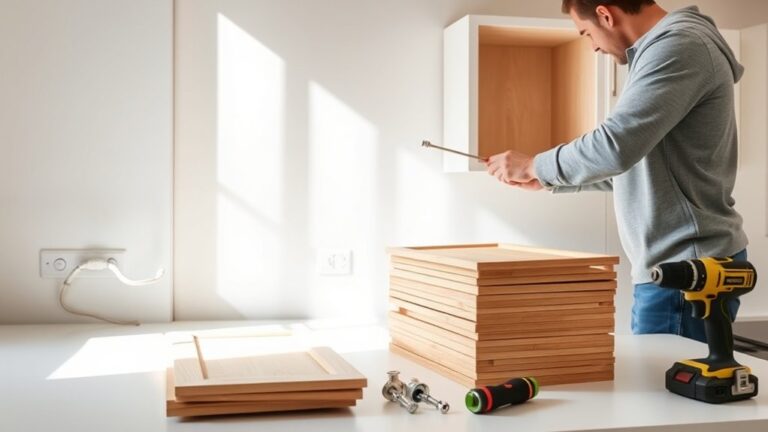
Before you decide to tackle your kitchen remodel yourself, take an honest look at your skills and how much time you can commit. Then, compare what you might save by doing the work yourself with the cost of hiring professionals. That should help you figure out whether DIY is really worth it for your project.
Assessing Skill Level
Although tackling a kitchen remodel yourself can cut costs considerably, you need to honestly evaluate your skills before diving in. A thorough skill assessment helps you determine if the project matches your capabilities or if hiring pros is safer. Consider your design expertise, as well, since layout and aesthetic choices impact both function and budget.
Ask yourself these questions:
- Do you understand basic plumbing and electrical work?
- Can you handle precise measurements and installations?
- Are you comfortable with tools and safety protocols?
- Do you have a keen eye for design details and spatial planning?
If you hesitate on these points, DIY might lead to costly mistakes. Being realistic about your skill level guarantees you save money without sacrificing quality.
Evaluating Time Commitment
When you decide to take on a kitchen remodel yourself, you need to be honest about how much time you can realistically dedicate to the project. Effective time management is essential to avoid delays and frustration.
Start by creating a detailed project schedule, breaking down tasks into manageable steps with clear deadlines. Consider your daily responsibilities and how many hours you can commit each week.
If you have limited free time, a DIY remodel might stretch over months, increasing stress and potentially impacting the quality of work. On the other hand, if you can stick to a consistent schedule, DIY can be rewarding.
Ultimately, evaluating your availability and how well you manage time will help you decide if tackling the remodel yourself is worth the effort.
Calculating Potential Savings
Balancing your available time with the demands of a kitchen remodel naturally leads to the question of cost savings. DIY projects can cut expenses, but only if you focus on areas where your skills match the work required. For example, installing kitchen lighting or swapping out plumbing fixtures can be manageable and save you labor costs. However, complex electrical or plumbing tasks might increase costs if mistakes occur.
Consider these factors when calculating potential savings:
- Your proficiency with tools and home improvement tasks
- The complexity of plumbing fixtures replacement
- Time required to source materials and permits
- Potential costs of correcting DIY errors
How Changing Your Kitchen Layout Impacts Remodel Costs
Changing your kitchen layout can considerably affect your remodel costs because it often involves moving plumbing, electrical wiring, and appliances. When you alter the placement of sinks, stoves, or refrigerators, expect higher labor and material expenses. However, reconfiguring your space can also improve functionality and flow, making it worth the investment.
As you plan, consider integrating smart storage solutions to maximize space in your small kitchen. Customized cabinets or pull-out shelves may raise upfront costs but save you money by reducing clutter and improving usability.
Furthermore, lighting improvements play a vital role. Repositioning fixtures or adding under-cabinet lighting can brighten your workspace and boost your kitchen’s atmosphere, slightly increasing costs but increasing overall value.
Ultimately, the extent of your layout changes will directly influence your budget. Minor tweaks might keep costs manageable, while major relocations usually lead to higher expenses. Planning carefully ensures your remodel meets both your needs and financial limits.
Common Unexpected Expenses in Small Kitchen Remodels
Unexpected expenses can quickly inflate your small kitchen remodel budget if you’re not prepared. Even with careful budget planning, certain costs can catch you off guard.
Unexpected costs can rapidly increase your small kitchen remodel budget, even with thorough planning.
When selecting a contractor, clarify what’s included to avoid surprises. Common unforeseen expenses often arise from underlying issues or last-minute changes.
Here are some typical unexpected costs to watch for:
- Hidden water damage or mold uncovered once cabinets are removed
- Electrical or plumbing upgrades needed to meet current codes
- Structural repairs like fixing subfloors or walls
- Delays in material delivery causing schedule extensions and extra labor
Tips to Keep Your Small Kitchen Remodel on Budget
Unforeseen costs can throw off your kitchen remodel budget, but you can still keep your project on track with some smart planning. Start by prioritizing upgrades that add value without overspending, like incorporating eco friendly options such as energy-efficient appliances. These not only reduce utility bills but qualify for rebates. Also, consider smart technology to improve your kitchen’s functionality without major renovations.
Here’s a quick guide to help you decide where to invest:
| Upgrade Type | Cost Range | Budget Tip |
|---|---|---|
| Cabinets | $2,000 – $5,000 | Refinish instead of replace |
| Appliances | $1,000 – $4,000 | Choose energy-efficient models |
| Lighting | $200 – $1,000 | Use LED fixtures |
| Countertops | $1,500 – $3,000 | Opt for laminate or recycled |
| Flooring | $1,000 – $3,000 | Consider eco-friendly vinyl |
Frequently Asked Questions
How Long Does a Small Kitchen Remodel Typically Take?
A small kitchen remodel typically takes about 3 to 6 weeks. It depends on your kitchen layout and the extent of appliance upgrades you choose.
If you’re just updating cabinets and appliances without changing the layout, it’s quicker. But if you’re altering plumbing or electrical work, expect more time.
Planning ahead and coordinating with contractors will help you stay on schedule and enjoy your refreshed kitchen sooner.
Do I Need Permits for a Small Kitchen Remodel?
You might think permits are like seatbelts—sometimes overlooked but essential. Yes, you often need permits for a small kitchen remodel, especially if you’re altering electrical, plumbing, or structural elements.
Permit requirements and renovation regulations vary by location, so check with your local building department. Skipping this step can lead to costly fines or having to undo your work.
Always get the right permits to keep your project safe and legal.
How Can I Improve Kitchen Lighting During a Remodel?
You can improve kitchen lighting during a remodel by combining ambient lighting and task lighting. Install recessed ceiling lights or a central fixture for even ambient lighting.
Add under-cabinet LED strips or pendant lights over work areas to amplify task lighting, making cooking and prep easier. Don’t forget dimmers to adjust brightness, creating a cozy atmosphere when you’re not working.
This layered approach boosts both functionality and style in your kitchen.
What Are the Best Flooring Options for Small Kitchens?
Imagine stepping into your small kitchen and instantly feeling it’s brighter and more spacious. The best flooring options to create that effect are tile patterns that add visual interest without overwhelming the space. You’ll love how vinyl options mimic wood or stone, offering durability and easy maintenance. Both choices let you play with color and texture, making your kitchen feel larger and inviting. You’ll be surprised how much flooring transforms your kitchen’s vibe!
How Do I Choose a Reliable Contractor for My Remodel?
To choose a reliable contractor, start by checking their contractor reputation through reviews and references. You’ll want someone with a proven track record of quality work and clear communication.
Next, get detailed project estimates from multiple contractors to compare costs and timelines. Don’t just go with the cheapest—consider experience and reliability.
Trust your gut; if a contractor seems transparent and responsive, you’re likely in good hands for your remodel.
Conclusion
So, ready to turn your tiny kitchen into a masterpiece without selling a kidney? Remember, small remodels have a knack for sneaky costs because who doesn’t love surprise expenses? Cabinets, countertops, and labor all want their cut.
DIY might save you cash, or just your pride. Keep your eyes peeled and your wallet tight, or your small kitchen makeover might become a grand financial adventure you didn’t sign up for. Happy remodeling! A little planning can help keep your small kitchen remodel cost under control.