How Much Does a Kitchen Remodel Cost?
Planning a kitchen remodel can feel overwhelming, especially when costs vary so widely. You’re not alone—many homeowners struggle to figure out what fits their budget and where the money goes.
Kitchen remodel costs depend largely on the size of your kitchen and the scope of the project. Small kitchens typically run $10,000–$15,000, medium kitchens $15,000–$30,000, and large kitchens $30,000–$50,000 or more.
High-end remodels with custom cabinetry, premium countertops, and smart appliances can exceed $150,000. Layout changes, material choices, and labor can all affect your final bill.
Keep reading to see what drives kitchen remodel costs and how to manage them.
Key Takeaways
- Kitchen remodels typically cost $10,000–$50,000+, depending on size, scope, and quality of materials chosen.
- Small kitchens average $10,000–$15,000, while large kitchens can exceed $50,000 for full renovations.
- High-end remodels range from $50,000 to over $150,000, featuring custom cabinetry and premium finishes.
- Labor costs account for 20–35% of the budget, with contractors charging $50–$150 per hour.
- Cabinets, countertops, and appliances are major cost drivers, varying widely by material and quality level.
Average Kitchen Remodel Cost by Project Size

How much you’ll pay for your kitchen remodel depends largely on its size. A small kitchen, typically under 100 square feet, costs between $10,000 and $15,000. You’ll have enough budget to update cabinet hardware, repaint walls, and swap in eco friendly materials like bamboo countertops.
A small kitchen under 100 square feet costs $10,000 to $15,000, enough for hardware updates, fresh paint, and bamboo countertops.
A medium-sized kitchen, ranging from 100 to 200 square feet, runs $15,000 to $30,000. This size gives you room to replace appliances, install new flooring, and incorporate vintage design elements such as subway tile backsplashes or farmhouse sinks.
Large kitchens exceeding 200 square feet cost $30,000 to $50,000 or more. You’re looking at structural changes, custom cabinetry, premium countertops, and high-end appliances. These projects often include layout changes like removing walls or adding islands.
Your final cost depends on how extensively you renovate each space, regardless of square footage.
Small Kitchen Remodel Costs on a Tight Budget
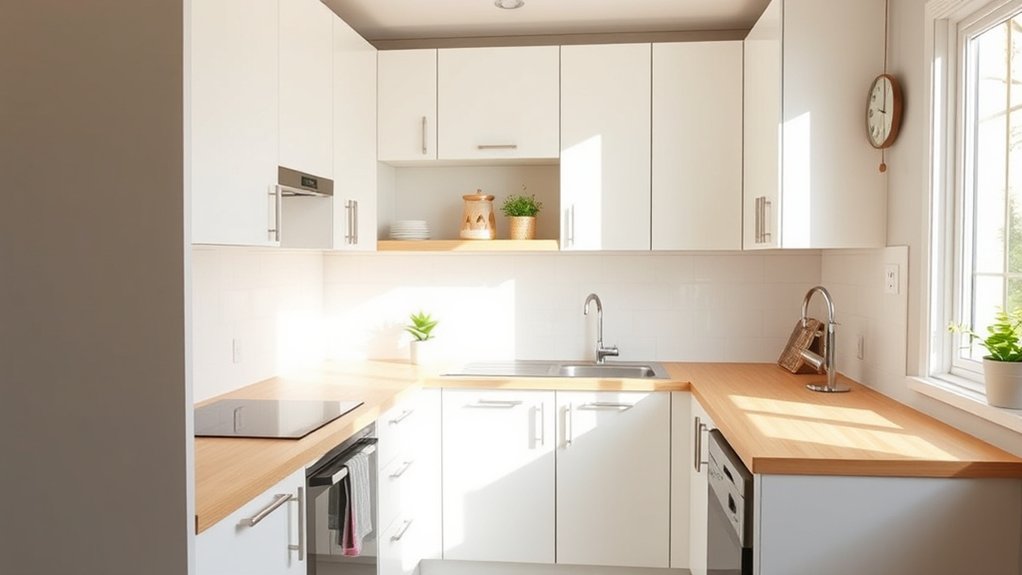
Since every dollar counts in a small kitchen remodel, focus your budget on changes that make the biggest visual impact. Start with paint and hardware—new cabinet pulls and a fresh coat on walls or cabinets can transform the space for under $500. Skip full cabinet replacement and reface existing boxes instead, saving thousands while still achieving a updated look.
If you love character, consider vintage appliances from resale shops or online marketplaces. They often cost less than new models and add personality without straining your budget, though you’ll want to verify they’re in working condition before buying.
Think about kitchen landscaping too—rearranging your layout to improve workflow doesn’t always require new construction. Moving a few items or adding open shelving can refresh the room’s function and feel.
Finally, tackle flooring with budget-friendly vinyl or laminate, and handle demolition yourself to cut labor costs considerably on your overall project.
High-End Kitchen Remodel Costs Explained

When you’re ready to splurge, a high-end kitchen remodel can easily run $50,000 to $150,000 or more, depending on size and finishes. At this level, you’re not just upgrading function—you’re investing in craftsmanship, custom design, and premium materials that raise the entire space.
Here’s where your money typically goes:
- Custom cabinetry – Hand-built, solid wood cabinets with intricate detailing replace standard options, often costing $30,000 or more alone.
- Professional-grade appliances – You might blend vintage appliances with modern smart technology for a unique, curated look that still performs flawlessly.
- Architectural features – Open shelving, waterfall countertops, and designer lighting add visual interest and showcase your personal style.
You’ll also pay for skilled labor, structural changes, and high-end plumbing fixtures. Every detail, from flooring to hardware, reflects quality and intention, turning your kitchen into a true showpiece rather than just a functional space.
5 Factors That Drive Your Kitchen Remodel Budget
Whether you’re working with a modest budget or planning that high-end showpiece, several key factors determine where your project lands on the price spectrum.
Your kitchen layout plays a major role. Moving plumbing or electrical lines to accommodate a new design adds labor and permit costs, while keeping your existing footprint saves money.
Changing your layout means changing your plumbing and electrical—keep your footprint, keep your budget intact.
Material durability matters too. Cheaper materials cost less upfront but wear out faster, forcing replacements sooner. Investing in durable countertops, cabinets, and flooring reduces long-term expenses.
Labor costs shift based on your location and the complexity of your project. Skilled tradespeople, including electricians, plumbers, and carpenters, charge more for intricate work.
Appliance selection affects your budget significantly. Standard models cost far less than professional-grade or smart appliances.
Finally, your kitchen’s size directly impacts expenses. Larger spaces require more materials, more labor hours, and often more fixtures, driving up the total cost of your remodel.
Cabinet Costs: Stock, Semi-Custom, or Custom?
Because cabinets typically eat up 30-40% of your total kitchen remodel budget, choosing the right type matters more than almost any other decision you’ll make. You’ve got three main options, each with distinct price points and benefits:
- Stock cabinets – Pre-made in standard sizes, these cost $100-$300 per linear foot. They’re ready quickly but offer limited cabinet styles and sizing flexibility.
- Semi-custom cabinets – Priced at $150-$650 per linear foot, these let you adjust dimensions, finishes, and storage solutions while keeping costs manageable.
- Custom cabinets – Built to your exact specifications, these run $500-$1,200+ per linear foot. You’ll get unlimited design freedom and tailored storage solutions, but you’ll pay a premium for it.
Your choice depends on your layout’s complexity, timeline, and how much you value unique storage configurations versus staying within a tighter budget. For most homeowners, semi-custom strikes the best balance between cost and flexibility.
Countertop Material Costs Compared
Your countertop choice can swing your budget by thousands, so it pays to compare materials upfront. Granite and quartz are similarly priced, but they differ in maintenance and durability. If you’re looking for a budget-friendly option that still looks sharp, laminate is worth considering. And if you want a touch of luxury, marble offers timeless elegance, though it comes with a higher price tag and requires extra care.
Granite Vs Quartz Pricing
Two of the most popular countertop materials, granite and quartz, typically cost between $50 and $200 per square foot installed, with the final price hinging on slab quality, color rarity, and edge detailing. You’ll find granite durability shines in heat resistance and natural variation, while quartz aesthetics offer consistent patterns and a nonporous surface that resists stains without sealing.
Before you decide, weigh these factors:
- Maintenance: Granite needs periodic sealing; quartz requires none.
- Appearance: Granite gives you unique, natural veining; quartz delivers uniform, engineered looks.
- Budget: Quartz often costs slightly more upfront but saves you money on long-term upkeep.
Choose granite if you want a one-of-a-kind surface, or quartz if you prioritize low-maintenance consistency.
Budget-Friendly Laminate Options
Why settle for less when laminate can stretch your renovation dollars further? You’ll typically pay $20 to $50 per square foot installed, a fraction of granite or quartz costs. Modern laminate mimics natural stone and wood grains convincingly, giving you countless color schemes to match your kitchen’s personality. Brands like Formica and Wilsonart offer finishes ranging from matte to high-gloss, so you won’t sacrifice style for savings.
Laminate also pairs well with various backsplash styles, whether you want subway tile, bold patterns, or textured stone accents. You’ll appreciate the easy maintenance, too, since laminate resists stains and cleans up with simple soap and water.
If you’re working with a tight budget, laminate lets you allocate funds toward cabinets, appliances, or lighting instead.
High-End Marble Costs
If you crave timeless elegance, marble will cost you $75 to $250 per square foot installed, reflecting its luxury status in kitchen design. You’re paying for natural veining, rarity, and a finish that raises any kitchen instantly.
Marble installation demands skilled professionals since slabs are heavy, fragile, and require precise seaming for a seamless look.
Before committing, weigh these factors:
- Marble maintenance requires regular sealing to prevent staining from acidic foods and liquids.
- Slab quality varies widely—premium Calacatta or Carrara marble sits at the top of the price range.
- Edge detailing adds sophistication but increases labor costs considerably.
Marble suits buyers who prioritize aesthetics over practicality. You’ll need patience for upkeep, but the visual payoff is unmatched in kitchen design.
Appliance Upgrade Costs Worth the Splurge
Not every appliance upgrade is worth the extra cost, but a few can really pay off. Energy-efficient models can lower your utility bills, and rebates may help offset the higher upfront price. Smart kitchen features can make everyday tasks easier, too, letting you manage cooking, cooling, and cleaning right from your phone.
Energy-Efficient Appliance Investments
How much should you really spend on that new refrigerator? Energy-efficient appliances cost more upfront, but you’ll recoup the difference through lower utility bills and rebates. Pair them with sustainable materials in your cabinetry and countertops, and you’ll build a kitchen that saves money long-term while reducing environmental impact.
Before you buy, focus on these upgrades:
- ENERGY STAR refrigerators – You’ll cut energy use by 15% compared to standard models.
- Induction cooktops – They heat faster and waste less energy than traditional gas or electric ranges.
- High-efficiency dishwashers – You’ll use less water per cycle without sacrificing cleaning power.
These investments typically pay for themselves within five to seven years, making them smart additions to your remodel budget.
Smart Kitchen Technology Perks
Once you’ve nailed down your energy-efficient appliances, you’ll want to contemplate smart technology that adds convenience and long-term value. Smart appliances let you preheat ovens, monitor fridge contents, and start dishwashers remotely through your phone, saving you time and reducing wasted energy.
Automated lighting systems adjust brightness based on time of day or activity, cutting electricity costs while creating the right ambiance for cooking or entertaining.
Voice-activated assistants integrated into your kitchen can set timers, convert measurements, or read recipes aloud, keeping your hands free while you work. Smart faucets with touchless controls help you conserve water and minimize mess.
While these upgrades add to your budget, they boost resale appeal and daily functionality. Prioritize features you’ll actually use rather than chasing every gadget on the market.
Flooring and Lighting Costs to Factor In
Because flooring and lighting tie your whole kitchen together, you shouldn’t skimp on either when planning your budget. Flooring materials vary widely in price and durability, so you’ll want to weigh upfront costs against long-term maintenance. Lighting fixtures also deserve careful thought, since they affect both function and ambiance.
Flooring and lighting anchor your kitchen’s style and budget—skimping on either can cost you in comfort and design down the road.
- Flooring materials: Tile, hardwood, and luxury vinyl plank each come with different price points. Tile offers durability and water resistance, hardwood adds warmth but costs more, and vinyl plank balances affordability with style.
- Lighting fixtures: Pendant lights over an island, recessed lighting for general illumination, and under-cabinet strips for task lighting each serve distinct purposes and add to your total cost.
- Installation labor: Professional installation for flooring and electrical work for lighting can appreciably increase your budget, so get quotes early.
Plan for these costs together, since they’re installed early in the remodel and influence your overall design choices.
Labor Costs: Hiring a Contractor vs DIY
Two paths lead to a finished kitchen: hiring a licensed contractor or rolling up your sleeves yourself, and each carries its own cost trade-offs. Labor typically eats up 20-35% of your total budget when you hire professionals, with general contractors charging $50-$150 per hour or taking a flat project fee.
Before signing anyone, verify contractor qualifications—licensing, insurance, and references prevent costly disputes down the road. A qualified contractor also catches structural or electrical issues you might miss.
Going the DIY route cuts labor costs considerably, sometimes saving thousands. However, DIY safety matters most when tackling plumbing, electrical work, or load-bearing walls. Mistakes here create expensive repairs or dangerous hazards.
A hybrid approach works well for many homeowners: handle demolition and painting yourself while hiring pros for plumbing and electrical work. This balances savings with safety, letting you control costs without risking code violations or injury.
How to Cut Kitchen Remodel Costs Without Sacrificing Quality
While a full gut renovation sounds appealing, keeping your kitchen’s existing layout slashes costs dramatically. You’ll avoid expensive plumbing and electrical relocation, which often eats up a huge chunk of your budget.
Smart budget planning means prioritizing where your money actually makes a visual impact.
Material selection plays an *equally* critical role. You don’t need top-tier granite or custom cabinetry to achieve a high-end look. Quality alternatives exist at every price point.
Here’s how to stretch your dollars further:
- Reface cabinets instead of replacing them – you’ll save thousands while *revitalizing* the entire space.
- Choose quartz or laminate over natural stone – you’ll get durability without the premium price tag.
- Shop discontinued or overstock tile – you’ll find designer looks at clearance prices.
You can also handle demolition yourself, paint existing cabinets, or source fixtures secondhand. These choices preserve your vision while protecting your wallet.
Frequently Asked Questions
How Long Does a Typical Kitchen Remodel Take to Complete?
You’ll typically wait 6 to 8 weeks for a kitchen remodel, though timelines vary based on scope. You’ll spend early weeks on kitchen design and material selection, which can add time if you’re still deciding on finishes.
Once you’ve finalized plans, demolition and construction usually take 4 to 6 weeks. Don’t forget delays can happen with custom orders, so you’ll want to plan ahead and order materials early to keep things moving smoothly.
Do I Need a Permit to Remodel My Kitchen?
You might think you can skip the paperwork, but yes, you’ll likely need a permit for your kitchen remodel. Permitting requirements typically kick in when you’re changing plumbing, electrical, or structural elements—not just swapping cabinets or countertops.
Don’t risk fines or resale headaches by ignoring local renovation regulations. Check with your city’s building department before you start, since requirements vary widely. It’s a small step that protects your investment and keeps your project fully compliant.
Will a Kitchen Remodel Increase My Home’s Resale Value?
Yes, a well-planned kitchen remodel can considerably boost your home’s resale value. Buyers often prioritize updated kitchens, so smart kitchen design choices make a strong impression. Focus on timeless layouts and functional work triangles rather than trendy fads that’ll age poorly. Your material selection matters too—opt for durable, quality finishes like quartz countertops or solid wood cabinets. These choices signal craftsmanship to potential buyers, helping you recoup more of your investment when you decide to sell.
Can I Live in My House During the Remodel?
Yes, you can often stay in your house during a kitchen remodel, but your living arrangements will depend on the project’s scope. Minor updates let you manage with a makeshift kitchen setup, while major renovations that remove plumbing or electricity may require temporary housing elsewhere.
You’ll want to plan ahead, set up a temporary cooking space if possible, and talk with your contractor about timelines so you can prepare your household accordingly.
How Do I Finance a Kitchen Remodel?
You’ve got several financing options to cover your kitchen remodel. You can tap into a home equity loan or line of credit if you’ve built up equity in your house.
You might also consider remodeling loans like FHA 203(k) loans, which roll renovation costs into your mortgage. Personal loans and credit cards work too, though they often carry higher interest rates. Compare terms carefully before you commit.
Conclusion
You’re the one holding the blueprint for your dream kitchen, and the price tag doesn’t have to feel like scaling Mount Everest. Whether you’re stretching a small budget or splurging on high-end finishes, you’ve got options at every turn.
Nail down your priorities, choose cabinets and appliances wisely, and decide where labor costs make sense. With smart planning, you can manage how much a kitchen remodel costs and build a kitchen that feels like a million bucks without actually spending one.