How Much Do New Kitchen Cabinets Cost?
Choosing new kitchen cabinets can be exciting, but figuring out the price can feel overwhelming. You’re not alone: many homeowners struggle to balance the look they want with their budget.
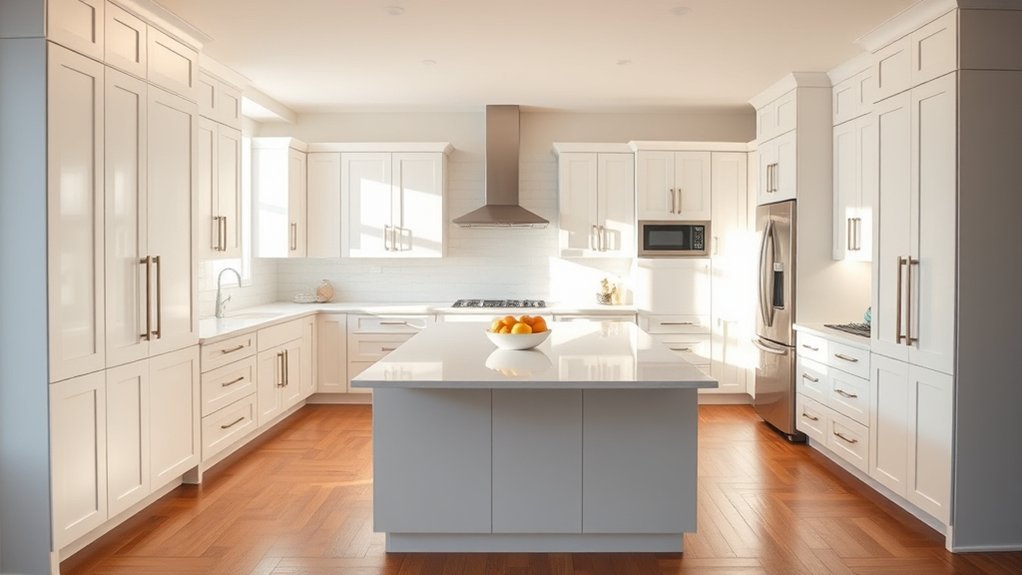
How much do new kitchen cabinets cost? You’ll typically spend $4,000 to $25,000 or more, depending on material, style, and kitchen size. Stock cabinets run $100–$300 per linear foot, semi-custom costs $200–$600, and custom options can exceed $1,200.
Solid wood, finishes, and hardware upgrades also affect your final price. Your layout and chosen installation method matter too.
Read on to learn what drives these costs and how to keep yours in check.
Key Takeaways
- Full kitchen cabinet remodels typically cost $4,000–$25,000+, depending on materials, style, size, and scope.
- Material choice matters: solid wood runs $150–$380/ft, while laminate and thermofoil cost $60–$160/ft.
- Cabinet type affects price and lead time: stock ($100–$300/ft), semi-custom ($200–$600/ft), custom ($500–$1,200+/ft).
- Hidden costs like demolition, disposal, and structural repairs can significantly increase overall project expenses.
- Refacing cabinets costs roughly half of full replacement and refreshes appearance without changing layout.
What Does a Kitchen Cabinet Remodel Really Cost?
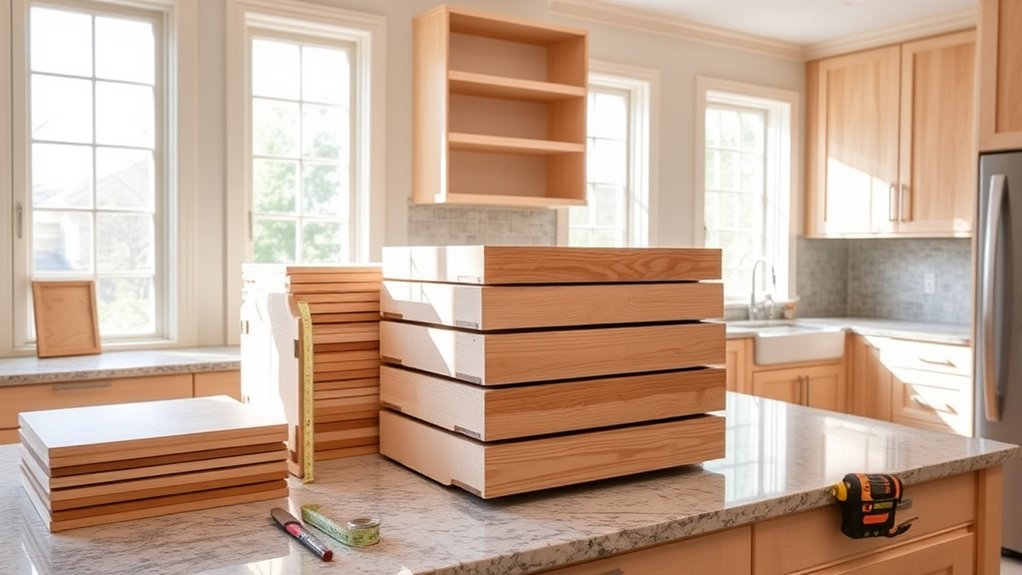
When you start pricing new kitchen cabinets, you’ll quickly find the range is wide—and for good reason. A full kitchen cabinet remodel typically runs anywhere from $4,000 to $25,000 or more, depending on materials, cabinet style, and kitchen size. Stock cabinets sit at the lower end, while custom builds with premium finishes push costs higher.
Your total also depends on choices beyond the boxes themselves. Decorative hardware—knobs, pulls, and hinges—can add hundreds to your budget, but it’s where you’ll see immediate style payoff. Soft-close drawers, pull-out shelving, and specialty storage inserts also raise the price tag.
Don’t overlook long-term cabinet maintenance when budgeting. Solid wood costs more upfront but holds up better over time, while laminate or thermofoil options save money initially but may need replacing sooner. Factoring in installation labor, finishes, and hardware gives you a realistic, complete picture before you commit to a budget.
5 Factors That Affect Cabinet Pricing

Because every kitchen has different needs, cabinet prices don’t follow a single formula. Several variables determine your final investment, and understanding them helps you budget accurately.
Every kitchen is unique, so cabinet costs shift based on your specific choices, needs, and space.
Material quality tops the list—solid wood costs more than laminate or thermofoil, but it lasts longer. Construction type matters too; framed cabinets typically cost less than frameless, European-style designs.
Your cabinet finish options also impact pricing, since custom stains and glazes require more labor than standard factory finishes.
Size and layout play a role as well. More cabinets, taller units, and specialty configurations like corner cabinets or pull-out drawers add to your total.
Current cabinet hardware trends, such as brushed brass pulls or hidden hinges, can increase costs depending on the style you choose.
Finally, installation complexity affects pricing. If your kitchen requires structural changes or custom fitting, you’ll pay more for labor than with a straightforward cabinet swap.
Stock vs. Semi-Custom vs. Custom: What’s the Difference?
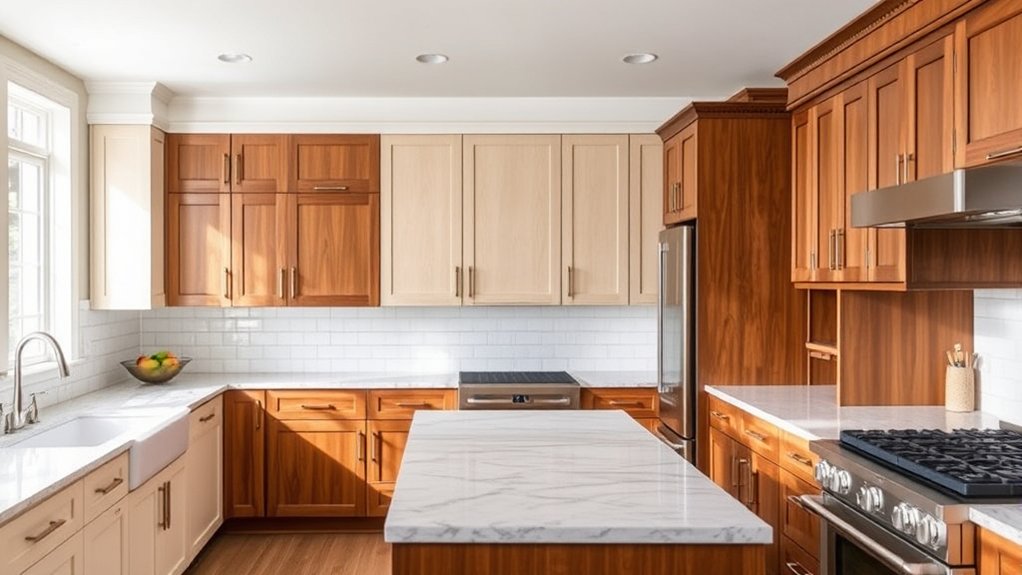
Once you start shopping for cabinets, you’ll quickly notice three distinct categories: stock, semi-custom, and custom. Each option affects your budget, timeline, and design flexibility differently.
Stock cabinets come pre-built in standard sizes, offering the lowest cost and fastest delivery, though finish options stay limited. Semi-custom cabinets let you adjust dimensions, finishes, and storage features, striking a balance between price and personalization. Custom cabinets are built to your exact specifications, giving you full control over materials, cabinet durability, and style details.
| Type | Price Range | Lead Time |
|---|---|---|
| Stock | $100–$300/linear ft | 1–2 weeks |
| Semi-Custom | $200–$600/linear ft | 4–8 weeks |
| Custom | $500–$1,200+/linear ft | 8–12 weeks |
Your choice depends on how much flexibility you need versus how quickly you want your kitchen finished. Weighing durability against design freedom helps you decide which category fits your project best.
Which Cabinet Material Fits Your Budget?
Your cabinet material choice can have a big impact on your total cost—often more than the style or brand. Solid wood offers classic beauty and durability, but it comes at a premium, especially for species like cherry or maple. If you’re watching your budget, laminate and thermofoil are attractive, low-maintenance alternatives that can mimic the look of wood without the hefty price tag.
Solid Wood Pricing
Since solid wood delivers unmatched durability and timeless appeal, it’s no surprise you’ll pay a premium for it. You’re investing in cabinet durability that outlasts cheaper alternatives, making the higher upfront cost worthwhile for most homeowners.
Your budget will shift based on wood species and finishing techniques. Here’s what impacts pricing most:
- Wood species – Oak and maple run $150-$380 per linear foot, while cherry and walnut push costs to $500+.
- Finishing techniques – Hand-rubbed stains or glazes add $20-$50 per foot compared to standard finishes.
- Construction style – Custom joinery costs more than semi-custom options.
Expect to pay $300-$600 per linear foot for quality solid wood cabinets, depending on these factors.
Laminate and Thermofoil Options
If solid wood stretches past your budget, laminate and thermofoil cabinets offer a practical middle ground. Both materials wrap a particleboard or MDF core with a synthetic finish, cutting costs while still delivering solid cabinet durability for everyday kitchen use.
Laminate holds up well against scratches and moisture, while thermofoil resists stains but can peel near heat sources like ovens. If material sustainability matters to you, look for products using recycled wood cores or low-VOC adhesives.
| Material | Price Range (per linear foot) | Best For |
|---|---|---|
| Laminate | $60–$150 | Busy kitchens, high moisture areas |
| Thermofoil | $70–$160 | Smooth, modern finishes |
| Hybrid (wood + laminate) | $100–$200 | Balancing style and budget |
Because style drives both labor and material costs, choosing a cabinet door design affects your budget as much as the material itself. Simple styles keep costs down, while intricate profiles raise both material and installation time.
- Shaker style: Flat panels with clean frames cost $100-$300 per linear foot and suit most budgets.
- Raised-panel: Detailed carving and extra milling push prices to $150-$400 per linear foot.
- Flat-slab: Minimalist and budget-friendly, running $80-$250 per linear foot.
Your style choice also shapes cabinet organization options. Shaker and slab doors pair well with pull-out shelves and built-in dividers, while ornate styles limit certain hardware configurations.
Don’t overlook hardware upgrades, either. Soft-close hinges, custom pulls, and upgraded hinges can add $5-$20 per cabinet, but they boost both function and resale value. Picking the right style upfront saves you from costly changes later.
How Kitchen Size Changes Your Total Cost
How much kitchen space do you have to fill? Your kitchen’s square footage directly drives your cabinet budget. A small galley kitchen might need just 10 linear feet of cabinets, costing $3,000 to $8,000. A sprawling kitchen with an island could require 25+ linear feet, pushing costs to $15,000 or more.
Size also affects related expenses you’ll want to budget for simultaneously. Larger kitchens often mean bigger appliance upgrades, since you’ll have room for professional-grade ranges or oversized refrigerators that complement your new cabinetry. You’ll also face more extensive flooring choices, as a bigger footprint means covering more square footage with your chosen material.
Don’t forget layout complexity matters too. L-shaped and U-shaped kitchens require more corner units and custom pieces than straight-line designs, increasing your per-foot cost. Measure carefully and factor in these size-related variables before setting your final budget.
Should You Install Cabinets Yourself or Hire a Pro?
Since cabinet installation can make or break your kitchen’s final look, deciding who swings the hammer matters as much as choosing the cabinets themselves. DIY installation saves on labor costs, but it demands precise measurements, leveling, and anchoring skills.
One misaligned cabinet can throw off your countertop materials fitting or create gaps that ruin the finished look.
Hiring a pro costs more upfront, but you get experience that prevents costly mistakes. Professionals also coordinate installation with other projects, like appliance upgrades, ensuring everything fits together seamlessly.
Before deciding, consider these factors:
- Skill level – Cabinet installation requires precision; mistakes are expensive to fix.
- Time investment – DIY projects often take longer than expected, especially for beginners.
- Project complexity – Custom layouts or unusual kitchen shapes benefit from professional expertise.
If you’re confident in your abilities and have simple, standard-sized cabinets, DIY works. For complex layouts, hire a professional.
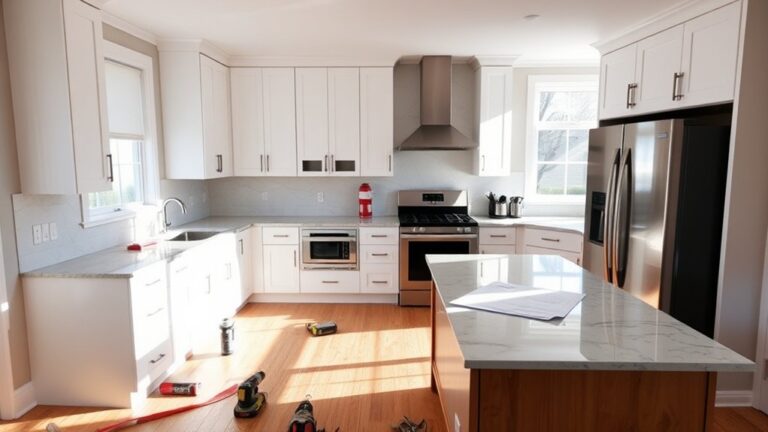
Before you finalize your budget, consider what might be hiding behind those old cabinets. Removal and disposal fees can add up quickly. And once demolition begins, you may uncover structural damage or outdated wiring and pipes. These surprises can blow your budget, so it’s wise to plan for them upfront.
Removal and Disposal Fees
Why does tearing out your old cabinets cost almost as much as installing new ones? Labor, dumpster rentals, and landfill fees add up fast, often blindsiding homeowners who only budgeted for installation. You’re not just paying someone to unscrew boxes from the wall. You’re paying for:
- Demolition labor to safely remove cabinets without damaging walls or floors
- Hauling and dumpster rental to clear debris off-site
- Disposal fees charged by local landfills for construction waste
If your old cabinets are still sturdy, skip removal costs entirely. Consider cabinet painting or hardware upgrades instead. Both refresh your kitchen’s look without the demolition expense, saving you hundreds while still delivering a noticeable transformation.
Structural Repairs Needed
Once contractors tear out your old cabinets, they often uncover problems you never knew existed—and these surprises can wreck your budget fast. Water damage hides behind cabinet walls for years, rotting subfloors and weakening wall studs. If your contractor uncovers compromised structural integrity, you’re looking at $500 to $2,000 in additional repairs before installation even begins.
Sagging floors sometimes signal deeper issues requiring foundation repair, which can add thousands to your project. Termite damage, mold growth, and outdated electrical wiring behind walls are other common discoveries that demand immediate attention.
You can’t install new cabinets on a compromised structure, so these repairs aren’t optional. They’re mandatory. Budget an extra 10-15% for unexpected structural fixes, and ask your contractor to inspect walls and flooring before finalizing your quote.
Plumbing and Electrical Surprises
How often do old pipes and outdated wiring derail a kitchen remodel? More often than you’d think. Once contractors open up your walls, they often find plumbing and electrical systems that don’t meet current codes. These surprises can add thousands to your project before you even touch the cabinets.
- Outdated wiring: Older homes may need rewiring to handle new appliance upgrades safely.
- Galvanized pipes: Corroded plumbing often requires full replacement, not just patching.
- Insufficient outlets: Modern kitchens need more circuits for lighting fixtures, islands, and small appliances.
Budget for inspections upfront. You’ll avoid mid-project shocks and keep your renovation timeline and wallet intact.
How to Save Money Without Sacrificing Quality
Since cabinets eat up the biggest chunk of your renovation budget, trimming costs here makes the biggest difference to your bottom line. You don’t have to choose between quality and affordability—you just need to know where to cut.
Keep your existing layout to avoid costly plumbing and electrical rework. Choose stock cabinets instead of custom builds, and reface boxes that are still structurally sound rather than replacing them entirely.
Shop salvage yards for vintage hardware that adds character without the designer price tag. Opt for eco friendly finishes like water-based paints, which often cost less than specialty coatings while improving indoor air quality.
| Strategy | Average Savings | Trade-Off |
|---|---|---|
| Reface instead of replace | 30-50% | Limited style changes |
| Stock vs. custom cabinets | 20-40% | Fewer size options |
| DIY installation | 15-25% | Requires skill and time |
Is It Cheaper to Reface or Replace Cabinets?
Refacing and replacing aren’t just different price points; they solve different problems. Refacing costs roughly half the price of full replacement, but it only works if your cabinet boxes are structurally sound. You’re keeping the frames and swapping doors, drawer fronts, and veneer, not starting over.
Refacing isn’t a discount replacement—it’s a different solution entirely, built on frames that are still structurally sound.
Choose refacing when:
- Your layout works fine—you just want a new look.
- The boxes are solid—no water damage, warping, or sagging shelves.
- Budget matters more than customization—you want savings, not a redesign.
Cabinet painting is often the cheapest refacing option, giving old wood a fresh finish for a fraction of new doors. Pair it with hardware upgrades, like new pulls and hinges, and the transformation looks dramatic for minimal cost.
Replacement makes sense when you’re changing the kitchen’s footprint, upgrading storage function, or dealing with damaged boxes refacing can’t fix.
Frequently Asked Questions
How Long Does a Typical Kitchen Cabinet Installation Take to Complete?
You’ll typically wait one to three days for a standard kitchen cabinet installation, though your timeline can shift depending on your project’s scope. If you’re installing stock cabinets, you’ll finish faster since they’re pre-assembled.
However, if you’ve chosen custom cabinet material, you’ll need extra time for precise fitting and adjustments. Don’t forget that your installation timeline also depends on your kitchen’s layout, how many cabinets you’re adding, and whether you’re making plumbing or electrical changes too.
Do Kitchen Cabinets Increase Home Resale Value Significantly?
Yes, new cabinets can seriously boost your resale value! Think of your kitchen like a car’s dashboard: it’s the first thing buyers judge, even if the engine’s solid. Realtors often say kitchens “sell the house,” and updated cabinets signal you’ve cared for the whole space.
As a home investment, cabinet upgrades typically recoup 70-80% of their cost at resale, making them one of the smarter renovations you can make before listing.
What’s the Average Lifespan of Newly Installed Kitchen Cabinets?
You’ll typically get 20–50 years out of your new kitchen cabinets, depending on material quality and how well you maintain them. Cabinet durability varies widely. Solid wood options often outlast particleboard or laminate alternatives.
If you’re focused on material longevity, choose plywood boxes with solid wood doors and quality hardware. You’ll also extend their lifespan by wiping up spills quickly, avoiding excess moisture, and tightening loose hinges as soon as you notice them.
Can I Finance New Kitchen Cabinets Through a Contractor or Retailer?
Yes, you can—and it’s funny how, right when you’re bracing for a big upfront cost, financing options suddenly appear everywhere. Many contractors and retailers offer payment plans that let you spread costs over several months, sometimes interest-free if you qualify. You’ll just need to ask upfront, compare terms, and check for hidden fees. It’s a convenient way to get the cabinets you want without draining your savings all at once.
Are There Eco-Friendly or Sustainable Kitchen Cabinet Options Available?
Yes, you’ll find plenty of eco-friendly options when shopping for kitchen cabinets! Look for materials like bamboo, reclaimed wood, or FSC-certified lumber, which come from responsibly managed forests.
You can also ask manufacturers about their sustainable manufacturing processes, including low-VOC finishes and water-based adhesives that reduce harmful emissions. Many retailers now highlight these eco-friendly materials in their product lines, so don’t hesitate to ask questions and request documentation to confirm a brand’s sustainability claims before you buy.
Conclusion
Your kitchen cabinets are the backbone of your remodel, and like any good foundation, they’re worth getting right. Whether you stick with budget-friendly stock options or splurge on custom craftsmanship, you’re the one steering this ship.
Weigh your priorities, watch for hidden costs, and don’t be afraid to get creative with refacing if funds run tight. In the end, you’ll find new kitchen cabinets that fit both your kitchen and your wallet.