How to Clean a Kitchen Sink Drain in 3 Steps
A slow, smelly, or clogged sink drain can make everyday kitchen cleanup frustrating. If you’re wondering how to clean a kitchen sink drain, you’re not alone—many people struggle with buildup, odors, and recurring clogs. The right products can make the job easier and help keep your drain fresh.
To clean a kitchen sink drain in three steps, first remove the stopper, scoop out debris, and clear standing water.
Next, pour hot, nonboiling water down the drain, add half a cup of baking soda, then one cup of white vinegar. Cover the opening for 10–15 minutes before flushing with more hot water.
Finally, use a strainer, discard grease properly, and rinse the drain weekly. You’ll find additional tips for preventing odors and clogs below.
Key Takeaways
- Remove the stopper, scoop out debris, and clear standing water from the sink and drain opening.
- Pour hot water down the drain to loosen grease and residue.
- Add half a cup of baking soda, followed by one cup of vinegar, and cover the opening.
- Wait 10–15 minutes, then flush the drain with another pot of hot water.
- Prevent future clogs by using a strainer and never pouring grease, oil, or food scraps down the drain.
Gather Supplies and Clear the Kitchen Sink Drain

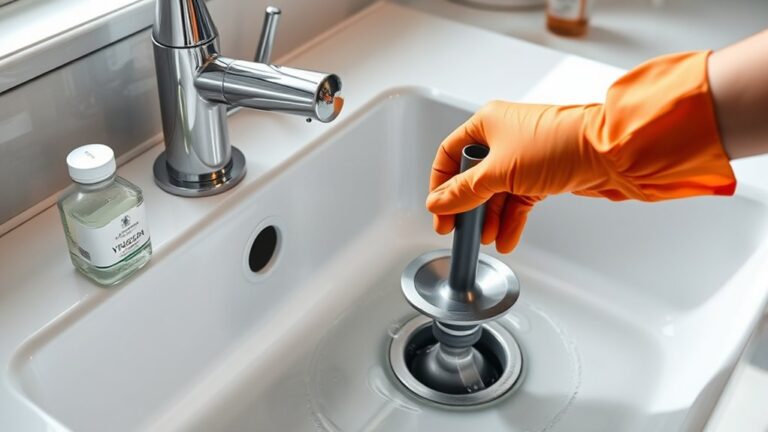
Before you begin, gather rubber gloves, a bucket, a plunger, baking soda, white vinegar, hot water, and a drain brush. These Cleaning tools help you handle routine Drain maintenance safely and efficiently.
Remove dishes, sponges, and soap from the sink so you have a clear workspace. Place the bucket beneath the P-trap or drain opening to catch standing water if you need to disconnect a pipe.
Clear the sink area, position a bucket beneath the drain, and prepare to catch standing water before disconnecting pipes.
Put on gloves before touching residue, food particles, or stagnant water.
Next, remove the drain stopper, strainer, or basket according to its design. Set each part aside and inspect it for trapped debris.
Scoop visible food scraps from the basin and drain opening, then discard them in the trash rather than pushing them farther inside.
If water remains pooled, use a cup or sponge to transfer it into the bucket. Keep the surrounding counter dry, and check that your plunger fits the drain opening before you begin clearing the blockage.
Clean the Kitchen Sink Drain With Hot Water and Baking Soda
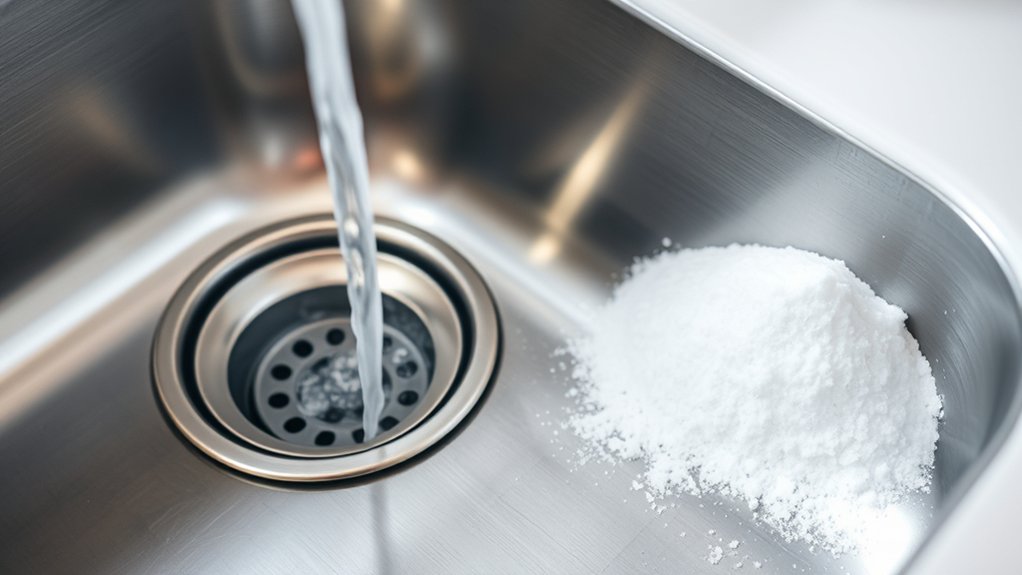
Once the drain opening is clear, pour a pot of hot, but not boiling, water into it to loosen grease and wash away residue. Pause for a minute, then add half a cup of baking soda directly into the drain.
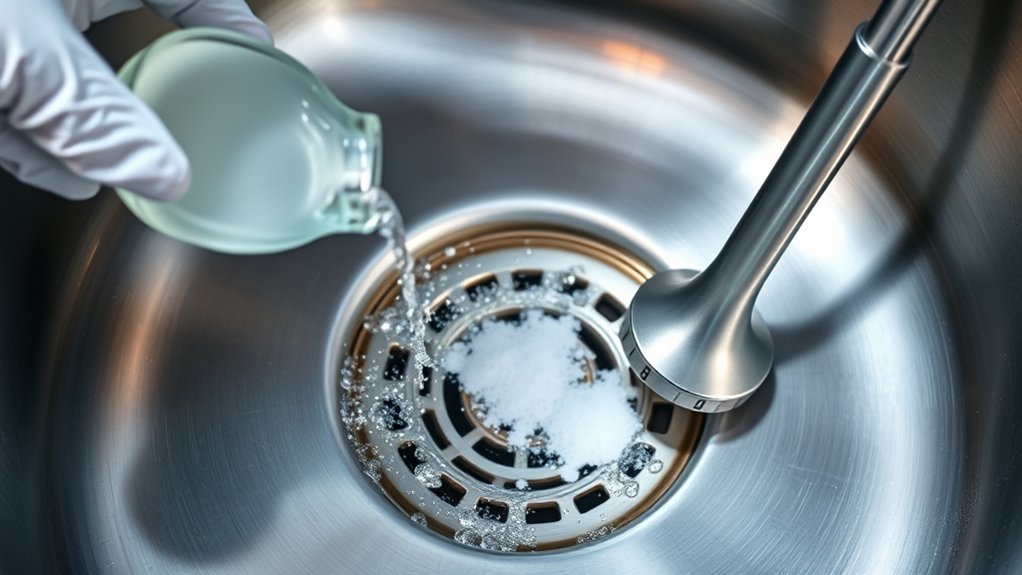
Follow it with one cup of white vinegar, and cover the opening with a drain stopper or clean cloth. The fizzing reaction helps break down light buildup inside the pipe.
Let the mixture work for 10 to 15 minutes, giving its cleaning action time to reach greasy residue. Remove the cover, then flush the drain with another pot of hot water.
These simple Drain cleaning techniques use common household ingredients and require no harsh chemicals. One of the key Baking soda benefits is its gentle abrasive and deodorizing action, which helps freshen the drain while lifting grime.
If the water drains slowly, repeat the process once, but don’t combine vinegar with commercial cleaners.
Prevent Kitchen Sink Odors and Clogs

Prevent odors and clogs by scraping food scraps into the trash or compost before rinsing dishes. Use a sink strainer to catch rice, coffee grounds, grease, and other debris, then empty it daily.
Don’t pour cooking oil or fat down the drain. Let it cool, then place it in a sealed container for disposal.
Once a week, flush the drain with hot water to dissolve light residue. For extra odor prevention, sprinkle baking soda into the drain, add vinegar, let the fizzing finish, and rinse with hot water.
Clean the stopper and drain opening regularly, since trapped food and slime can cause unpleasant smells. Include these habits in your plumbing maintenance routine, and check for slow drainage early.
If water remains in the basin, use a plunger rather than chemical cleaners, which can damage pipes. Call a professional if recurring odors, backups, or leaks persist despite regular cleaning and careful disposal.
Never mix cleaning products, especially bleach and ammonia.
Frequently Asked Questions
Can I Use Chemical Drain Cleaners to Unclog My Kitchen Sink?
Yes, you can use chemical drain cleaners, but you should treat them as a last resort. Chemical cleaners may damage pipes, harm septic systems, or create dangerous fumes.
Follow every label instruction, wear gloves and eye protection, and ventilate the area. Never mix products, especially bleach, ammonia, or acids.
Safety precautions matter: keep cleaners away from children and pets. Try plunging or removing the trap first, and call a plumber if the clog persists.
How Often Should I Professionally Clean or Inspect My Kitchen Sink Drain?
Schedule a professional inspection of your kitchen sink drain about once a year, or sooner if you notice slow drainage, odors, leaks, or recurring clogs. Think of drain maintenance as giving your plumbing a regular tune-up before small problems become expensive headaches.
You can rinse the drain weekly, avoid pouring grease down it, and clean the stopper monthly. After chemical cleaner use, request professional help to check for damage and safely assess the pipes.
What Should I Do if Cleaning Doesn’T Remove a Stubborn Drain Blockage?
If cleaning doesn’t remove a stubborn drain blockage, try a drain snake to break through or retrieve the clog. You can also pour baking soda followed by vinegar, wait 15 minutes, then flush with hot water.
Don’t mix chemical drain cleaners, especially if you’ve already used another product. If water still won’t drain, stop forcing it and call a plumber.
A professional can inspect deeper pipes and prevent damage to your sink or plumbing system.
Can I Safely Clean a Garbage Disposal Drain Using the Same Method?
Yes, you can use a similar method, but take extra precautions. For Safe cleaning, unplug the Garbage disposal or switch off its breaker before reaching near the opening. Remove visible debris with tongs, never your hands.
Flush with cold water, then grind ice cubes briefly to loosen residue. Avoid chemical drain cleaners, which can damage components or splash dangerously. If blockage persists, stop using the disposal and call a plumber.
When Should I Call a Plumber for Recurring Kitchen Sink Drainage Problems?
Call a plumber when your kitchen sink keeps draining slowly despite careful cleaning and regular drain maintenance. You should also seek professional help if water backs up repeatedly, multiple fixtures drain slowly, foul odors persist, or you notice leaks, sewage, gurgling, or unusual noises.
DIY plumbing can handle minor clogs, but recurring problems may indicate a blocked main line, damaged pipe, or improper venting. Don’t keep using chemical cleaners, which can worsen damage.
Conclusion
A clean kitchen sink drain is like a fresh start: small care keeps bigger problems from piling up. After you clear the opening, flush away buildup with hot water and baking soda, then prevent future odors by rinsing scraps, using a strainer, and cleaning regularly.
You don’t need harsh chemicals or hours of work, just a few simple habits. Treat your kitchen sink drain well, and it’ll quietly keep your kitchen running smoothly, day after day.