How to Get Rid of Cockroaches in the Kitchen
Finding cockroaches in your kitchen can feel frustrating and unsettling, but you’re not alone—many people struggle with these persistent pests. The right products can make it easier to tackle the problem and keep your kitchen clean.
To get rid of cockroaches in your kitchen, start by deep cleaning appliances, counters, and drains to remove crumbs, grease, and moisture they thrive on. Seal cracks around pipes, baseboards, and vents to cut off entry points.
Use baits, natural repellents like essential oils, or chemical sprays for stubborn cases, and call a pro if the problem persists.
Stick around, and you’ll uncover exactly where roaches hide and how to keep them gone for good.
Key Takeaways
- Eliminate food, water, and warmth sources by cleaning spills, crumbs, and grease regularly.
- Spot early infestation signs like droppings, musty odors, egg casings, and shed skins.
- Seal cracks, gaps, and entry points around pipes, vents, and baseboards.
- Use baits, natural repellents, or chemical sprays to target and eliminate roaches.
- Schedule regular inspections and consult pest control professionals for persistent infestations.
Why Roaches Keep Showing Up in Your Kitchen
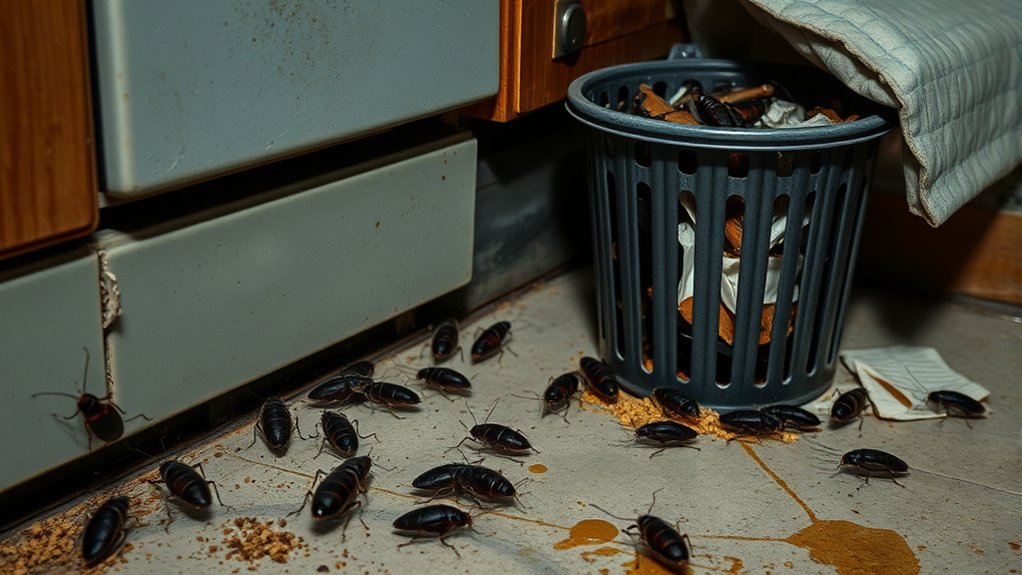
Because your kitchen offers everything a roach needs—food, water, and warmth—it’s practically an open invitation. Crumbs under the toaster, grease on the stovetop, and standing water in the sink all keep roaches coming back. You don’t need visible filth to attract them; even small food particles trapped in cracks are enough.
Kitchen appliances are a major culprit. Refrigerators, dishwashers, and ovens generate warmth and often hide grease buildup behind and underneath them, creating perfect hiding spots you rarely check. Roaches also squeeze through gaps around pipes, vents, and baseboards, so your kitchen’s layout can work against you.
If your cabinets or walls lack pest resistant materials, you’re giving roaches easier access points to nest and travel unseen. Cardboard boxes and paper bags make things worse, since roaches love chewing through them for shelter. Until you address these conditions, no amount of spraying will keep them away for good.
Spot the Early Signs of a Roach Infestation
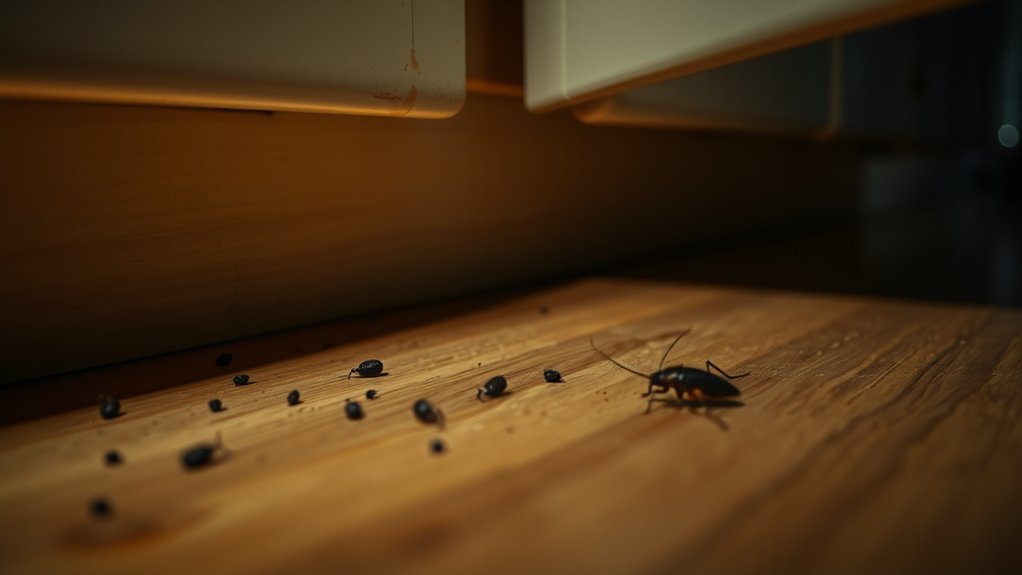
Before you ever see a roach scurry across the counter, it usually leaves clues behind. Cockroach behavior is largely nocturnal, so you’re more likely to notice traces of their presence than the insects themselves.
Check cabinets, behind appliances, and under the sink for small, dark droppings that resemble ground coffee or black pepper. A musty, oily odor lingering in enclosed spaces often signals a growing colony.
Small, dark droppings resembling coffee grounds and a lingering musty odor often signal a hidden roach colony nearby.
Keep an eye out for brown, oval egg casings tucked into corners or crevices. These hold dozens of future roaches. Shed skins are another giveaway, since roaches molt several times as they mature.
Catching these early infestation signs lets you act before the problem spreads to other rooms. Don’t wait for a daytime sighting to take action; by then, the population’s likely already substantial.
Regularly inspect dark, warm, moist areas near food and water sources to stay ahead of any outbreak.
Find Where Roaches Hide in Your Kitchen
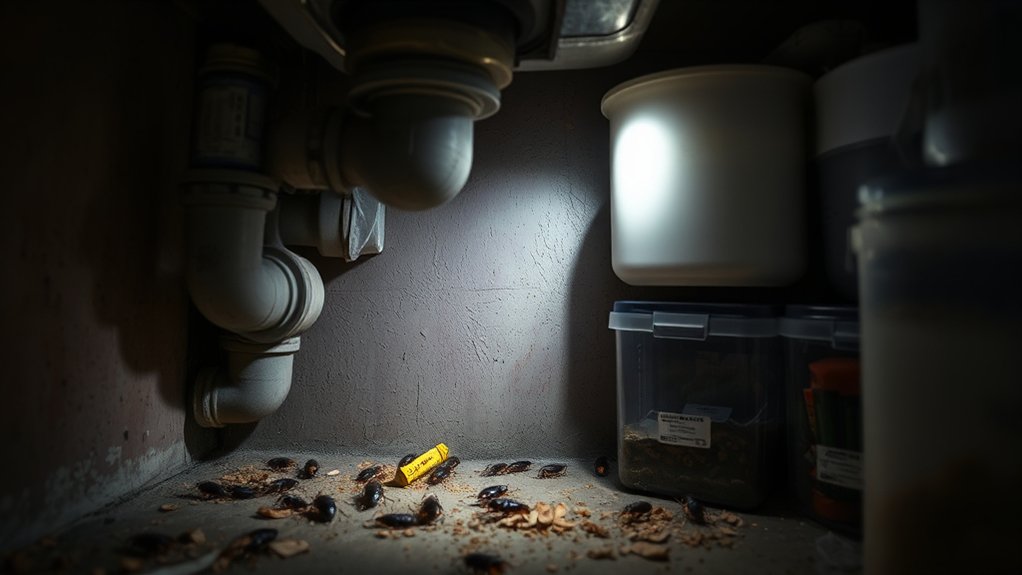
Once you’ve spotted the warning signs, it’s time to track down where roaches actually hide. Cockroaches love tight, warm, moist spaces close to food and water. Start by checking the usual hidden hiding spots that most homeowners overlook.
- Under the sink: Pipes create moisture roaches crave, making this one of the most common nesting areas in any kitchen.
- Behind appliances: Refrigerators, stoves, and dishwashers generate heat and hide crumbs, giving roaches shelter and food.
- Inside cabinets: Cracks near hinges and corners offer dark, undisturbed spaces perfect for breeding.
- Near drains: Roaches travel through pipes, so drains often connect directly to nesting sites.
Use a flashlight to inspect these areas at night when roaches are most active. Pull appliances away from walls, check cardboard boxes, and look behind loose wallpaper. Finding these spots helps you target treatment where it matters most.
Deep Clean the Spots Roaches Love Most
After locating the hot spots, grab your cleaning supplies and get to work. Effective cleaning means scrubbing beyond surface level—roaches feed on grease, crumbs, and moisture hiding in cracks you can’t see at a glance.
Pull out appliances, wipe down sides and undersides, and clean behind them where grime builds up unnoticed.
Clutter removal matters just as much as scrubbing. Stacks of paper bags, cardboard boxes, or unused containers give roaches shelter and hiding spots.
Toss what you don’t need and store everything else in sealed containers.
| Area | Cleaning Action | Frequency |
|---|---|---|
| Under appliances | Vacuum crumbs, wipe grease | Weekly |
| Cabinet corners | Wipe with soap and water | Weekly |
| Pantry shelves | Remove clutter, seal food | Monthly |
Don’t forget the sink drain and garbage disposal—both trap moisture and food particles roaches love.
A consistent cleaning routine removes their food source and makes your kitchen far less inviting.
Seal the Entry Points Roaches Use to Get In
Even a spotless kitchen can attract roaches if tiny gaps give them a way inside. They can squeeze through cracks as thin as a dime’s edge, so check your walls, baseboards, and cabinets for openings. Then grab some caulk and steel wool to seal off their favorite entry points.
Caulk Cracks and Gaps
Since roaches can squeeze through gaps as thin as a dime’s edge, sealing your kitchen’s cracks is one of the most effective ways to keep them out for good. Grab a silicone-based caulk and inspect your kitchen for openings where pests sneak in.
Focus on these high-risk areas:
- Baseboards along the floor
- Gaps around pipes under the sink
- Cracks near window frames
- Spaces behind cabinets
Caulk cracks you find in walls, corners, and countertops, since roaches use even the smallest openings to travel between walls and your kitchen. Don’t forget to fill gaps around outlets and switch plates, too. These overlooked spots give pests easy access to food and water sources, keeping infestations alive.
Seal Pipes and Vents
Caulking cracks only solves part of the problem—pipes and vents offer roaches another easy route into your kitchen. Check under your sink where pipes enter the wall; gaps around them are prime entry points.
Wrap pipe insulation around these areas to block access while also preventing condensation that attracts roaches searching for water.
Don’t overlook your vents. Install vent covers with fine mesh screens on exhaust fans, dryer vents, and any wall openings leading outside.
Roaches can squeeze through surprisingly small gaps, so make sure covers fit snugly without visible spaces.
Inspect these areas every few months, since insulation can shift and covers can loosen. Taking a few minutes to reseal them keeps your kitchen protected and cuts off another hiding spot roaches rely on to get inside.
Choose the Right Roach Bait for Your Home
Because roach gels, bait stations, and powders each work differently, picking the right one makes all the difference in your results. You’ll want to match your bait options to your kitchen’s layout and infestation level.
- Gel bait: Apply this in cracks, behind appliances, and under cabinets where roaches travel most.
- Bait stations: Place these in corners and low-traffic areas for a mess-free, long-lasting solution.
- Powder bait: Use boric acid or diatomaceous earth in wall voids and hard-to-reach spots.
- Combination approach: Pair two or more formats to target roaches at every life stage.
Look for products containing strong pest attractants like peanut butter oils or sugar compounds. Roaches can’t resist them. Rotate bait types every few months, since roaches can develop an aversion to a single formula over time. Consistency and placement matter more than brand name when you’re choosing your weapon against an infestation.
Try Natural Remedies That Repel Roaches
If you’d rather skip harsh chemicals, several natural remedies can keep roaches away just as effectively. Essential oils like peppermint, tea tree, and eucalyptus disrupt a roach’s senses and drive them out of hiding spots. Mix a few drops with water in a spray bottle and apply it along baseboards, under sinks, and near entry points.
Herbal repellents such as bay leaves and crushed mint also work well—scatter them in cabinets or drawers where roaches tend to hide.
Cucumber peels and citrus rinds offer another option, as roaches dislike their scent and will avoid areas where they’re placed. For a stronger approach, combine baking soda with sugar to lure and eliminate roaches naturally.
These remedies won’t harm your family or pets, making them ideal for kitchens where food is prepared. Reapply them regularly since natural scents fade faster than chemical treatments, and combine multiple methods for the best results.
Know When to Use Chemical Sprays and Foggers
When natural remedies and baits can’t keep up with a heavy infestation, it’s time to bring in chemical sprays and foggers. These products pack more punch, but you’ve got to use them wisely to avoid wasting money or exposing your family to unnecessary chemicals.
Chemical sprays work best for targeted spot treatments. Spray cracks, crevices, and baseboards where roaches hide, but keep sprays away from food prep surfaces and dishes.
Target cracks, crevices, and baseboards with chemical sprays, but always keep them far away from food prep surfaces.
Foggers, on the other hand, release pesticide into the air, settling on exposed surfaces throughout the room. Fogger effectiveness depends on proper placement and timing, so follow label instructions closely.
Before using either option, try these steps:
- Remove food, dishes, and utensils from the area.
- Cover electronics and appliances.
- Ventilate the kitchen before returning.
- Clean surfaces after treatment to remove residue.
Use chemical treatments as a last resort, not your first move.
Prevent Roaches From Coming Back for Good
Getting rid of roaches once isn’t enough—you also need to make your kitchen less inviting to future invaders. Start by sealing entry points and keeping surfaces clean. Then check regularly for signs of roaches so you can catch a problem early. Together, these habits can help keep them from coming back.
Seal Entry Points
Since roaches can squeeze through gaps as thin as a credit card, sealing your kitchen’s entry points is essential for long-term control. Walk through your kitchen and inspect every wall, cabinet, and pipe connection for cracks or openings.
Once you’ve spotted them, seal each one to create a solid pest barrier against future invasions.
Focus on these common trouble spots:
- Wall cracks and gaps – Fill them with caulk or steel wool.
- Pipe openings – Seal around plumbing with expanding foam.
- Door gaps – Install weather stripping along the bottom.
- Window seals – Replace worn or damaged weatherstripping.
Check these areas every few months since caulk shrinks and foam degrades over time. Consistent maintenance keeps every entry point closed, stopping roaches before they ever get inside.
Maintain Kitchen Cleanliness
Because roaches thrive on crumbs and grease, keeping your kitchen spotless starves them out for good. Wipe down counters, stovetops, and sinks every night before bed. Sweep floors daily, and don’t let dirty dishes sit overnight—roaches feed on food residue you might overlook.
Good kitchen organization plays a huge role in prevention, too. Clear clutter from countertops and cabinets, since roaches love hiding in piles of papers, bags, and boxes. Store food in pest proof containers made of glass or hard plastic instead of leaving bags or boxes open.
Empty your trash regularly and clean the bin itself, not just the bag inside it. Don’t forget to clean under appliances and inside cabinets, where grease and crumbs build up unnoticed. A consistently clean kitchen gives roaches nothing to come back for.
Schedule Regular Pest Inspections
Why wait for roaches to reappear when you can catch them before they do? Scheduling a professional pest inspection keeps your kitchen roach-free long-term. Routine monitoring catches early signs you might miss, like droppings behind appliances or egg casings in cabinets. Don’t treat pest control as a one-time fix; make it a habit.
Here’s what regular inspections typically cover:
- Hidden entry points – cracks, gaps, and pipe openings roaches use to sneak in
- Moisture sources – leaky faucets or damp areas that attract pests
- Nesting spots – dark corners, behind appliances, under sinks
- Treatment effectiveness – checking if previous pest control measures still work
Booking inspections every few months gives you peace of mind and stops infestations before they start.
Call a Pest Control Pro When Nothing Works
If you’ve tried baits, sprays, and sealed every crack you can find and the roaches keep coming back, it’s time to call in a professional. Persistent infestations usually mean roaches are breeding somewhere you can’t reach—behind appliances, inside walls, or under flooring.
Eco friendly traps and DIY repellents work well for small, early-stage problems, but they can’t match a technician’s access to commercial-grade treatments and targeted application methods.
A pest control pro will inspect your kitchen, identify the species, locate nesting sites, and apply treatments designed for lasting results. Here’s why professional help often makes the difference:
| DIY Approach | Professional Approach |
|---|---|
| Limited to visible areas | Inspects hidden nesting sites |
| Store-bought products | Commercial-grade treatments |
| Short-term relief | Long-term elimination |
| Guesswork on species | Accurate identification |
| Repeated applications | Targeted, one-time solutions |
Don’t let a stubborn infestation drag on. Schedule a professional visit before roaches multiply further.
Frequently Asked Questions
Can Roaches in the Kitchen Make You Sick or Spread Disease?
Yes, you can get sick from roaches in your kitchen. They carry bacteria like salmonella and E. coli on their bodies, contaminating your food and surfaces as they crawl around. Their droppings and shed skins can also trigger allergies and asthma, especially in kids.
That’s why pest prevention isn’t just about cleanliness. It’s about protecting your family’s health. Don’t ignore an infestation; the health risks grow the longer roaches stick around, so act quickly to keep your kitchen safe.
How Long Does It Take to Fully Get Rid of Roaches?
You’ll typically see results within a few weeks, but full elimination can take 1-3 months depending on the infestation’s severity. If you’re using chemical treatments, you’ll often notice faster knockdown of roaches, while natural remedies usually take longer to show full effects.
Don’t get discouraged if you still spot a few stragglers. Consistency is key. Keep up with your chosen method, maintain cleanliness, and you’ll eventually break the cycle for good.
Are Baby Roaches a Sign of a Bigger Infestation?
Yes, spotting baby roaches is like seeing smoke before you’ve found the fire. It means something bigger’s already burning nearby. One homeowner found a single nymph behind her toaster, only to uncover an entire colony under the sink a week later.
That’s classic baby roach behavior: they don’t wander far from home. If you’re noticing these infestation signs, don’t wait. Start inspecting cracks, pipes, and dark corners immediately before the problem multiplies.
Is It Safe to Use Roach Bait Around Pets and Children?
Yes, you can use roach bait safely if you place it correctly. Tuck bait stations in hidden spots like under appliances or behind cabinets, away from curious pets and little hands. This protects pet safety without sacrificing bait effectiveness, since roaches still travel to these hidden areas.
Avoid loose gel bait in open spaces, and always choose enclosed stations. You’ll get rid of roaches while keeping your household safe and worry-free.
Why Do Roaches Seem Worse at Night in the Kitchen?
Imagine this: the lights go off, your kitchen falls silent, and that’s exactly when they emerge. You’re seeing nighttime activity in full swing because roaches are nocturnal by nature—they avoid light and prefer darkness for foraging.
Their nocturnal behavior means they wait until you’re asleep to scurry across counters and under appliances, searching for crumbs. You just can’t see them doing it during the day!
Conclusion
Funny how the “dirty” kitchen myth falls apart once you realize roaches just want what you want: free snacks and a cozy place to crash. You’ve vacuumed, sealed, sprayed, and sworn off crumbs like a saint.
So go ahead, flip on the kitchen light at 2 a.m. for dramatic effect. If you don’t see any roaches scattering, congratulations: you’ve officially out-stubborned nature’s most resilient houseguest.
Enjoy your crumb-free victory. For lasting success, keep following these steps to get rid of cockroaches in the kitchen.