How to Use a Kitchen Scale in 5 Easy Steps
Getting accurate measurements can be frustrating, especially when a recipe turns out too dry, wet, or inconsistent. You’re not alone—many home cooks struggle with portioning ingredients, but learning how to use a kitchen scale can make baking and cooking much easier.
To use a kitchen scale, first select grams or ounces to match your recipe. Place an empty bowl on the scale, center it, and press tare to reset the display.
Add each ingredient gradually, watching the weight and pressing tare before the next addition. Spoon and level flour, pour liquids slowly, and weigh sticky ingredients directly in the bowl.
Keep the scale level, verify units, avoid spills, and never exceed its capacity. These tips make accurate measuring easier.
Key Takeaways
- Select the correct unit—grams for metric recipes or ounces for imperial recipes—and verify the scale’s display.
- Place an empty bowl on a stable, level surface, then press tare to reset the scale to zero.
- Add each ingredient gradually, watching the display and stopping when you reach the recipe’s target weight.
- Press tare between ingredients, keeping the bowl centered and confirming the unit remains correct.
- Measure flour carefully, pour liquids slowly, weigh sticky ingredients directly, and clean spills promptly.
Select Grams or Ounces
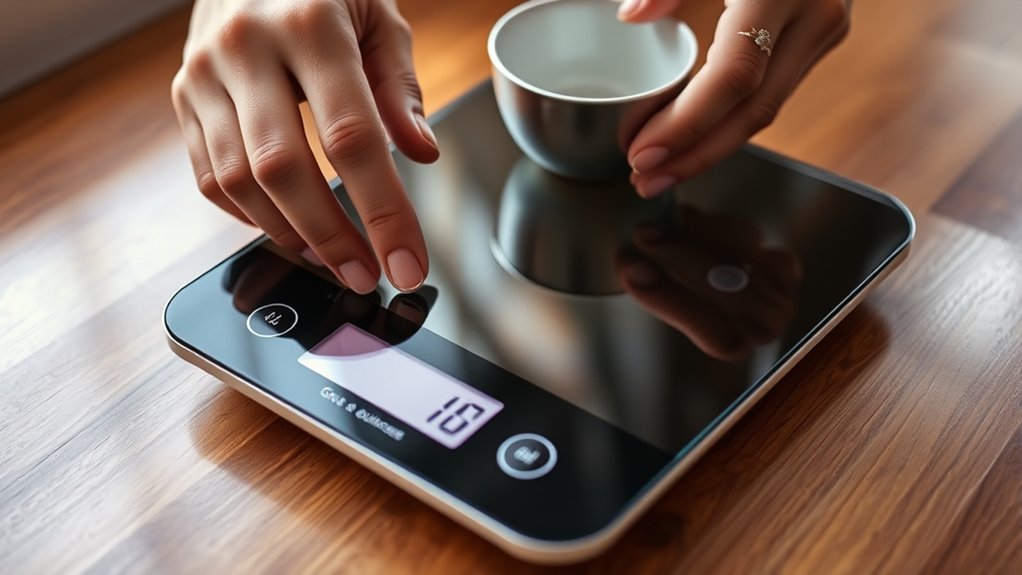
Before weighing, choose the unit that matches your recipe—grams for metric measurements or ounces for imperial ones. Grams suit recipes that list metric ingredients, while ounces match imperial instructions.
Select the correct unit before measuring each ingredient, and keep the same system throughout your recipe to prevent conversion errors.
On most digital scales, press the unit button until the display shows “g” for grams or “oz” for ounces. Check your manual if the symbol or button differs.
If you’re comparing digital and analog scales, digital models usually let you switch units directly. Analog models may use a fixed dial or require mental conversion.
Review your scale’s calibration techniques and confirm that its readings appear consistent before relying on them.
Don’t switch units midway unless you convert every amount accurately. When a recipe provides both options, choose the unit you find easiest to read and measure precisely.
Consistent units help you follow proportions and achieve reliable results.
Place Your Bowl and Tare the Scale
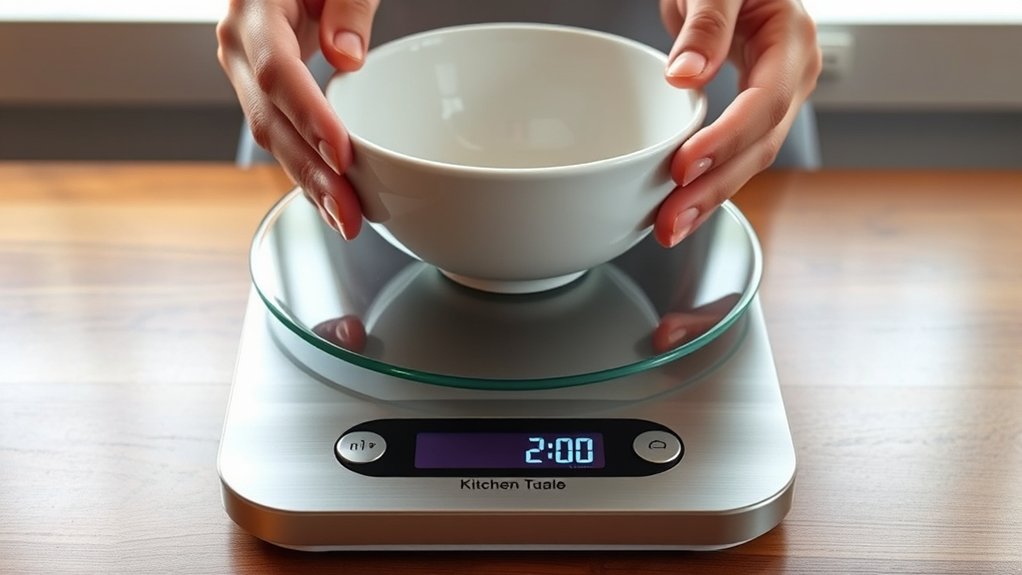
Set your empty bowl on the scale, then press the tare button to reset the display to zero. Make sure the bowl sits at the center without touching nearby objects. If the display doesn’t change to zero, press tare again after removing anything resting against the bowl or platform.
Before you begin, check that the scale stands on a firm, level surface. A tilted counter can affect accuracy, especially when you’re Measuring spices in small amounts. Keep the bowl stable, and avoid pressing on it while the scale settles.
If the reading seems inconsistent, turn the scale off and on, then follow the manufacturer’s instructions for calibrating scale settings. Some models require a calibration weight, while others reset automatically.
Confirm the unit you selected earlier remains visible, and check that the battery has enough power. Once the display shows zero with the empty bowl in place, you’re ready for the next step.
Add Ingredients and Read the Weight

Add the first ingredient slowly to the bowl and watch the display as the weight increases. Pause when the number approaches your target, then add smaller amounts until you reach the exact measurement.
Keep the bowl centered and avoid touching it while you read the display.
Check the unit shown on the scale before you continue. If the number seems unexpected, remove the ingredient, press tare, and confirm the setting.
Measuring accuracy depends on a stable surface, a clear display, and careful handling. Don’t estimate when the screen changes; wait for the reading to settle.
For reliable results, review your scale calibration according to the manufacturer’s instructions. Calibration helps the scale report correct weights, especially when you notice consistent differences.
Record each reading as you work, and press tare before adding the next ingredient so the display shows only that ingredient’s weight.
If the scale turns off automatically, note the reading first, then reactivate it and verify the bowl’s zero reading before continuing.
Weigh Flour, Liquids, and Sticky Ingredients
Weigh flour by spooning it lightly into the bowl until you reach the target, rather than packing it down. This keeps your baking consistent and prevents dense results.
For liquids, place a suitable container on the platform and pour slowly, watching the display as you approach the required amount. You can weigh sticky ingredients, such as honey or peanut butter, directly into the mixing bowl.
Their weight stays accurate even when they cling to a spoon.
| Ingredient | Helpful approach |
|---|---|
| Flour | Spoon gently, then level |
| Liquids | Pour slowly into a container |
| Honey | Use a lightly oiled spoon |
| Spices | Add carefully in small amounts |
Before each session, check the display and follow your model’s instructions for calibrating the scale, especially if you’ve moved it.
Measuring spices by weight can improve sauces, rubs, and baked goods. Read the measurement at eye level, and pause briefly after pouring so the number settles.
Clean spills promptly to protect the platform and keep future readings reliable.
Avoid Tare, Unit, and Overloading Mistakes
To avoid inaccurate readings, press the tare button after placing an empty container on the scale and confirm that the display returns to zero. Add each ingredient gradually, pressing tare between additions so you can track every weight without mental math.
Tare the scale between ingredients to maintain accurate readings and simplify weight tracking without mental math.
Before weighing, select the correct unit: grams, ounces, pounds, or milliliters. Check the symbol on the screen, and don’t assume the scale remembers your preferred setting.
Picture these quick checks:
- A zeroed bowl sits steady like a ship in calm water.
- Grams appear clearly before flour falls like soft snow.
- A growing heap stays below the scale’s maximum limit.
- A clean platform gleams after a careful wipe.
Follow the manufacturer’s calibration tips if readings seem inconsistent, and place the scale on a firm, level surface.
Never exceed its capacity. Overloading can damage the sensor or produce unreliable results.
Use the cleaning guidelines: remove spills promptly, wipe with a slightly damp cloth, and keep water away from buttons, seams, and the display. Insufficient care can shorten the scale’s life.
Frequently Asked Questions
How Often Should I Calibrate My Kitchen Scale?
You should calibrate your kitchen scale whenever you move it, replace its batteries, notice inconsistent readings, or use it after a long period of storage.
For regular home cooking, check calibration frequency about once every few months. If you weigh ingredients daily or need precision for baking, calibrate monthly or according to the manufacturer’s instructions.
Always use the recommended calibration weight and follow proper calibration steps to keep measurements accurate and reliable.
Can I Use a Kitchen Scale on an Uneven Countertop?
Yes, you can use a kitchen scale on an uneven countertop, but your readings may become inaccurate. Prioritize countertop stability by placing the scale on the flattest, firmest area available.
Improve scale placement with a thin, rigid board beneath it, ensuring the board doesn’t wobble. Zero the scale before weighing, and check it with a known object.
For best accuracy, move it to a level surface whenever possible. Don’t rely on tilted positioning for precise measurements.
How Do I Clean and Maintain My Kitchen Scale?
Treat your kitchen scale like a trusted tool: keep it clean, dry, and ready for accurate results. For Cleaning tips, remove the bowl, wipe the platform with a slightly damp cloth, and use mild soap for stubborn residue.
Never immerse the scale or spray liquid directly onto it. Dry every surface before storing. Replace batteries when readings fade or the display dims; follow the manual for safe Battery replacement.
What Should I Do if My Scale Displays an Error Message?
Check your scale’s manual for the displayed code, then remove and replace the batteries if needed. Make certain the scale sits on a flat, stable surface, and don’t exceed its weight limit.
Remove everything from the platform, press tare, and restart it. Clean moisture or debris from the sensors without immersing the device.
These troubleshooting tips and error message solutions often resolve problems. If the message persists, contact the manufacturer or replace the scale.
Can Kitchen Scales Measure Very Small Amounts Accurately?
Yes, kitchen scales can measure very small amounts accurately, but performance depends on their resolution and calibration. For reliable Precision measurement, choose a scale that displays 0.1 gram or 0.01 gram increments.
Place it on a stable, level surface, tare your container, and avoid drafts or vibrations. For Small quantities, check the manufacturer’s minimum capacity.
If you need extreme accuracy, use a dedicated jewelry or laboratory scale instead.
Conclusion
Once you’ve practiced these five steps, your kitchen scale becomes a quiet recipe translator. I learned this after weighing flour for bread: scooping produced a dense, disappointing loaf, but measuring 120 grams delivered a reliable rise.
That small number made a big difference. Choose grams or ounces, tare your bowl, add ingredients gradually, and watch the display. Avoid unit, tare, and overload mistakes, and you’ll cook with greater accuracy, less waste, and confidence every time you use a kitchen scale.