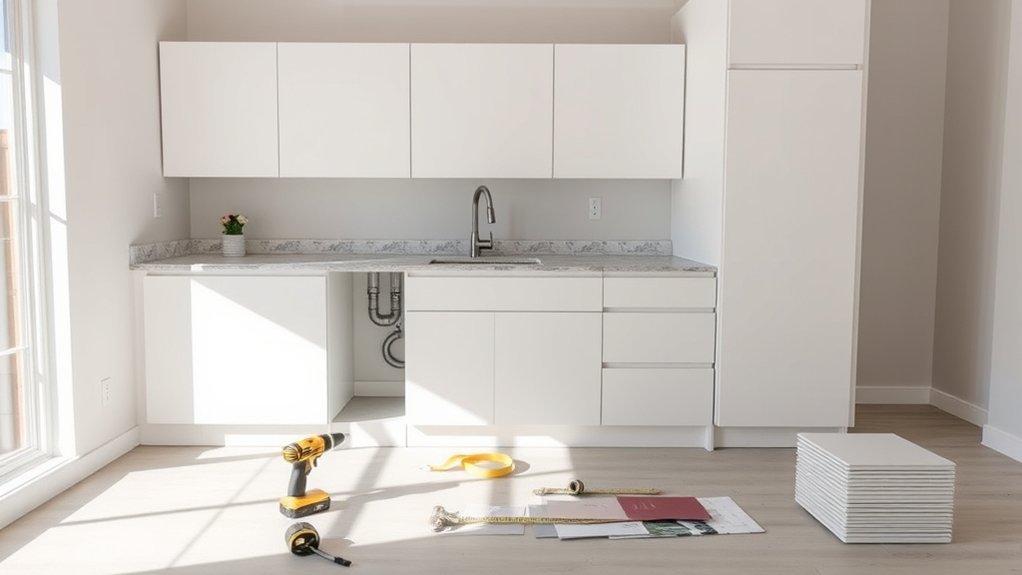
How Much Does It Cost to Remodel a Small Kitchen?
A small kitchen remodel can feel like a balancing act: you want a fresh, functional space without letting costs spiral. If you’re wondering how much it costs to remodel a small kitchen, you’re not alone—many homeowners face the same challenge.
You’ll typically spend between $10,000 and $25,000 to remodel a small kitchen, depending on your choices for cabinets, countertops, appliances, and layout changes. Material selections and labor costs play a big role in your budget.
You can save by refinishing cabinets or opting for budget-friendly materials, but moving plumbing or walls will add expenses. Planning smartly helps you get the best value for your money.
Keep exploring to find cost-saving tips and key upgrade impacts.
Key Takeaways
- Small kitchen remodels typically cost between $10,000 and $25,000 depending on materials, labor, and scope.
- Cabinets are the largest expense, with custom options costing more than stock or refacing existing ones.
- Countertops range from $10 to $150 per square foot, influenced by material durability and installation fees.
- Appliance and lighting upgrades add to costs but improve efficiency and may offer rebates.
- Layout changes, plumbing, and electrical moves significantly increase labor and material expenses.
How Much Does It Cost to Remodel a Small Kitchen?
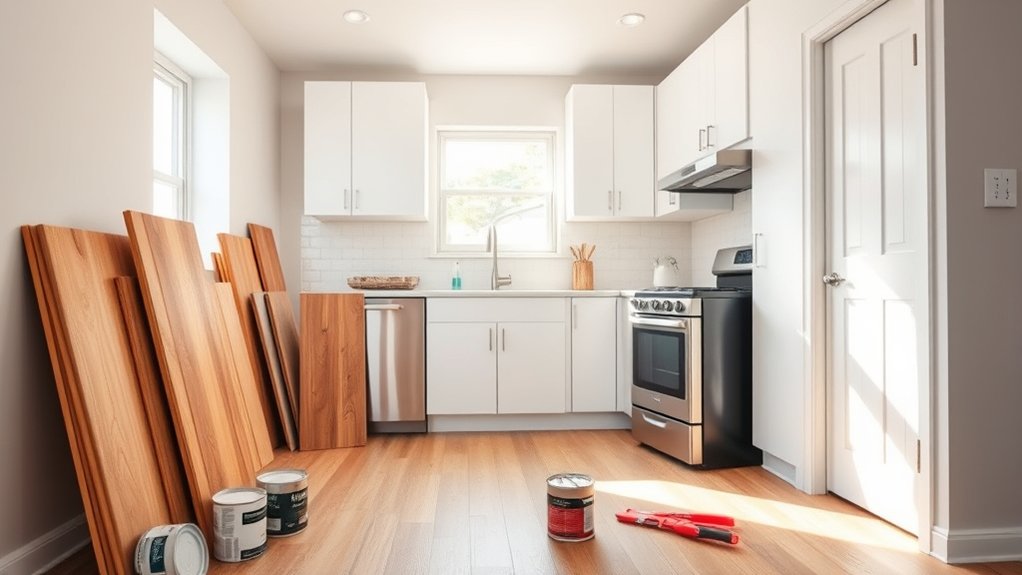
Remodeling a small kitchen typically costs between $10,000 and $25,000, depending on the materials and extent of the renovation. When planning your budget, consider kitchen flooring options, as they greatly impact costs. Hardwood or tile floors are pricier but add durability and style, while vinyl or laminate offer budget-friendly alternatives.
You’ll also want to think about ventilation options. Upgrading your range hood or installing a new exhaust fan can improve air quality and reduce cooking odors, but these can vary in price based on size and power.
Labor and materials play a big role, so it’s smart to balance quality with cost. Since your space is small, efficient use of materials and smart ventilation choices can maximize value without overspending.
How Cabinet Choices Affect Your Small Kitchen Remodel Budget
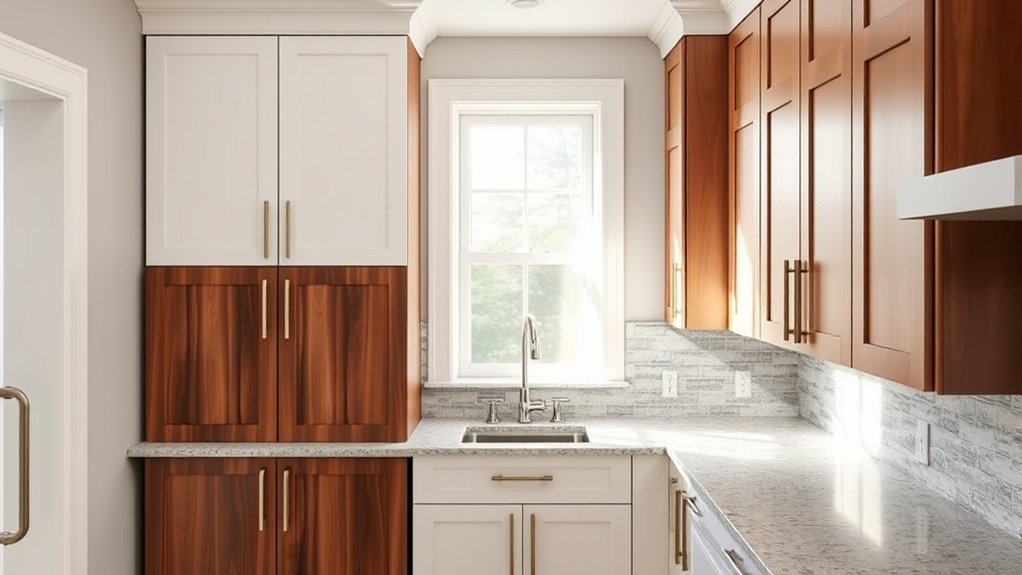
Flooring and ventilation set the stage for your kitchen’s look and feel, but cabinets often take up the largest portion of your remodel budget. When choosing cabinet styles, you’ll find options ranging from classic shaker to modern flat-panel designs, each varying in price. Custom cabinets offer tailored fits but come at a higher cost than semi-custom or stock options. The material you pick—solid wood, plywood, or MDF—also impacts your spending.
Don’t overlook cabinet installation costs, which can vary based on the complexity of your kitchen’s layout. Simple installs save money, while intricate designs with multiple cabinets and features increase labor costs. To keep your budget in check, consider refacing existing cabinets or mixing high-end pieces with budget-friendly options. By making informed choices about cabinet styles and installation, you’ll control costs without sacrificing style or functionality in your small kitchen remodel.
How Countertop Materials Influence Remodeling Costs
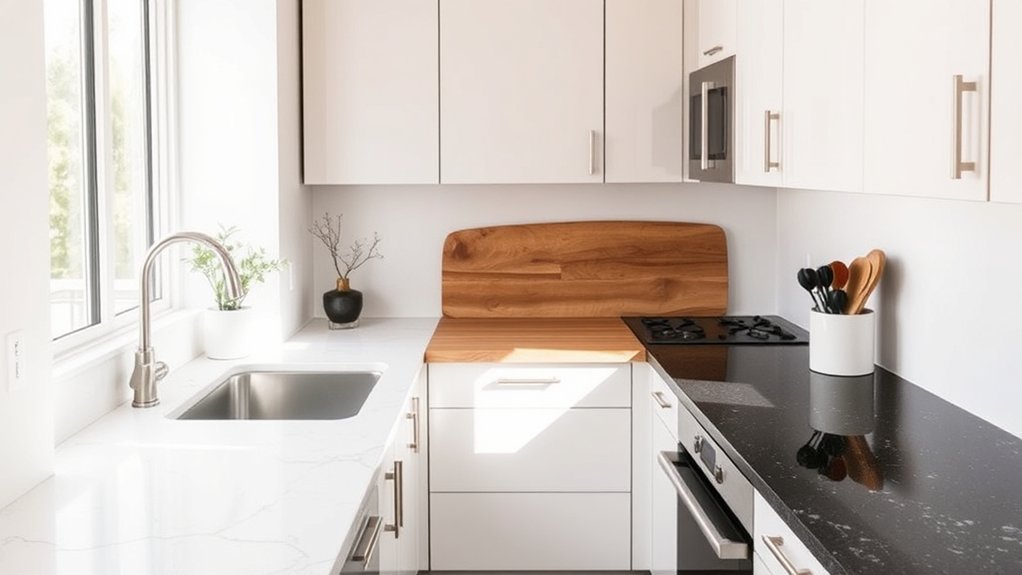
Countertop prices can vary widely depending on the material. To get the best value for your remodel, weigh durability against cost. Understanding these tradeoffs can help you make a smart choice without overspending.
Popular Countertop Material Prices
Choosing the right countertop material can considerably impact your kitchen remodel budget. When considering popular options, granite usually ranges from $40 to $100 per square foot, including countertop installation.
Quartz is slightly more expensive, typically $50 to $120 per square foot, but offers consistent patterns and easy maintenance. Laminate is the most budget-friendly, often between $10 and $40 per square foot, making it ideal for small kitchens.
Marble, while beautiful, can cost $70 to $150 per square foot, so it’s less common in small remodels. Comparing these materials helps you balance cost and style.
Keep in mind that installation fees vary, affecting your total expense. By reviewing material comparisons carefully, you’ll choose a countertop that fits your budget and raise your kitchen’s look.
Durability Versus Cost Tradeoffs
Although budget plays a major role in your kitchen remodel, you’ll want to contemplate how durability affects long-term costs. Choosing countertop materials isn’t just about price—you’ll balance upfront expenses with longevity.
Durable surfaces like quartz or granite might cost more initially but resist scratches and stains, saving you money on repairs and replacements. If you prefer vintage styles, reclaimed wood can add charm but often requires more maintenance, potentially raising costs over time.
Eco friendly options, like bamboo or recycled glass countertops, offer sustainable appeal but vary in durability and price. By weighing how each material performs against its cost, you can select a countertop that fits your budget without sacrificing quality or style, ensuring your small kitchen remodel is both smart and lasting.
How Appliance Upgrades Affect Your Small Kitchen Remodel Costs
Upgrading your appliances can considerably impact the overall cost of remodeling a small kitchen. When you choose appliance upgrades, you’re not just investing in new gadgets—you’re influencing your budget and energy bills.
High-efficiency models often come with a higher upfront price but save you money long-term through reduced energy consumption. If you opt for energy-efficient appliances, you might qualify for rebates or tax incentives, which can help offset initial costs.
Keep in mind that sleek, modern appliances designed for small spaces might cost more but maximize functionality. On the other hand, standard models are typically less expensive but may lack advanced features.
Balancing your desire for upgraded appliances with your budget is key. By prioritizing energy efficiency and size-appropriate designs, you can improve your kitchen’s performance without overspending.
Ultimately, smart appliance upgrades contribute to both your kitchen’s appeal and your wallet’s health.
How Lighting and Fixtures Impact Your Small Kitchen Remodel Budget
When you plan your small kitchen remodel, lighting and fixtures play a crucial role in both functionality and budget. Effective lighting design improves your workspace, making cooking safer and more enjoyable, while also setting the kitchen’s mood.
You’ll want to balance task lighting, such as under-cabinet lights, with ambient options like ceiling fixtures to guarantee your space feels bright and inviting.
Fixture selection directly impacts costs, with choices ranging from budget-friendly to high-end designer pieces. Opting for energy-efficient LED fixtures can save you money long-term, even if the upfront price seems higher.
Keep in mind that custom or specialty lighting may increase labor and material expenses. By carefully planning your lighting design and choosing fixtures that complement your kitchen style without breaking the bank, you can achieve both aesthetic appeal and cost-effectiveness.
Prioritizing these elements ensures your small kitchen remodel stays within budget while improving usability and design.
How Layout Changes Affect Labor and Overall Expenses
Changing your kitchen layout can increase labor costs, especially if it involves moving plumbing or electrical lines or altering walls. Material costs can also change depending on how much new cabinetry, flooring, or countertop space you need. And the more complex the work, the longer the project may take—adding to your overall budget.
Labor Costs by Layout
Although your kitchen layout might seem like a simple design choice, it plays a major role in determining labor costs during a remodel. If you’re rearranging plumbing or electrical work to fit vintage appliances, expect higher labor fees due to the specialized skills required.
Likewise, installing eco friendly materials often demands extra care and precision, which can increase installation time and costs. A straightforward layout with minimal changes keeps labor costs lower since contractors can work more efficiently.
However, if you opt for an open plan or island addition, labor expenses rise because of added complexity. Understanding how your layout impacts labor helps you budget smarter and avoid surprises during your kitchen remodel.
Impact on Material Expenses
Labor costs are just one piece of the puzzle. Your kitchen layout also directly influences material expenses. When you change your layout, you often need more or fewer materials, affecting your budget. For example, adding an island may increase countertop and cabinetry needs.
Your choice of color schemes can impact costs too, as some finishes are pricier. Backsplash options vary widely in material and installation complexity, influencing overall expenses.
| Layout Change | Countertop | Cabinetry | Backsplash | Color Schemes Impact |
|---|---|---|---|---|
| Adding an Island | High | High | Moderate (extra area) | Can increase cost |
| Moving Appliances | Moderate | Moderate | Low | Minimal effect |
| Open Shelving | Low | Low | Moderate | Depends on materials |
| Changing Walls | High | High | High | Varies by finish |
| Expanding Space | High | High | High | Higher-end possible |
Adjust your layout thoughtfully to manage material costs effectively.
Time Required for Changes
Because altering your kitchen layout often involves multiple steps, it usually takes more time to complete than minor updates. When you change the layout, labor increases, pushing up overall expenses.
For effective budget planning, you need a clear timeline estimation to avoid surprises.
Consider these factors affecting your timeline:
- Demolition and removal of existing fixtures and cabinetry.
- Rewiring and plumbing adjustments to fit the new design.
- Installation of new cabinets, appliances, and flooring tailored to the updated layout.
Each phase adds complexity and time, so allow extra days for unforeseen delays. By factoring in these elements during your budget planning, you’ll create a more realistic timeline estimation, keeping your remodel on track and within budget.
What Labor Costs Should You Expect for a Small Kitchen Remodel?
When you plan a small kitchen remodel, you’ll need to factor in the costs of skilled professionals who bring your vision to life. Labor costs typically include design consultation fees, which help you create a functional, stylish layout tailored to your space. You might pay around $50 to $150 per hour for a designer’s expertise.
Once the design is set, appliance installation is another key labor expense. Depending on the complexity, installing ovens, dishwashers, or refrigerators can cost between $100 and $500 per appliance. Moreover, you’ll pay for carpenters, electricians, and plumbers to handle cabinetry, wiring, and plumbing updates.
Expect labor to account for roughly 20-35% of your total remodel budget. While these costs vary by location and project scope, budgeting carefully for each professional’s role ensures a smooth remodel without unexpected surprises. Prioritizing skilled labor helps guarantee quality and longevity in your small kitchen makeover.
When Should You Hire a Pro vs. DIY Your Kitchen Remodel?
Deciding whether to hire a pro or tackle your kitchen remodel yourself depends on your skills, time, and the project’s complexity. If you’re confident with tools and have experience, DIY can save money and let you personalize kitchen decor with your touch. But for complicated tasks like plumbing or electrical work, hiring a professional guarantees safety and code compliance.
Choosing between DIY and hiring a pro hinges on your skills, time, and project complexity.
Consider these points:
- Skill Level – Can you install new countertops or update appliance brands without mistakes?
- Time Commitment – Do you have weeks to dedicate, or do you need the remodel done quickly?
- Project Complexity – Simple updates like painting or replacing cabinet handles suit DIY; structural changes need pros.
Ultimately, if your remodel involves advanced installations or custom appliance brands, a pro is worth the investment. For smaller upgrades or cosmetic changes, rolling up your sleeves might be the way to go.
Smart Ways to Save Money Without Losing Style in Your Remodel
Whether you choose to hire a pro or tackle parts of your kitchen remodel yourself, keeping your budget in check doesn’t mean sacrificing style. Start by incorporating eco friendly options like energy-efficient lighting and low-VOC paints—they save money over time and reduce your environmental impact.
You don’t have to splurge on brand-new cabinets; consider refinishing or repainting existing ones for a fresh look. Embracing vintage styles can also add character without a hefty price tag.
Hunt for secondhand fixtures or retro appliances to create a unique vibe that’s both affordable and stylish. Swap costly materials for budget-friendly alternatives that mimic high-end finishes.
Finally, focus on small but impactful changes like updated hardware or open shelving to boost style without major expenses. By mixing smart choices with your personal flair, you’ll achieve a chic kitchen remodel that fits your budget perfectly.
How to Plan Your Small Kitchen Remodel Budget Step-by-Step
Start by setting a realistic budget that fits your finances and renovation needs. Then prioritize the changes that will make the biggest difference to your kitchen and daily routine. This way, you can stay focused and avoid overspending.
Setting Realistic Budget Goals
Before you plunge into choosing materials or appliances, you need to establish a realistic budget that fits your financial situation and remodel goals. Don’t let kitchen trends or renovation myths pressure you into overspending. Instead, focus on what truly adds value and suits your lifestyle. Start by:
- Evaluating your total available funds and how much you’re willing to allocate specifically for the kitchen.
- Researching current kitchen trends to identify affordable updates versus costly fads.
- Setting aside a contingency fund (usually 10-15%) for unexpected expenses during the remodel.
Prioritizing Key Renovation Elements
Although small kitchens come with space limitations, you can still make impactful upgrades by prioritizing renovation elements that matter most to your daily use and budget. Focus on essentials like storage, lighting, and energy-efficient appliances.
Adding vintage accents can give your kitchen character without breaking the bank. Choosing eco friendly options helps save money long-term and supports sustainability.
| Element | Emotional Impact | Budget Priority |
|---|---|---|
| Storage | Relief from clutter | High |
| Lighting | Warmth & clarity | Medium |
| Appliances | Efficiency & ease | High |
| Vintage Accents | Charm & nostalgia | Low |
| Eco Friendly | Pride & savings | Medium |
Prioritize what improves your daily experience most, then layer in style and sustainability.
Frequently Asked Questions
How Long Does a Typical Small Kitchen Remodel Take to Complete?
A typical small kitchen remodel usually takes about 3 to 6 weeks to complete. You’ll want to plan carefully, especially when choosing your kitchen color and exploring smart storage ideas to maximize space.
Delays can happen if you change your mind mid-project, so decide on your color scheme and storage solutions early. Staying organized and communicating with your contractor will help keep the remodel on track and finish sooner.
What Permits Are Required for a Small Kitchen Remodel?
Don’t worry, getting permits for a small kitchen remodel isn’t as complicated as it sounds. You’ll typically need building permits, electrical permits, and sometimes plumbing permits, depending on the changes you make.
Local inspection requirements guarantee everything meets safety codes, so your remodel passes smoothly. Checking with your city’s building department will clarify which permit types apply.
Staying on top of this helps you avoid fines and costly delays during your project.
How Do I Choose the Right Color Scheme for a Small Kitchen?
To choose the right color scheme for your small kitchen, focus on colors that improve light and create a sense of space. Start with light, neutral tones like white or soft gray to make the room feel bigger. Add pops of color through accessories or backsplash tiles for personality.
Consider how the colors work with your cabinets, countertops, and flooring to create a cohesive, stylish, and inviting look.
What Are the Best Storage Solutions for Small Kitchens?
The best storage solutions for small kitchens are like puzzle pieces, fitting perfectly to maximize every inch. You’ll want to use innovative shelving, such as wall-mounted racks or pull-out baskets, to keep things organized and accessible. Space-saving appliances, like slim refrigerators or multi-functional cookers, free up valuable countertop space. Combining these smart options helps you create a clutter-free kitchen that feels open and efficient, even when space is tight.
How Can I Make My Small Kitchen More Energy-Efficient?
You can make your small kitchen more energy-efficient by upgrading to energy saving appliances, which use less electricity and water. Don’t forget insulation improvements around windows and walls to reduce heat loss and keep your kitchen temperature stable.
Also, switch to LED lighting and seal any drafts. These steps lower your energy bills and help the environment without sacrificing functionality or style in your kitchen space.
Conclusion
Remodeling your small kitchen doesn’t have to break the bank. For example, imagine Sarah, who chose mid-range cabinets and quartz countertops, upgraded to energy-efficient appliances, and installed modern lighting, all while doing the painting herself. She kept labor costs low and saved money without sacrificing style.
By planning carefully and making smart choices, you can transform your kitchen beautifully and affordably, creating a space you’ll love without overspending. With careful planning, a small kitchen remodel can fit your budget and style.