How to Disguise Kitchen Soffits
Kitchen soffits can make an otherwise beautiful kitchen feel dated or unfinished, and you’re not alone if you’re looking for ways to hide them without taking on a costly renovation.
Fortunately, there are several simple ways to disguise kitchen soffits and make them feel like a natural part of your design.
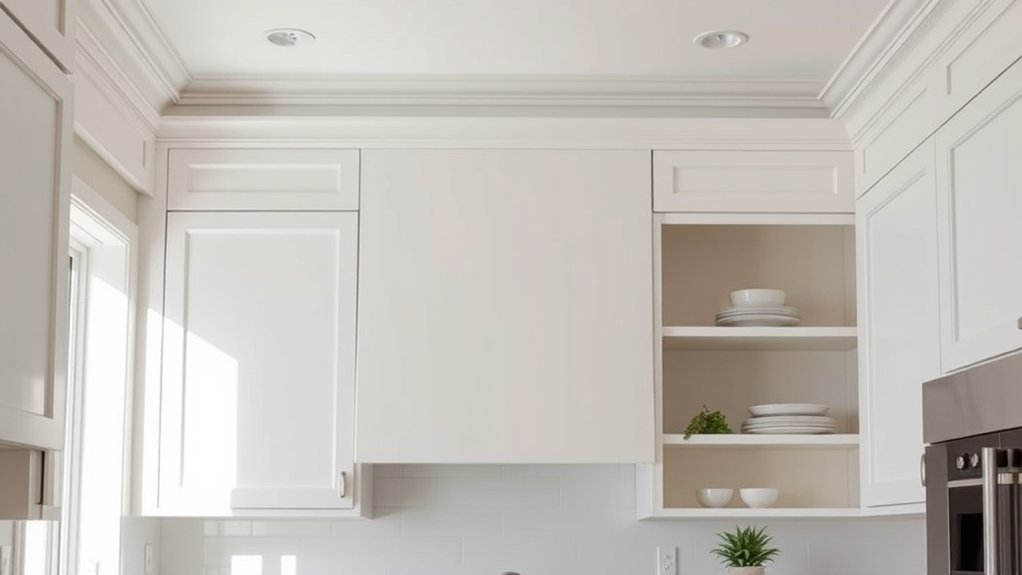
Paint them to match your cabinets, extend cabinetry to the ceiling, or add crown molding for a seamless transition.
You can also cover soffits with wallpaper, use recessed or LED lighting to turn them into a feature, or mount open shelving beneath them for display space.
These budget-friendly ideas can help you refresh your kitchen without removing the soffits.
Read on to find out how to pull off each technique.
Key Takeaways
- Paint soffits to match cabinet color and sheen for a seamless, blended appearance.
- Extend cabinets or add floating shelves upward to the soffit for cohesive visual flow.
- Add crown molding matching cabinet trim to soften edges and unify the design.
- Cover soffits with wallpaper, wood paneling, or shiplap to add texture and style.
- Install recessed or LED strip lighting in soffits to create a deliberate design feature.
What Is a Kitchen Soffit?
What Is a Kitchen Soffit?
Why do so many kitchens have that boxed-in gap between the cabinets and ceiling? That’s a soffit, and it’s not a design flaw. It’s a structural feature. Builders use soffits to hide ductwork, plumbing lines, electrical wiring, or support beams that run above your cabinets. In older homes, you’ll often find them in kitchens with 9-foot or 10-foot ceilings, where standard cabinets don’t reach the top.
Soffits aren’t going anywhere without major renovation, so you’re better off working with them. Think of your soffit as extra surface area you can use creatively. You can paint it to match your color schemes, add molding to blend it into your cabinetry, or install lighting options like LED strips underneath to brighten your countertops.
Once you understand what a soffit actually does, disguising it becomes less about hiding a flaw and more about making a smart design choice.
Paint Your Soffit to Match Your Cabinets
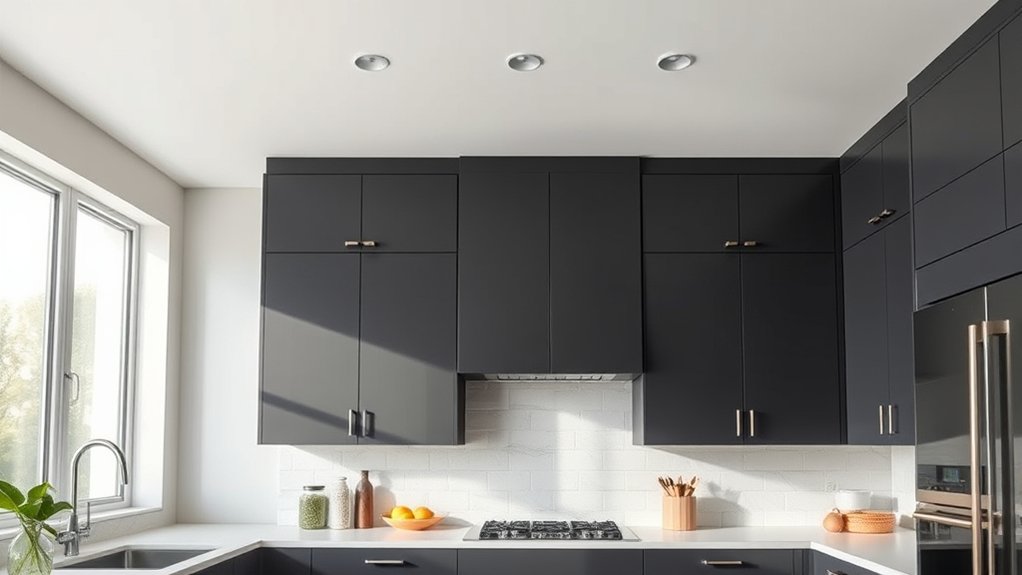
The easiest fix for a soffit costs nothing but a can of paint. If you paint your soffit the same color as your cabinets, it visually disappears into the cabinetry instead of standing out as a separate, awkward box. This color coordination trick works because your eye stops registering the soffit as a distinct architectural element and starts reading it as part of the cabinet structure above.
Match the sheen, too. Use the same finish on the soffit that you used on your cabinets, whether that’s satin, semi-gloss, or matte. Mismatched sheens will give away the illusion even if the color is spot-on.
For an even more seamless look, try paint techniques like extending your cabinet’s trim color onto the soffit’s edges or adding a thin shadow line where the soffit meets the ceiling. These small details trick the eye and make your kitchen feel more cohesive overall.
Extend Your Cabinets to Fill the Space
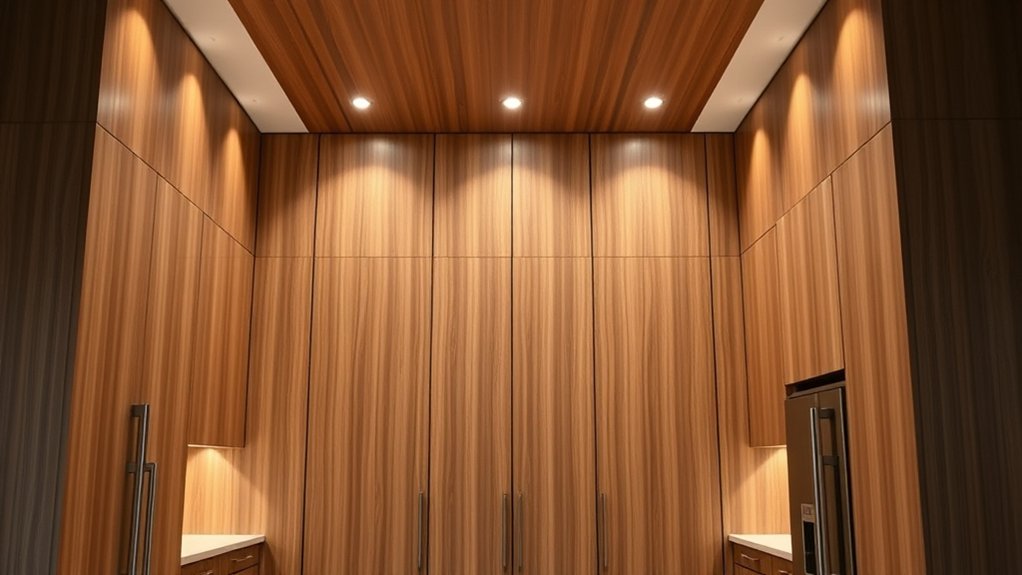
If you’d rather make the soffit disappear, extend your cabinets to the ceiling. Match the existing style and materials so the new sections blend in and look like they were always part of the cabinetry.
Match Cabinet Style
Because soffits often sit right above existing cabinetry, extending your cabinets upward offers one of the cleanest ways to disguise them. Once you’ve closed that gap, focus on style coordination so the new sections look original to your kitchen, not added on. Cabinet customization makes this possible, whether you’re matching door panels, trim profiles, or finish colors to your current layout.
Keep these details in mind:
- Match the wood species and stain for a seamless color blend.
- Replicate door styles and hardware so new cabinets feel original.
- Align panel grooves and molding for a cohesive, built-in look.
When done right, your cabinetry reads as one continuous design, erasing any sign the soffit ever existed.
Choose Matching Materials
Once you’ve decided to extend your cabinets into the soffit, choosing materials that match becomes your next priority. You’ll want to track down your cabinet’s original manufacturer or finish code, since exact matches save you from a patchwork look.
If that’s not possible, a skilled finish carpenter can custom-blend stain or paint to achieve color coordination that’s nearly seamless. Don’t forget hardware upgrades: swapping old pulls and hinges for new ones across all cabinets, including your extensions, creates a cohesive, intentional design rather than an obvious add-on.
| Material | Matching Challenge | Solution |
|---|---|---|
| Stain-grade wood | Color variation | Custom blending |
| Painted cabinets | Sheen differences | Full repaint |
| Laminate | Discontinued patterns | Panel replacement |
| Hardware | Finish mismatch | Full-set upgrade |
Add Crown Molding to Blend the Soffit
Since a soffit’s harsh, flat edge often draws the eye, crown molding offers the simplest fix for softening that shift. By running molding along the bottom of the soffit and tying it into your existing cabinet crown, you create one continuous visual line instead of two competing shapes. This small addition tricks the eye into reading the soffit as part of the cabinetry’s design rather than an afterthought.
Consider these details before installing:
- Match the profile to your cabinet crown so the transition looks intentional, not patched together.
- Check for ventilation solutions first. Some soffits house ductwork, so confirm molding won’t block airflow.
- Respect historical preservation guidelines if you’re in an older home, choosing period-appropriate profiles.
Paint the molding the same color as your cabinets for a seamless finish. This low-cost, high-impact update often makes the biggest visual difference in disguising awkward soffit lines.
Cover Your Soffit With Wallpaper
How do you turn an awkward ceiling gap into a design feature? Wrap your soffit in wallpaper and let it become an intentional part of your kitchen’s style instead of an afterthought. Choose a pattern that complements your cabinetry and backsplash, or go bold with decorative murals that turn the soffit into a focal point rather than a flaw. If you’d rather keep things subtle, opt for textured finishes like grasscloth or linen-look wallpaper to add depth without overwhelming the space.
Before you start, clean the surface thoroughly and prime it if your soffit has existing paint or texture issues. Peel-and-stick wallpaper works well for smaller soffits and offers an easy way to experiment without long-term commitment. For a more durable option, traditional paste-based wallpaper holds up better over time.
Whichever route you choose, matching your wallpaper to your kitchen’s existing palette ensures the soffit blends seamlessly rather than standing out as an obvious fix.
Panel Your Soffit With Wood for Texture
If wallpaper feels too flat for your kitchen, wood paneling brings warmth and dimension to that stubborn soffit instead. Wood paneling adds texture improvement that painted drywall simply can’t match, turning an awkward gap into a design feature. You don’t need to overhaul your whole kitchen—just the soffit itself can carry the transformation.
That soffit isn’t a flaw to hide—it’s an invitation. Wood paneling turns dead space into the kitchen’s quiet focal point.
Consider these options before you start:
- Shiplap boards: Create horizontal lines that make the soffit look intentional, not accidental.
- Reclaimed wood: Adds rustic character and pairs well with industrial or farmhouse styles.
- Tongue-and-groove planks: Offer a clean, seamless finish for modern kitchens.
Match the wood tone to your cabinetry or go contrasting for a bold statement. Seal the panels to protect against kitchen humidity and grease. This approach costs more than wallpaper but delivers lasting texture improvement that lifts the entire room’s character without major renovation.
Install Lighting to Turn Your Soffit Into a Feature
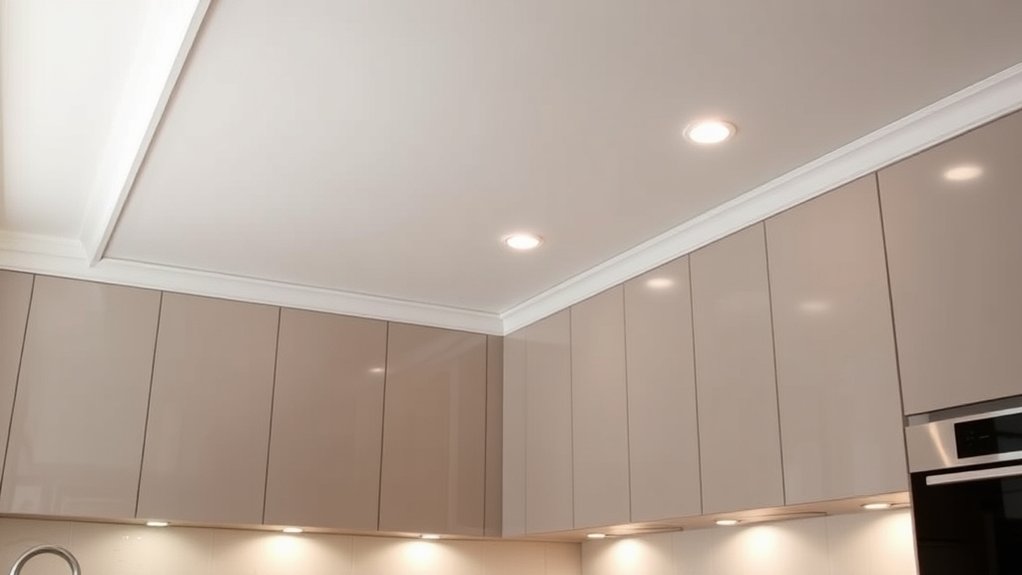
Because soffits already jut into your kitchen’s negative space, you might as well put that space to work with lighting. Recessed puck lights installed along the underside of the soffit cast a warm glow over countertops, turning an awkward structural element into functional task lighting.
LED strip lights tucked into a routed channel create a softer, diffused effect that highlights your backsplash or upper cabinets.
If you’re dealing with soffit ventilation ductwork hidden inside the structure, work with an electrician who can route wiring around vents without compromising airflow. This keeps your kitchen safe while still achieving the look you want.
Lighting draws the eye upward intentionally, reframing the soffit as a design choice rather than a flaw. This small investment pays off in kitchen aesthetics, making the space feel more intentional and layered.
Instead of hiding your soffit, you’re giving it a purpose and a glow-up.
Add Open Shelving to Mask the Soffit
Lighting isn’t the only way to soften a soffit’s bulk—open shelving tackles the problem from a different angle entirely. Instead of hiding the soffit, you build directly beneath it, extending cabinetry upward with floating shelves that visually absorb the awkward overhang into a cohesive storage wall.
This soffit masking technique turns dead space into functional square footage while breaking up the bulky ceiling line.
Mount shelves flush against the soffit’s underside, letting them run its full depth so the blending looks intentional rather than tacked on. Match the shelf material to existing cabinetry or choose a contrasting wood tone to create a deliberate design statement.
- Stack shelves at varying heights to draw the eye upward naturally
- Display dishware, plants, or cookbooks to add warmth and personality
- Use the same finish as lower cabinets for visual continuity
Open shelving gives you storage and style without a single demolition tool.
Should You Remove Your Kitchen Soffit Instead?
Before trying clever paint tricks or open shelving, you might wonder whether removing the soffit altogether makes more sense. It can be costly, though—you’ll need to budget for demolition, drywall repairs, and repainting the kitchen ceiling. And before you start, check what’s inside the boxed-in space. Ductwork, electrical wiring, or plumbing can turn a straightforward demolition into a more complex and expensive renovation.
Cost of Removal
If you’re weighing demolition against disguise, the price tag usually settles the debate fast. Tearing out a soffit isn’t just cosmetic work—you’re dealing with electrical rerouting, ductwork relocation, drywall repair, and possibly structural adjustments.
Soffit materials inside the cavity, like wiring or vents, often dictate how complex and costly the job becomes.
Your budget considerations should include:
- Labor costs: Electricians and HVAC pros charge separately from general contractors
- Hidden repairs: Opening walls often reveals outdated wiring or insulation issues
- Finishing work: New drywall, paint, and cabinet adjustments add up quickly
Removal projects frequently run into thousands of dollars, while disguising a soffit with trim, paint, or decorative elements costs a fraction of that price.
Structural and Electrical Concerns
Since soffits often hide more than empty space, you’ll want to know what’s lurking inside before grabbing a sledgehammer. Many soffits conceal electrical wiring, plumbing lines, or HVAC ductwork that builders routed through this convenient gap. You might also find hidden ventilation for range hoods or bathroom fans snaking through the cavity, especially in homes where exterior walls didn’t offer a direct path outside.
Beyond utilities, some soffits provide structural reinforcement, housing support beams or blocking that ties your cabinets to the wall. Removing these without understanding their purpose risks compromising your kitchen’s stability or disrupting critical systems.
Before demolition, cut a small inspection hole or consult an electrician and contractor. Knowing what’s inside determines whether removal is simple or requires professional rerouting.
Weighing Renovation vs. Disguise
Once you know what’s hiding behind your soffit, you’ll face a bigger question: do you disguise it or tear it out entirely? The answer depends on your budget, timeline, and interior design goals.
Removal requires rerouting wiring, ductwork, or plumbing, plus drywall and paint work. It’s pricier and messier, but it can give you more storage and a cleaner ceiling line. Disguising costs less, takes less time, and still delivers a stylish look.
Consider these factors before deciding:
- Budget: Removal often costs thousands more than creative disguise solutions.
- Timeline: Disguising takes days; removal can take weeks with contractors involved.
- Space optimization: Removing soffits adds cabinet space, while disguising preserves function without construction.
Weigh these trade-offs honestly before committing to either path.
How Much Does Soffit Disguising Cost?
Because soffit disguises range from a $20 can of paint to a $500 custom trim job, your final cost depends entirely on which method you choose. Budget largely dictates your options, so it helps to match your spending to the technique that delivers the best visual payoff.
| Method | Estimated Cost |
|---|---|
| Paint-matching | $20–$75 |
| Decorative trim/molding | $100–$300 |
| Faux cabinet panels | $200–$500 |
Before you commit, consider how your soffit interacts with kitchen ventilation. Many soffits house ductwork, so any disguise you choose can’t block airflow or interfere with appliance integration, especially above a range hood or microwave.
Cheaper fixes like paint work well when you just need the soffit to blend in, while pricier trim or paneling options create a built-in look that raises the entire kitchen. Set your budget first, then choose the method that fits both your wallet and your ventilation needs.
Frequently Asked Questions
Can You Remove a Soffit Without Hiring a Professional Contractor?
Yes, you can remove a soffit yourself if you’re handy and comfortable with basic demolition, electrical checks, and drywall work. However, once it’s gone, you’ll face bigger challenges like cabinet integration and ceiling installation that often require precision.
You’ll need to patch ceilings, possibly extend cabinets upward, and guarantee everything looks seamless. If you’re not confident tackling wiring, structural elements, or finish carpentry, it’s worth hiring a pro for those trickier final steps.
Will Disguising a Soffit Affect My Kitchen’s Resale Value?
No, disguising a soffit generally won’t hurt your resale value. It can actually boost buyer appeal. You’re improving aesthetics without major structural changes, which buyers appreciate.
Adding decorative lighting draws attention upward and makes the space feel intentional rather than awkward. Just make sure you don’t block ventilation or conceal access to vents or ductwork inside the soffit.
If you handle those details thoughtfully, you’ll create a polished look that elevates your kitchen’s overall marketability.
Do Soffit Covers Require Special Maintenance or Cleaning?
No, soffit covers don’t need special maintenance beyond regular kitchen upkeep. You’ll find that cleaning techniques depend largely on the soffit material you’ve chosen. For painted drywall, just wipe with a damp cloth. Wood paneling benefits from occasional polishing, while decorative tiles only need standard degreasing cleaners.
You’re not adding extra chores. Just incorporate these surfaces into your normal cabinet-cleaning routine, and they’ll stay looking great for years.
Can I Disguise a Soffit Without Repainting My Entire Kitchen?
Yes, you can! You don’t need to repaint your whole kitchen to disguise a soffit. Try cabinet integration by extending your upper cabinets to meet the soffit, creating a seamless, built-in look.
You could also opt for a simple ceiling modification, like adding trim or molding around the soffit’s edges to blend it with the ceiling. Both options let you camouflage the soffit while keeping your existing color scheme intact.
How Long Does a Typical Soffit Disguise Project Take?
You’ll spend more time deciding whether soffits are “architectural features” than actually fixing them. Ironic, right? Realistically, you can knock out a disguise project in a weekend.
Saturday, you’ll add decorative accents like molding or trim to blend the soffit into your cabinetry. Sunday, you’ll install lighting improvements underneath to distract eyes upward and downward instead.
Two days, minimal mess, maximum impact. No need to repaint your whole kitchen or question your life choices.
Conclusion
You don’t have to view your soffit as a flaw you’re stuck with. Whether you paint it, extend your cabinets, add molding, or swap it for open shelving, you can choose a fix that fits your budget and style.
Some claim removal always adds value, but that’s not universally true. It depends on your home’s wiring and ductwork. Weigh your options carefully, and you’ll turn an awkward gap into a design win when you disguise your kitchen soffits.