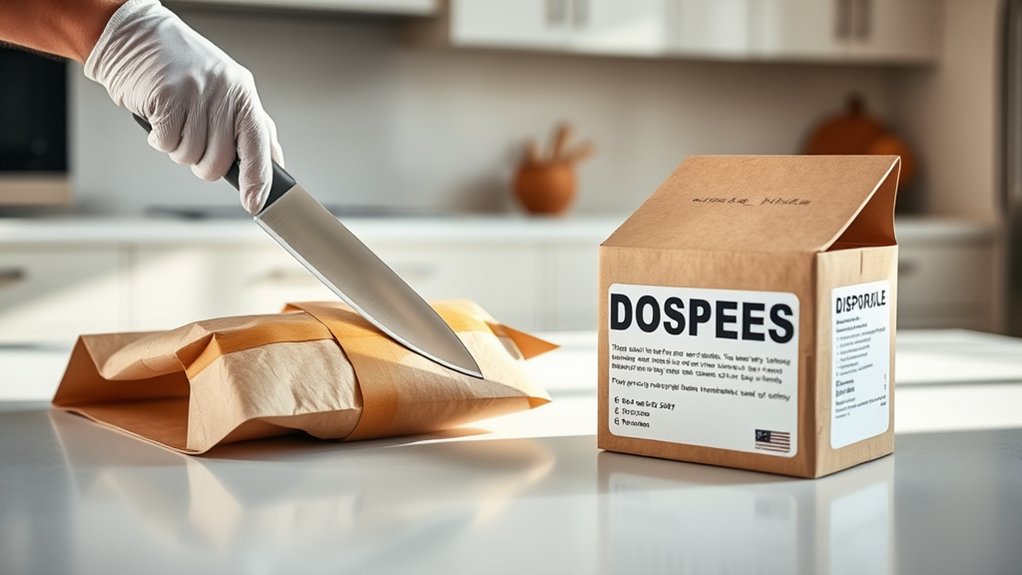
How to Dispose of Kitchen Knives in 3 Safe Steps
Getting rid of an old kitchen knife can feel tricky: you want to protect sanitation workers and avoid anyone getting hurt. You’re not alone—many people struggle to figure out the safest way to dispose of kitchen knives.
To dispose of a kitchen knife safely, start by wrapping the blade in thick cardboard, taping it securely so the edge can’t poke through.
Next, label the wrapped knife clearly with “KNIFE” or “SHARP OBJECT” in bold marker so sanitation workers know to handle it carefully.
Finally, place it in regular trash, not recycling.
Want to make sure you’re choosing the best disposal option for your situation? Here’s what you need to know next.
Key Takeaways
- Wrap the blade securely in thick cardboard, taping it tightly to prevent exposure or injury.
- Label the wrapped knife clearly with “KNIFE” or “SHARP OBJECT—CAUTION” for visibility.
- Dispose of the wrapped knife in regular trash, never in recycling bins.
- Check local waste management or metal recycling programs for specific disposal guidelines.
- Consider donating usable knives or contacting scrap metal recyclers for responsible disposal.
Wrap the Blade for Safe Handling
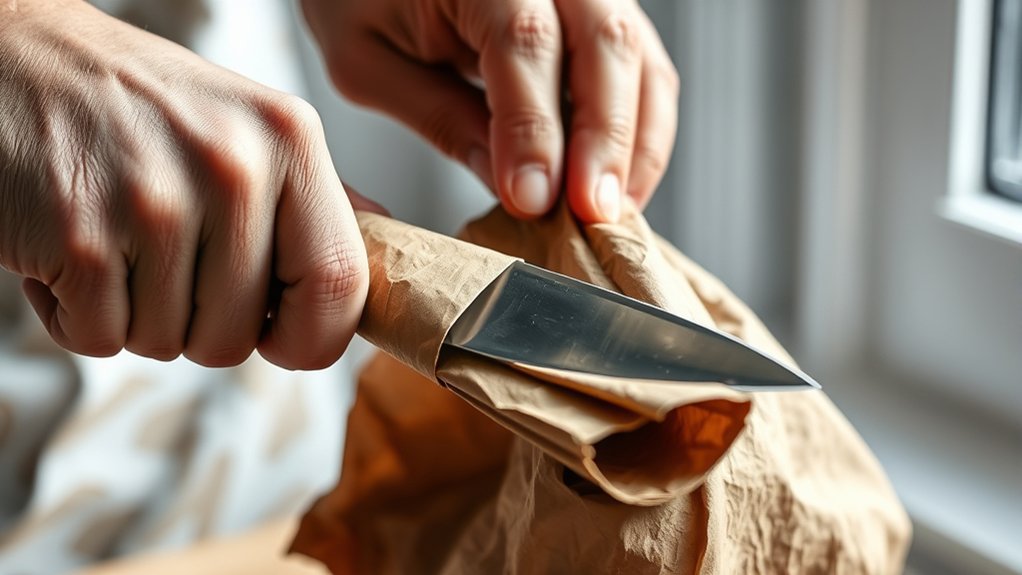
How do you keep a discarded knife from slicing open a trash bag—or someone’s hand? You wrap it properly before it ever touches your garbage can. Start by grabbing a few layers of cardboard—an old cereal box or shipping box works perfectly.
Wrap it before it ever touches your garbage can—a few layers of sturdy cardboard is all it takes.
Cut a piece large enough to cover the entire blade, then fold it around the sharp edge like a sheath. Secure the cardboard tightly with heavy-duty tape, wrapping it multiple times to prevent slipping. This blade protection method keeps the edge contained and stops it from cutting through anything it touches.
Don’t skip this step, even for dull or rusty knives—they can still cause injury. These safety precautions protect sanitation workers who handle your trash, as well as anyone who might accidentally reach into the bag.
Once wrapped, label the package clearly with the word “knife” or “sharp object” in permanent marker, so everyone knows to handle it with care.
Label It Clearly as a Knife
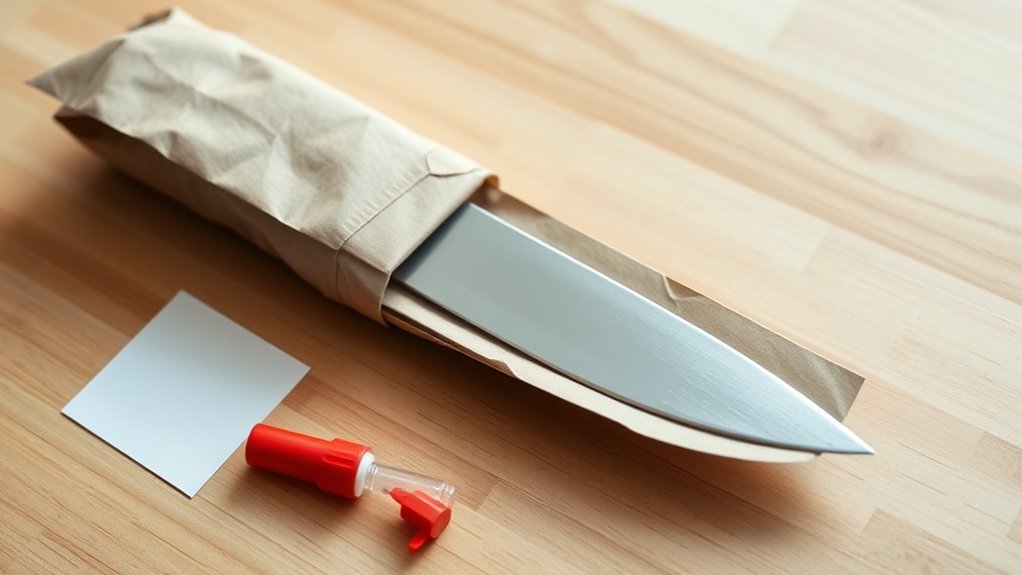
Once you’ve wrapped the blade securely, grab a permanent marker and write “KNIFE” or “SHARP OBJECT—CAUTION” directly on the cardboard in bold, large letters. This simple step protects sanitation workers who handle your trash without knowing what’s inside. Don’t rely on vague labels like “fragile” or “handle carefully”—those words don’t convey the actual danger. Be specific and direct.
Labeling your discarded knife is just as important as proper knife maintenance while it’s still in use. You wouldn’t leave a sharp blade lying around your kitchen unmarked and exposed, so don’t do it in the trash either. Taking safety precautions at every stage of a knife’s life, from purchase to disposal, keeps everyone around you safe.
Place the labeled package in your regular trash, not recycling bins, since recycling facilities sort materials by hand and won’t expect a blade inside cardboard.
Find the Right Knife Disposal Method Near You
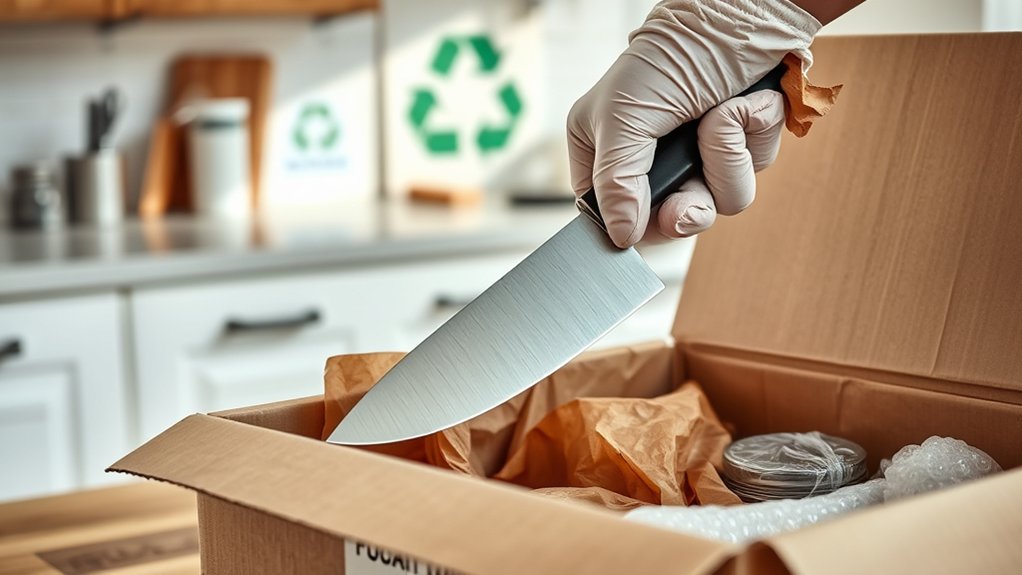
Wrapping and labeling your knife handles the immediate safety concern, but you’ve still got options worth considering before tossing it out with the regular trash. Check your city’s waste management website first. Many municipalities have specific guidelines for sharp metal items.
| Disposal Option | What to Know |
|---|---|
| Metal recycling programs | Steel blades often qualify; call ahead to confirm they accept knives |
| Local waste facility | Drop-off centers handle hazardous or sharp items safely |
| Donation (if usable) | Thrift stores may accept knives in good condition with intact sharpness maintenance |
If the knife still holds its edge and you’re just decluttering, consider donating it rather than discarding it. Many community centers and secondhand shops welcome quality kitchen tools.
For blades that are truly done, scrap metal recyclers typically pay by weight and handle disposal responsibly, turning your old knife into something useful again instead of landfill waste.
Frequently Asked Questions
Can I Recycle Kitchen Knives With Regular Metal Recycling?
No, you shouldn’t just toss kitchen knives into regular metal recycling bins. Loose blades can injure sanitation workers, so you’ll need to wrap them securely first. Before disposing of a knife, consider whether knife sharpening could extend its life instead. If it’s truly done, put on safety gloves, wrap the blade in thick cardboard or tape, label it “sharp,” and check with your local recycling center for specific metal recycling guidelines.
Is It Legal to Throw Knives in Household Trash?
Yes, it’s generally legal to throw knives in household trash, but you’ll need to follow proper disposal methods first. Don’t just toss a blade in loosely. Wrap it securely in thick cardboard or heavy fabric, then tape it well.
Label the package “sharp object” so sanitation workers stay safe. This simple step reflects good knife safety and protects anyone handling your trash. Always check your local regulations, since some municipalities have specific rules for sharp item disposal.
What Should I Do With Broken or Rusty Knives?
Did you know nearly 7,000 people visit ER rooms yearly from knife-related mishaps? That’s why you shouldn’t toss broken or rusty knives carelessly! Instead, wrap the blade securely in thick cardboard or duct tape before disposal.
If you’re unsure whether it’s salvageable, consider knife sharpening first—it might restore your blade’s usefulness. When handling damaged knives, always use safety glove protection to avoid cuts. You’ll stay safer and reduce waste this way!
Can Donation Centers Accept Used Kitchen Knives?
Yes, many donation centers accept used kitchen knives, but you’ll want to check their specific policies first since not all locations handle blades.
Knife safety matters here—wrap each blade securely in cardboard or thick cloth and tape it shut before you donate.
During the donation process, be sure the knives are clean, undamaged, and still functional. Calling ahead saves you a wasted trip and guarantees your knives find a good home instead of a landfill.
How Do I Dispose of a Large Knife Collection at Once?
Start by sorting your collection into usable and worn-out knives. For blades still in good shape, consider knife sharpening services or donating them locally.
For the rest, put on safety gloves before wrapping each blade individually in thick cardboard or cloth. Label the package clearly as “sharp objects,” then check your city’s bulk waste pickup options or take them directly to a local scrap metal recycler for safe, efficient disposal.
Conclusion
Disposing of kitchen knives doesn’t have to be a hassle or a hazard. Did you know that over 6,000 people end up in emergency rooms each year due to improper knife handling and disposal? By wrapping your blade securely, labeling it clearly, and finding a proper disposal method near you, you’ll protect sanitation workers and keep your home safer. Just a few extra minutes of effort can prevent painful accidents and give you peace of mind when disposing of kitchen knives.