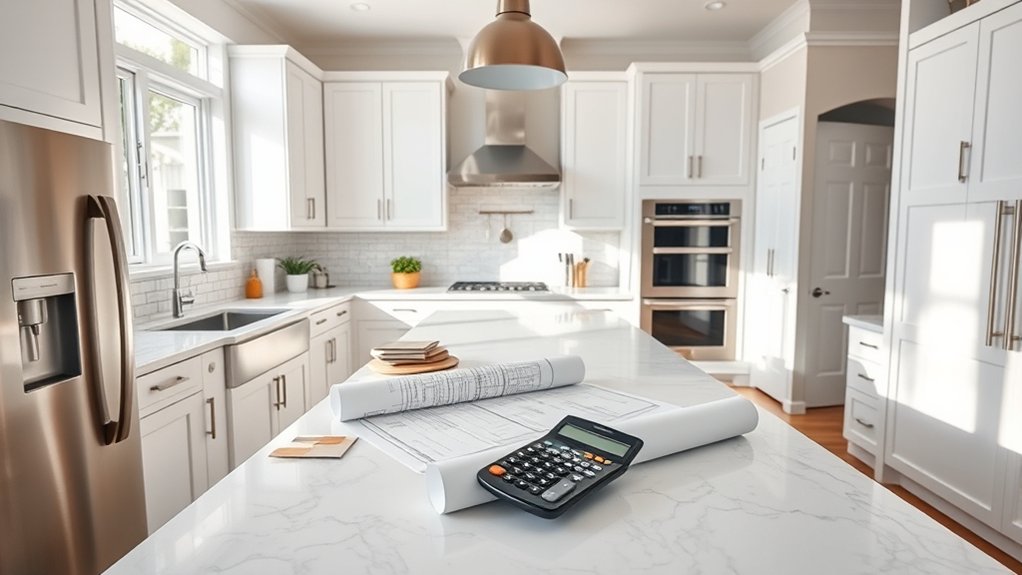
How Much Does a New Kitchen Cost?
Planning a new kitchen can feel overwhelming, especially when you’re trying to balance style, quality, and a realistic budget. You’re not alone—many people struggle to understand how much each choice can add to the final bill.
A new kitchen typically costs £8,000–£30,000, depending on its size, layout, cabinets, worktops, appliances, and installation. You might spend £8,000–£15,000 on a budget refresh, £15,000–£25,000 on a mid-range renovation, or £25,000–£30,000-plus on premium finishes.
Remember to budget for plumbing, electrics, delivery, removal, labour, VAT, and around 10% for unexpected costs. Careful planning helps you balance essentials and upgrades, and the sections below explain each major expense in more detail.
Key Takeaways
- A new kitchen typically costs £8,000–£30,000, depending on size, layout, materials, appliances, and installation complexity.
- Budget refreshes cost less, while mid-range projects add custom cabinetry and durable surfaces. Premium renovations include bespoke joinery and luxury appliances.
- Appliances commonly add £2,000–£8,000, excluding delivery, installation, plumbing, electrical work, and old-appliance disposal.
- U-shaped layouts, islands, open-plan extensions, bespoke storage, and moved services can significantly increase the overall cost.
- Reserve approximately 10–20% for unexpected expenses. Compare itemised quotes covering design, labour, delivery, VAT, removal, and installation.
What Does a New Kitchen Cost?
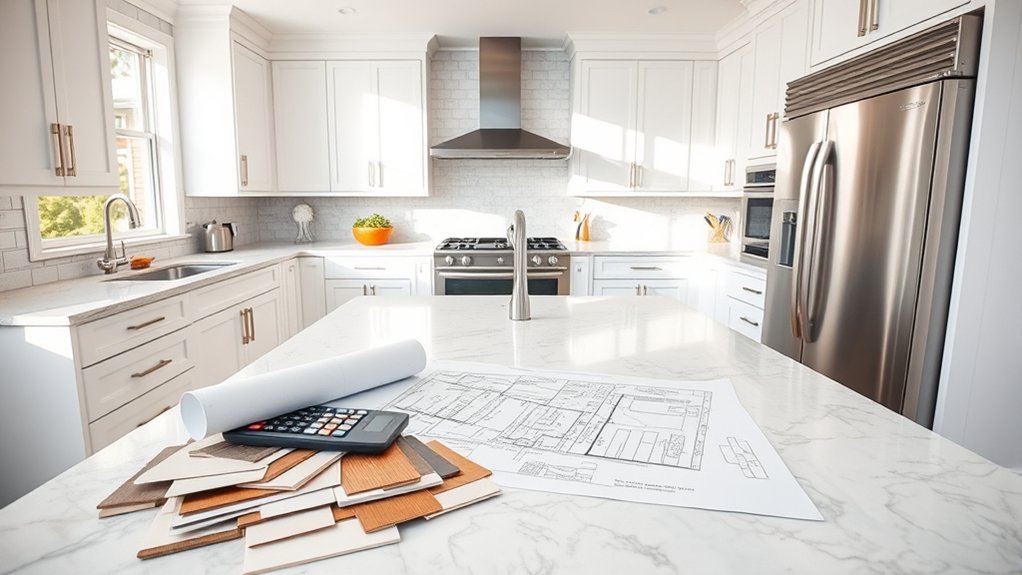
What does a new kitchen cost? You’ll typically spend between £8,000 and £30,000 for a complete renovation, although your choices can push the price higher or lower.
A budget refresh may cover paint, handles, worktops, and basic appliances, while a mid-range project often includes custom cabinetry, durable surfaces, and upgraded lighting. Premium renovations can add bespoke joinery, luxury appliances, stone worktops, and specialist installation.
Your final quote depends on materials, labour, plumbing, electrics, and the appliances you choose. Set a realistic budget before you begin, then reserve around 10% for unexpected costs.
Compare several detailed quotes, and check whether each includes design fees, delivery, removal, installation, and VAT.
You can also control spending by combining standard cabinets with distinctive Kitchen decor. Open shelving, new splashbacks, and statement lighting create impact without requiring every element to be bespoke.
Practical storage solutions, such as pull-out larders and drawer organisers, can improve daily use while keeping your investment focused.
How Kitchen Size Affects the Total Cost
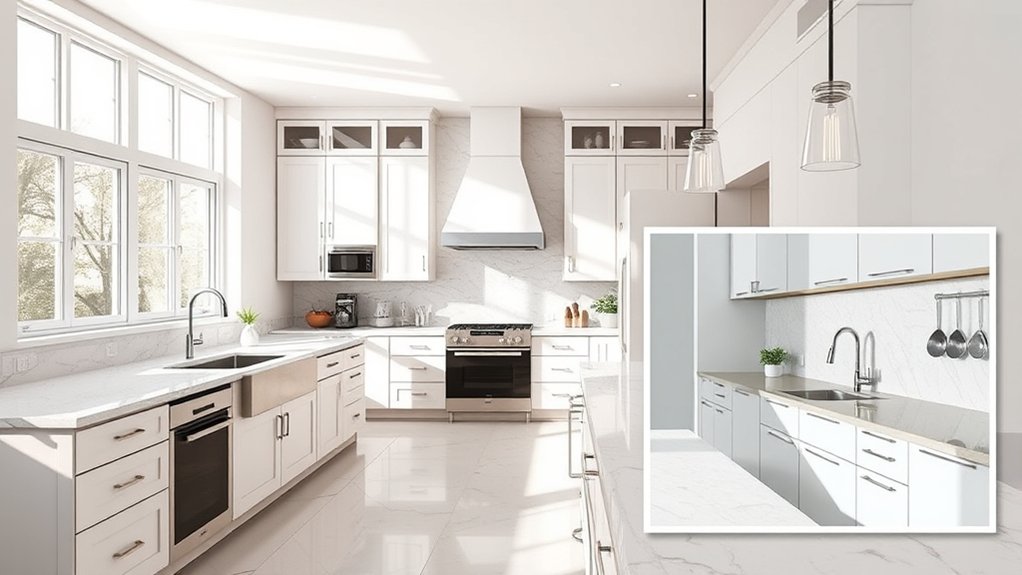
Kitchen size affects cost because larger spaces need more cabinets, worktops, flooring, lighting, and labour. You’ll usually spend less on a compact kitchen because there’s less area to prepare, fit, and finish.
Larger kitchens typically cost more, while compact spaces can reduce material and installation expenses.
However, small rooms can require specialist solutions, such as made-to-measure storage, compact appliances, or complex layouts, which may increase installation costs.
In a medium-sized kitchen, your budget often balances practical capacity with manageable fitting expenses. A large kitchen typically costs more overall because you’ll buy more materials and may need additional installation days.
You should also account for plumbing, electrical alterations, ventilation, and flooring repairs if the expanded layout changes existing services.
Your choices still matter more than floor area alone. Premium finishes, smart kitchen lighting, and high-end appliances can raise the total substantially.
Check appliance warranties before buying. Longer cover may protect your investment but add to the upfront price. Request an itemised quote so you can compare costs accurately.
How Much Do Kitchen Cabinets Cost?
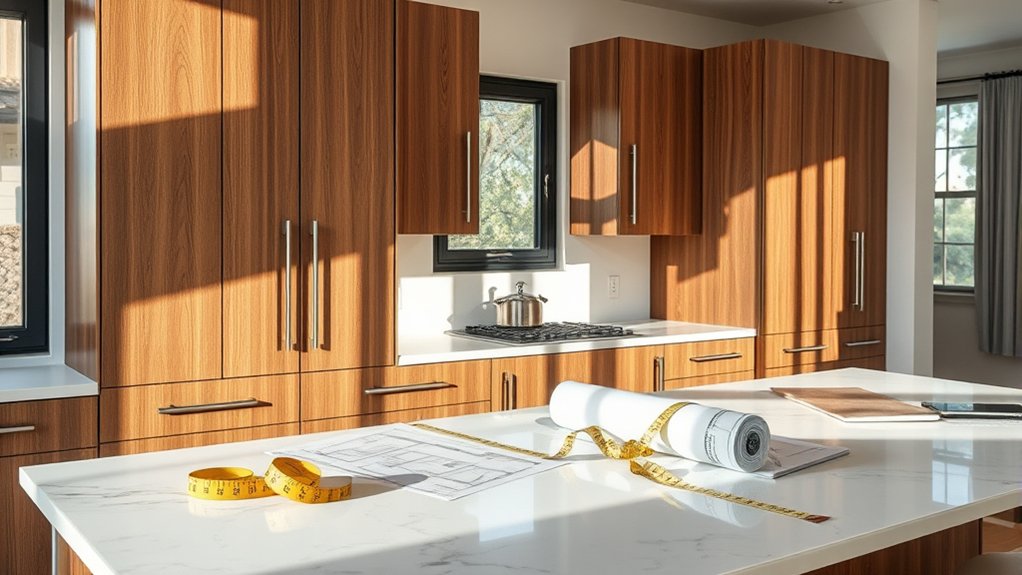
Your cabinet budget depends on the material you choose, such as laminate, thermofoil, or solid wood. You’ll also want to compare affordable stock cabinets with customizable options, which typically cost more. And don’t forget to include installation and labor, as these expenses can significantly increase your total cost.
Cabinet Material Costs
Cabinet material costs can vary widely, but you’ll typically pay less for laminate or thermofoil than for wood, plywood, or custom hardwood cabinetry. Laminate offers an affordable, easy-to-clean surface, while thermofoil resists moisture and works well in busy kitchens.
Wood veneer gives you a natural appearance at a lower price than solid wood, although it needs careful cleaning to prevent damage. Plywood boxes generally cost more than particleboard but provide better strength and durability.
Solid hardwood doors can raise your budget substantially, especially with premium species, detailed profiles, or specialty finishes. Consider cabinet maintenance when comparing materials, since durable surfaces may reduce repairs and refinishing over time.
If you’re planning a cabinet renovation, matching existing materials and finishes can affect your final cost. Ask your contractor about warranties, moisture resistance, and cleaning requirements before choosing.
Stock Vs. Custom Cabinets
When budgeting for cabinets, you’ll usually spend less on stock options than on semi-custom or fully custom designs. Stock cabinets come in standard sizes, limited finishes, and popular cabinet styles, making them a practical choice when you’re watching costs.
Semi-custom cabinets offer more door profiles, colors, storage features, and sizing flexibility, so you’ll pay more for broader selections. Fully custom cabinets cost the most because you can specify dimensions, materials, finishes, and specialized storage for your kitchen’s exact needs.
Compare material durability as well as price. Solid wood and high-quality plywood may outlast lower-cost particleboard, though construction and finish also affect longevity.
Measure your priorities carefully. If standard options meet your layout and taste, stock cabinets can preserve your budget. Choose custom work when unusual dimensions or personalized details matter most.
Installation And Labor
Installation and labor can add a significant amount to your kitchen cabinet budget, often costing about $50 to $450 per linear foot depending on the cabinet type, layout, and local rates. You’ll usually pay more for custom cabinets, complex corners, uneven walls, or extensive modifications.
Ask contractors whether quotes include removal, delivery, hardware installation, trim, and cleanup.
- Measure carefully: Accurate dimensions help prevent costly cabinet adjustments.
- Coordinate trades: Schedule plumbing, electrical work, kitchen lighting, and appliance connections before installation.
- Protect finishes: Discuss how installers will safeguard your flooring options, countertops, and nearby rooms.
- Compare estimates: Request itemized bids, verify insurance, and confirm warranty coverage.
You can reduce labor costs by clearing the room, labeling stored items, and handling simple demolition when safe. However, professional installation typically delivers better alignment, stability, and long-term performance than DIY work.
How Much Do Kitchen Worktops Cost?
Kitchen worktops typically cost between £100 and £3,000, depending on the material, size, thickness, and finish you choose. Laminate offers the lowest price, while solid wood, quartz, granite, and porcelain increase your investment.
Measure carefully, as unusual layouts, cut-outs, upstands, and splashbacks can raise the final quote.
| Material | Typical cost | Best for |
|---|---|---|
| Laminate | £100–£500 | Affordable updates |
| Solid wood | £500–£1,500 | Warm, natural style |
Your worktop should suit your lifestyle. Choose laminate for easy maintenance, wood for character, or quartz for durability and a seamless appearance.
You’ll also need to budget for templating, delivery, edging, and professional fitting, which may add several hundred pounds.
Coordinate the surface with your kitchen lighting and flooring options so the whole room feels cohesive. Request itemised quotes from at least three suppliers, and check whether warranties cover staining, heat, and installation.
A thicker edge profile can create a premium look without replacing every cabinet. Don’t forget to allow for future repairs when comparing materials and finishes.
What Should You Budget for Appliances?
Appliances usually account for £2,000 to £8,000 of a new kitchen budget, although premium models can push the total higher. Your final figure depends on how many appliances you need, their specifications, and whether you choose freestanding or integrated models.
Appliance costs typically range from £2,000 to £8,000, depending on your choices, specifications, and kitchen layout.
Set aside extra money for delivery, installation, plumbing, electrical work, and recycling old units.
- Essential package: Budget £2,000–£3,500 for a cooker, extractor, fridge-freezer, dishwasher, and washing machine.
- Mid-range package: Allow £3,500–£6,000 for quieter appliances, improved features, and better finishes.
- Premium package: Expect to spend £6,000–£8,000 or more on high-end brands and specialist equipment.
- Running costs: Prioritise Energy efficiency, as efficient appliances can reduce your electricity and water bills.
Compare warranties, installation requirements, and product dimensions before you buy. You’ll also need to contemplate appliance maintenance, since filters, seals, and servicing can add to long-term costs.
Ask suppliers for bundled discounts, but check that each appliance suits your cooking habits and household size. Reserve a contingency of around 10% for unexpected installation costs.
Which Kitchen Layout Costs the Most?
Your layout can have as much impact on the final cost as your appliances. U-shaped kitchens often cost the most because they need cabinets and countertops across three walls. You’ll also need more corner storage, filler panels, and careful planning to make every cabinet accessible.
An island can raise the budget further, especially when you choose seating, waterfall worktops, sinks, or built-in appliances.
Large open-plan kitchens may cost more than compact designs because they require longer runs, bigger surfaces, and additional storage. Galley kitchens usually cost less, since their straightforward footprint limits cabinetry and worktop area, although premium finishes can still increase the total.
Your choices for Kitchen decor also affect the price. Bespoke doors, stone backsplashes, and decorative hardware add quickly. Likewise, layered lighting fixtures, pendant lights, and under-cabinet strips can increase spending.
Before choosing a layout, compare storage needs, available space, and material quantities. An efficient design can deliver a high-end look without excessive features.
How Much Does Kitchen Installation Cost?
Once you’ve chosen a layout, installation becomes a major part of the overall kitchen budget. You’ll usually pay for assembling cabinets, fitting worktops, installing appliances, and completing finishing details.
Labour rates vary by region, project size, and the complexity of your kitchen design. A straightforward installation costs less than a bespoke arrangement with awkward corners, tall units, or specialist materials.
Your installer may price the work as a fixed project fee or charge by the day. Request a detailed quotation so you can compare exactly what’s included:
- Cabinet and drawer assembly
- Worktop cutting and fitting
- Appliance positioning and connection
- Handles, trim, plinths, and finishing
You should also ask whether removing your old kitchen, disposing of waste, and decorating are included. Lighting fixtures may require separate installation, so confirm this before signing.
Set aside a contingency of around 10% for unexpected adjustments, damaged parts, or extra finishing work. A written schedule helps you plan meals and avoid costly delays.
Will Plumbing and Electrical Work Add to the Cost?
Plumbing and electrical work can add considerably to your kitchen budget, especially if you’re moving sinks, relocating sockets, upgrading wiring, or installing new appliances. Your final price depends on access, labour rates, building regulations, and the condition of existing services.
A professional survey can reveal whether pipes need rerouting, circuits need upgrading, or your consumer unit requires replacement.
| Project change | Plumbing impact | Electrical impact |
|---|---|---|
| Move sink | New pipework | Usually none |
| Add dishwasher | Water and waste connection | Dedicated socket |
| Install island | Possible floor pipes | Island power supply |
| Upgrade appliances | Gas or water alterations | Higher-load circuits |
During budget planning, ask your installer for separate estimates covering labour, materials, certification, and potential repairs.
Material selection matters too. Appliance specifications and tap styles can determine connection requirements.
You’ll also need compliant installations and inspection certificates, particularly for gas, high-power appliances, and new circuits.
Confirm responsibilities before work begins, so quoted kitchen costs accurately reflect every required service adjustment.
How Can You Reduce Your Kitchen Costs?
You can keep your kitchen costs under control by setting a realistic budget before the work begins. Choose materials that offer a good balance of quality and price, and reuse existing features whenever possible.
Set a Realistic Budget
Setting a realistic kitchen budget starts with separating must-haves from nice-to-haves and pricing each project element before work begins. You’ll gain control when you account for labor, permits, delivery, and unexpected repairs, not just visible upgrades. Set aside 10–20% for surprises, then compare your total with available savings and financing limits.
- List priorities: Rank safety, storage, function, and style so essential work comes first.
- Track details: Record every quote, fee, and purchase in one shared spreadsheet.
- Protect appliances: Schedule appliance maintenance to prevent costly breakdowns during or after renovation.
- Control extras: Choose Kitchen decor selectively, and delay nonessential accessories until you confirm the final balance.
Review your budget weekly as prices and decisions change. If estimates exceed your limit, reduce the project’s scope, postpone lower-priority tasks, or adjust your timeline. Don’t borrow more than you can comfortably repay.
Choose Cost-Effective Materials
Choosing cost-effective materials can lower your kitchen renovation costs without sacrificing function or style. Compare prices for cabinets, countertops, flooring, and hardware before you commit.
Laminate countertops can mimic stone at a fraction of the cost, while engineered wood or luxury vinyl flooring can deliver durability and attractive finishes.
For cabinets, consider affordable stock or semi-custom models that match your layout and storage needs.
Eco-friendly options, such as bamboo flooring, recycled glass surfaces, and low-VOC paints, can offer value while reducing environmental impact.
You can also create character with vintage styles, including retro-inspired tiles, classic hardware, or period-color palettes, without choosing expensive designer products.
Request several quotes, check warranties, and calculate long-term maintenance costs so the lowest price doesn’t become the most expensive choice.
Reuse Existing Features
Reusing existing features can reduce your kitchen costs by limiting demolition, labor, and replacement expenses. Before replacing everything, inspect what still works, matches your design, and meets safety standards.
You’ll often save more by updating selected elements than rebuilding the entire room.
- Keep cabinets: Paint sound doors, replace handles, and install new hinges instead of buying new units.
- Try upcycling countertops: Refinish, reseal, or cover durable surfaces to improve their appearance without replacement.
- Consider reusing fixtures: Keep sinks, faucets, lighting, and appliances when they function properly and suit your plan.
- Preserve the layout: Retain plumbing, electrical connections, and flooring where possible to reduce costly modifications.
Ask your contractor to assess each feature before demolition. You’ll avoid unnecessary purchases, shorten the project, and direct your budget toward improvements that make the biggest difference.
Always prioritize safety and code compliance.
How Do You Create a Complete Kitchen Budget?
A complete kitchen budget starts with more than cabinet and appliance prices. You’ll also need to account for labor, plumbing, electrical work, permits, delivery, finishes, and a contingency fund.
Begin by measuring your space, defining must-haves, and setting a realistic spending limit. Then request itemized quotes so you can compare costs accurately.
| Category | Typical items | Planning tip |
|---|---|---|
| Construction | Labor, plumbing, electrical | Get written estimates |
| Products | Cabinets, appliances, countertops | Prioritize material selection |
| Extras | Permits, delivery, finishes | Add 10–20% contingency |
Separate essentials from upgrades. If your budget tightens, you can choose stock cabinets, refinish existing features, or postpone decorative additions without sacrificing function.
Include sales tax, temporary meal arrangements, and possible structural repairs, since these expenses often surprise homeowners. Track every quote and purchase in one spreadsheet, and update totals as decisions change.
Keep contingency money untouched until the project ends. Review the completed budget with your contractor before signing, and confirm payment schedules, warranties, and change-order fees.
Frequently Asked Questions
How Long Does a New Kitchen Renovation Typically Take?
A new kitchen renovation typically takes six to twelve weeks, depending on your project’s size, complexity, and permitting requirements. You’ll spend one to three weeks planning the Kitchen layout and completing Material selection.
Demolition and structural work may take one to two weeks, while plumbing, electrical, cabinetry, countertops, and finishes usually require four to seven weeks.
You should also allow extra time for inspections, deliveries, unexpected repairs, and potential contractor scheduling delays.
Do I Need Planning Permission for a New Kitchen?
Better safe than sorry: you usually don’t need planning permission for a standard kitchen replacement if you’re not changing your home’s structure, footprint, or exterior.
However, you may need building permits for moving walls, creating openings, altering windows, or converting space. Check local renovation regulations before work begins, especially if you live in a listed property or conservation area.
Your council can confirm requirements and help you avoid costly delays, fines, or reversal work.
Should I Renovate My Kitchen or Replace It Entirely?
Renovate your kitchen if its layout works, cabinets remain sound, and you mainly need updated finishes, appliances, or storage. Replace it entirely if you face structural damage, poor functionality, outdated plumbing, or costly repairs.
Start with Budget planning: compare refurbishment and replacement quotes, then include installation, waste removal, and unexpected expenses. Small DIY projects, such as painting doors or changing handles, can reduce costs, but leave electrical and plumbing work to qualified professionals for safety.
How Can I Choose a Reliable Kitchen Installer?
Measure twice, hire once: choose a reliable kitchen installer by checking licenses, insurance, reviews, and recent references. Ask each candidate for a detailed, written quote covering labor, materials, timelines, permits, and cleanup.
Review their experience with your kitchen design, then confirm who’ll manage subcontractors and resolve problems. During budget planning, avoid the cheapest bid if it seems unrealistic.
Trust clear communication, proven workmanship, and a contract that protects you.
What Kitchen Features Add the Most Value to My Home?
You’ll add the most value with a practical layout, durable worktops, quality cabinets, and energy-efficient appliances. Prioritise storage, especially deep drawers, a useful pantry, and integrated recycling.
Kitchen design should balance timeless style with everyday function. Excellent lighting, reliable ventilation, and easy-clean surfaces also improve appeal.
Careful material selection matters. Choose hard-wearing finishes that suit your home and won’t date quickly.
A well-installed, cohesive kitchen usually attracts buyers and supports a stronger resale price.
Conclusion
Planning a new kitchen can feel intimidating, but a clear budget makes it manageable. Start by pricing cabinets, worktops, appliances, and installation, then allow extra for plumbing, electrics, and unexpected changes.
Compare quotes, choose durable yet affordable materials, and prioritise the features you’ll use most. With careful research and smart savings, you can create a practical, stylish space without financial strain.
Set your spending limit, seek professional advice, and enjoy your new kitchen with confidence. Understanding how much a new kitchen costs will help you plan wisely and stay within budget.