How to Get Rid of Roaches in Your Kitchen in 10 Steps
Finding roaches in your kitchen can feel overwhelming, but you’re not alone—many people struggle with these persistent pests. This guide to how to get rid of roaches in your kitchen walks you through practical steps to tackle the problem and help keep them from coming back.
To get rid of roaches in your kitchen, start by spotting infestation signs like droppings and egg capsules.
Eliminate food and water sources, take out trash daily, and seal entry points with caulk.
Deep clean hiding spots, set bait stations, and apply roach gel or boric acid safely.
Call an exterminator if problems persist, then maintain year-round prevention habits.
Stick around for the full ten-step breakdown that’ll help you tackle each stage with confidence.
Key Takeaways
- Inspect dark, warm areas like under sinks and behind appliances for droppings, egg capsules, and odors.
- Store food in airtight containers and eliminate water sources by fixing leaks and reducing humidity.
- Seal entry points with caulk, steel wool, and weatherstripping around pipes, baseboards, and windows.
- Deep clean kitchen nightly, washing dishes, wiping counters, and emptying trash to remove attractants.
- Apply natural repellents, bait stations, or boric acid, and call professionals if infestations persist.
Spot the Signs of a Roach Infestation
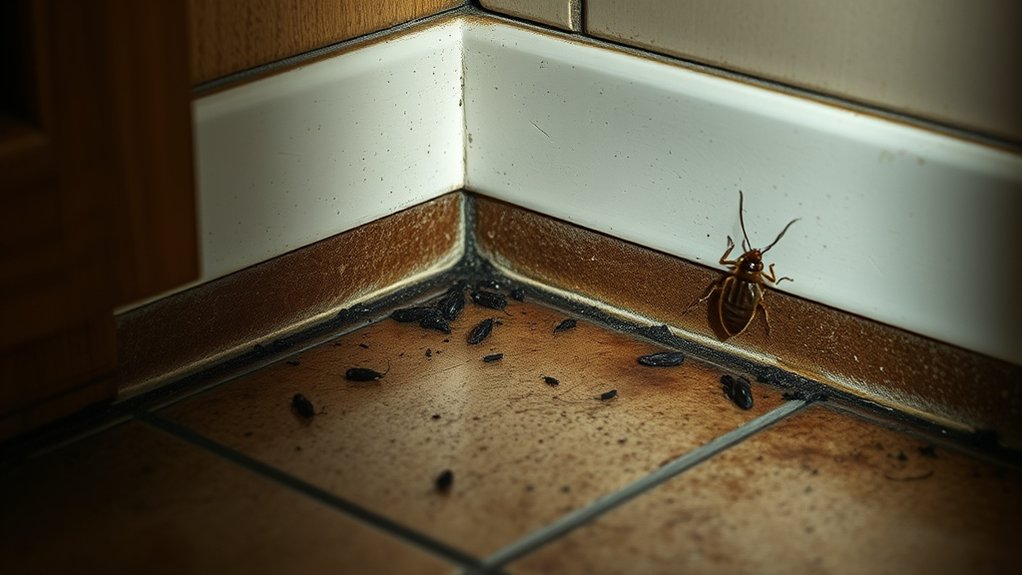
Before you can eliminate roaches, you need to confirm you’re actually dealing with them. Check dark, warm areas under your sink, behind appliances, and near pipes first. You’ll likely spot small, dark droppings resembling coffee grounds or black pepper—a telltale sign roaches have moved in.
Check under sinks, behind appliances, and near pipes—coffee-ground-like droppings mean roaches have already moved in.
Look for egg capsules too, called oothecae, tucked into cracks and corners. Understanding basic cockroach biology helps here: females produce these capsules regularly, so finding several means you’re facing an established population, not just a stray visitor.
A musty, oily odor often accompanies larger infestations, caused by pheromones roaches release to communicate. Don’t fall for common pest control myths claiming you’ll always see roaches during the day. They’re nocturnal and avoid light, so daytime sightings actually signal severe overcrowding.
Smear marks along walls and shed skins from molting nymphs round out the evidence you’re searching for.
Eliminate Food and Water Sources
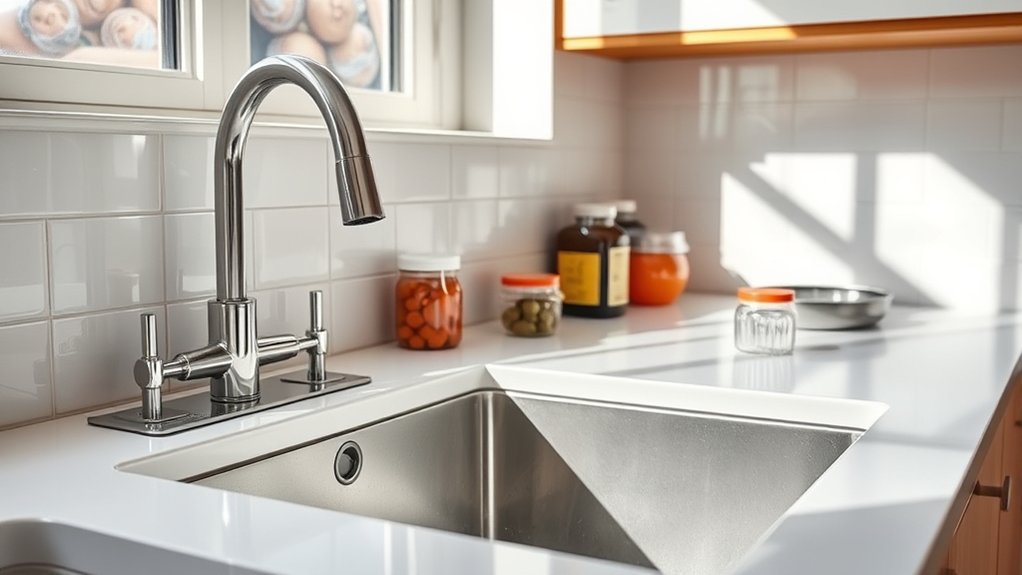
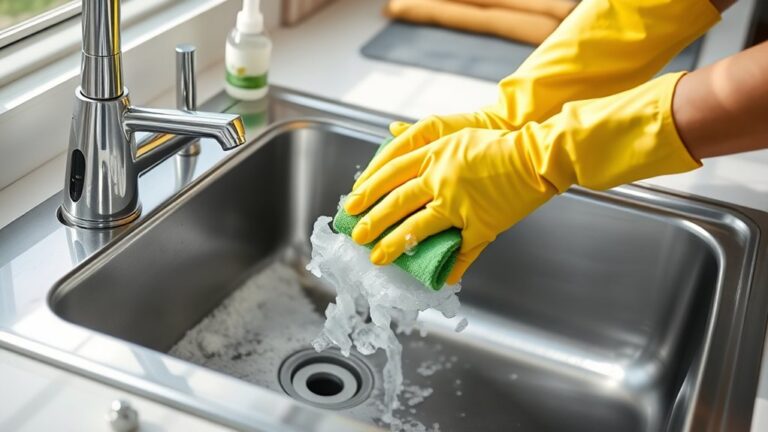
Roaches need food and water to survive, so cutting off their supply is one of the best ways to get rid of them. Store food in sealed containers, fix leaky pipes, and wash the dishes before bed rather than leaving them overnight. These simple habits take away the resources roaches need to thrive and make your kitchen much less inviting.
Store Food Properly
Since cockroaches can survive on crumbs alone, you’ll want to seal every food source they might exploit. Proper food storage is your first line of defense. Transfer cereals, grains, pet food, and snacks into airtight containers made of glass or hard plastic—roaches can chew through flimsy bags and cardboard boxes.
Never leave fruit or bread sitting out on counters overnight. Refrigerate produce when possible, and store bread in sealed containers rather than loose bags. Clean up spills immediately, and don’t let dirty dishes sit in the sink.
For effective pest prevention, empty trash cans daily and use bins with tight-fitting lids. Pet food bowls should be removed after feeding time rather than left out continuously. These small habits eliminate the resources roaches need to thrive in your kitchen.
Fix Leaky Pipes
Why do roaches gravitate toward your kitchen sink and under-cabinet plumbing? Water. Roaches can survive weeks without food but only days without water, so leaky pipes become a lifeline you need to cut off. Check under your sink regularly for drips, condensation, or pooling water around pipe joints. Tighten loose fittings and replace worn washers as soon as you spot them.
Make plumbing maintenance a monthly habit rather than an afterthought. Inspect supply lines, drain pipes, and the dishwasher connection for slow leaks that often go unnoticed until damage appears.
Adding pipe insulation helps, too. It reduces condensation buildup during temperature changes, which eliminates another moisture source roaches rely on. Dry pipes mean fewer reasons for roaches to stick around your kitchen.
Clean Dishes Nightly
Because a single dirty plate can feed an entire roach colony overnight, you can’t afford to leave dishes sitting in the sink. Roaches don’t need much—just a few crumbs and a drop of water will keep them fed for days. Make nightly dish-washing a non-negotiable habit before you turn in.
Focus on these three steps:
- Wash, don’t soak: Soaking dishes overnight creates standing water roaches love.
- Wipe down counters: Crumbs and grease residue attract pests even after dishes are clean.
- Run your dishwasher regularly: Dishwasher maintenance prevents food buildup in filters and hoses that roaches can access.
Clean dishes also improve kitchen air quality by reducing lingering food odors that draw roaches in from other rooms.
Take Out the Trash the Right Way
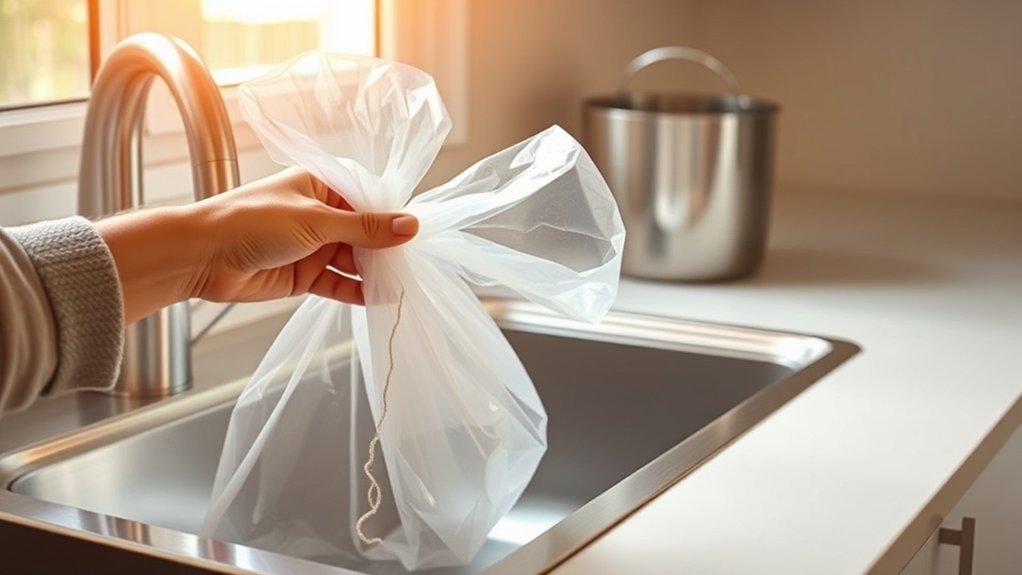
Your trash can can quickly become a roach buffet if you’re not careful. Use a bin with a tight-fitting lid to keep odors and food scraps contained. Then, make it a habit to take out the trash every night so it doesn’t sit around and attract unwanted guests.
Use Sealed Trash Bins
Since roaches can smell food scraps from several feet away, an open trash can basically rings the dinner bell every night. Switching to pest proof containers removes that invitation entirely. A tight-fitting lid blocks odors and keeps hungry roaches from squeezing inside to feast.
Good garbage bin organization makes this even more effective. Instead of one overflowing bin, try separating waste by type and sealing each one properly:
- Food scraps bin – Use a lid that locks tightly after every use.
- Recycling bin – Rinse containers first to remove sticky residue.
- General trash bin – Line it with a bag and tie it off daily.
Sealed bins don’t just hide smells; they cut off roaches’ access completely, making your kitchen far less appealing to them.
Empty Trash Nightly
Why wait until morning when roaches are already on their way over? Leftover food scraps and greasy wrappers give off odors that attract pests within hours, not days.
That’s why trash management matters just as much as using a sealed bin. Before you head to bed, take the bag out to an outdoor can with a tight lid.
Don’t let it sit overnight under the sink, even if it’s bagged. Roaches can smell their way through thin plastic.
Make this part of your nightly routine, right alongside locking the door. It only takes a few minutes but makes a real difference in pest prevention.
A clean kitchen at night means fewer unwanted visitors crawling around by morning.
Find and Seal Their Entry Points
Because roaches can squeeze through gaps as thin as a dime’s edge, you’ll need to inspect your kitchen closely for cracks around baseboards, pipes, and wall junctures.
Entry point identification starts with a flashlight and patience. Check under sinks, behind appliances, and along utility lines where wires or plumbing enter the wall.
Once you’ve spotted the gaps, sealing techniques matter as much as detection. Use the right material for each spot:
- Caulk small cracks around baseboards and countertops for a flexible, long-lasting seal.
- Steel wool combined with caulk for larger gaps around pipes, since roaches can’t chew through metal fibers.
- Weatherstripping on doors and windows to block gaps roaches use to enter from outside.
Don’t overlook vents or dryer exhausts. Cover them with mesh screens. Sealing entry points cuts off roaches’ access before infestations start, making this step one of the most effective long-term defenses in your kitchen.
Deep Clean Every Roach Hiding Spot
Roaches love clutter, grease, and damp corners, so a thorough cleaning can help clear out their favorite hiding spots. Start by emptying your cabinets and wiping down every crevice. Then pull the fridge and stove away from the wall to clean up crumbs, and scrub beneath the sink, where leaks and grime often collect. These spots can provide the food and moisture roaches need to thrive, so be sure to give them a good clean.
Clear Cluttered Cabinet Corners
Before you reach for sprays or traps, pull everything out of your cabinets and take a hard look at what’s lurking in those dark corners. Roaches thrive in clutter, and cluttered cabinet corners give them food, moisture, and hiding space all in one spot. Cabinet organization isn’t just about tidiness—it removes their shelter.
Focus on these clutter reduction steps:
- Toss expired food – Old cereal, spices, and snacks attract roaches fast.
- Group similar items – Store cans, boxes, and jars together so nothing gets buried and forgotten.
- Use clear bins – See-through containers let you spot crumbs or pests immediately.
Once you’ve cleared the clutter, wipe down every shelf and corner before putting items back.
Clean Behind Appliances Thoroughly
Cabinets aren’t the only culprit. Your refrigerator, stove, and dishwasher hide grease and crumbs that roaches love even more. Pull each appliance away from the wall and vacuum up debris before wiping surfaces down with soapy water. Check the coils under your fridge, where dust and grime build up fast. Don’t skip the space beneath your stove, either. Dropped food particles collect there unnoticed for months.
Appliance maintenance means more than wiping the front panel. Inspect hidden corners like the dishwasher’s base and the gap behind your oven, since roaches thrive in tight, undisturbed spaces. Clean these areas monthly, and you’ll eliminate food sources before they turn into a feeding ground. Consistent appliance maintenance keeps your kitchen inhospitable to pests year-round.
Scrub Under Sinks Carefully
Since moisture and darkness make the perfect roach habitat, your under-sink cabinet deserves special attention. Remove everything stored there, then inspect every corner for grease buildup and water residue that attract roaches.
Proper sink maintenance means checking pipes regularly for leaks, since even small drips create the humidity roaches crave.
Use these cleaning techniques for thorough results:
- Wipe down pipes and cabinet walls with a vinegar-water solution to eliminate grease and odors.
- Dry all surfaces completely before replacing stored items, since lingering moisture invites roaches back.
- Seal any gaps around pipes with caulk to block entry points roaches use to access your kitchen.
Don’t store cardboard boxes under your sink—roaches love hiding in them. Keep cleaning supplies in plastic bins instead, and check this area weekly for early signs of infestation.
Try Natural Roach Repellents First
If you’d rather skip harsh chemicals, a few pantry staples can help drive roaches away. Natural remedies work well as a first line of defense, especially if your infestation isn’t severe.
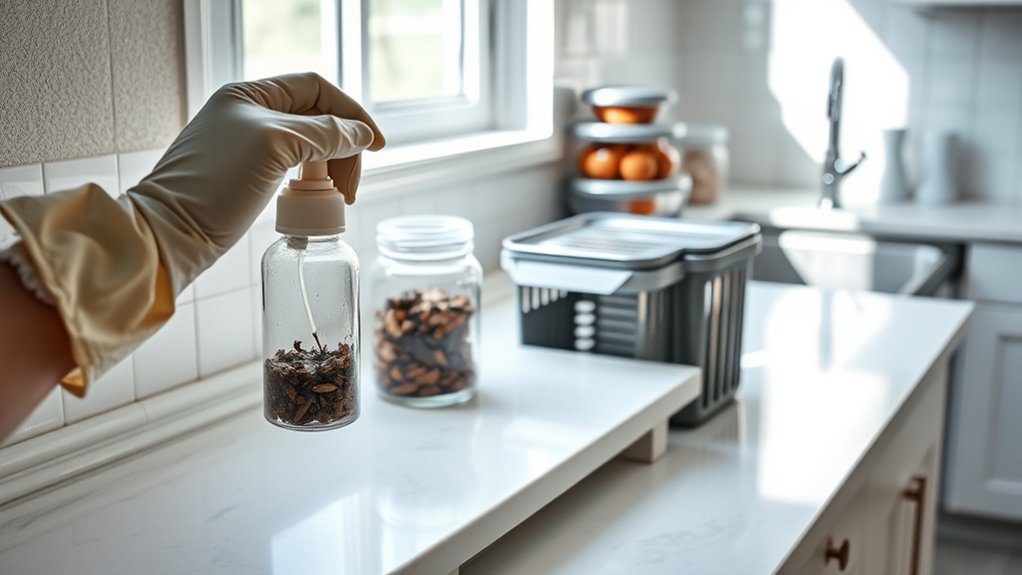
Start with a mix of water and peppermint essential oil in a spray bottle, then apply it along baseboards, under appliances, and near entry points. Roaches hate the scent and will avoid treated areas.
Bay leaves are another option—crush a few and scatter them in cabinets or drawers where roaches like to hide. Their strong smell disrupts the pests without posing risks to your family or pets.
You can also try a mix of baking soda and sugar placed in small dishes near problem areas. The sugar lures roaches in, while the baking soda disrupts their digestion.
These natural methods won’t eliminate a full-blown infestation, but they’re a solid starting point before turning to stronger solutions.
Set Bait Stations in Key Spots
When natural remedies aren’t cutting it, bait stations offer a stronger punch. Roaches carry the poison back to their nest, killing others you never see. Smart bait placement makes all the difference between a quick fix and a lasting solution.
Focus on these key spots for maximum trap effectiveness:
- Under the sink – Roaches love the moisture and dark corners near pipes.
- Behind the refrigerator – Warmth and food crumbs make this a prime hiding spot.
- Inside cabinet corners – These tight, undisturbed areas attract roaches searching for shelter.
Don’t place bait stations out in the open where you’ll constantly disturb them. Roaches need quiet access to feed and return to their colony.
Check stations every few weeks and replace them once they dry out or get eaten through. Combine this method with cleanliness, and you’ll see roach activity drop fast.
Use Roach Gel or Boric Acid Safely
Why does roach gel work so fast compared to sprays? Roach gel targets roaches directly at the source, letting them carry poison back to the nest. Unlike sprays, it doesn’t scatter roaches into hidden cracks—it draws them out and kills the colony from within.
Apply roach gel in thin lines along baseboards, under appliances, and near pipes. Avoid spraying cleaners nearby, since this breaks down the bait’s effectiveness. Reapply every few weeks until activity stops.
Boric acid works akin to but acts as a slower, more mechanical killer. It sticks to a roach’s legs and gets ingested during grooming, damaging its digestive system. Dust it lightly in dry areas like under the sink or behind the stove—too much powder actually repels roaches instead of attracting them.
Keep both roach gel and boric acid away from food prep surfaces and out of reach of pets or kids. Used correctly, they’re highly effective and low-risk solutions for lasting roach control.
Know When to Call an Exterminator
Once roach sightings continue despite weeks of gel, bait, and boric acid treatments, you’re likely dealing with an infestation too established for DIY methods alone. At this point, chemical repellents and store-bought traps won’t reach the hidden nests inside walls, under appliances, or behind cabinetry. Calling in professional pest control services gets you access to stronger treatments and targeted methods homeowners can’t legally buy.
Watch for these signs that it’s time to bring in a professional:
- Daytime sightings – Roaches avoid light, so seeing them during the day signals overcrowding.
- Persistent odor – A musty smell that lingers even after cleaning suggests a hidden colony.
- Egg casings everywhere – Finding multiple casings means the population is reproducing faster than you can control it.
A licensed exterminator can identify entry points, nesting sites, and species-specific weaknesses, giving your kitchen a real chance at staying roach-free.
Maintain a Roach-Free Kitchen Year-Round
After you’ve knocked out an active infestation, the real work shifts to prevention. Understanding cockroach biology helps you stay ahead of future problems: roaches breed fast, survive on crumbs, and thrive in warm, humid spaces. Break that cycle with consistent habits.
Wipe down counters nightly, sweep up crumbs, and don’t let dirty dishes sit in the sink. Store food in sealed containers, and take out the trash regularly instead of letting it overflow.
Apply pest prevention techniques beyond cleaning, too. Seal cracks around pipes, baseboards, and cabinets where roaches squeeze through. Fix leaky faucets since standing water attracts them. Keep humidity low with a dehumidifier or exhaust fan, especially in summer months.
Do a monthly check behind appliances and under sinks for early signs of activity. Catching a few stragglers before they multiply keeps your kitchen roach-free long after the initial infestation disappears.
Frequently Asked Questions
Can Roaches Cause Allergies or Asthma in Children?
Yes, they can. If you’ve got a roach infestation, you’re also risking a roach allergy developing in your kids, since their droppings, saliva, and shed skin contain allergens that trigger immune reactions. These same particles act as asthma triggers, often worsening symptoms or sparking new attacks, especially in young children with developing lungs.
You’ll want to clean thoroughly, seal food sources, and eliminate roaches quickly to protect your family’s respiratory health and reduce allergy flare-ups at home.
Do Roaches Bite Humans While Sleeping?
Imagine this: you’re fast asleep, and a tiny roach decides your cheek looks like a midnight buffet! Sounds terrifying, right? While it’s rare, roach biting can actually happen while you sleep, especially if infestations are severe and food sources are scarce. They’re drawn to skin residue like sweat or food particles. Though bites won’t likely wake you instantly, they can cause irritation and major sleep disturbance once you notice the itchy aftermath.
How Fast Do Roaches Reproduce Once Inside a Home?
Roaches reproduce incredibly fast once they’re inside your home. A single female can kick off a reproductive cycle that produces hundreds of offspring within a year.
Egg production happens continuously. She carries an egg case holding dozens of eggs, dropping it in hidden spots like cracks or under appliances.
You’ll often underestimate how quickly a tiny problem becomes an infestation, since each new generation starts reproducing within weeks of hatching.
Are Certain Kitchen Layouts More Prone to Roach Infestations?
Yes, you’ll find that certain kitchen designs invite roaches more than others. If you’ve got cluttered cabinets, tight spaces behind appliances, or poor ventilation, you’re creating perfect hiding spots.
Open shelving and easy-to-clean layouts make it harder for roaches to settle in. When you’re planning pest control strategies, consider sealing gaps near pipes and outlets—these common entry points often go overlooked in poorly designed kitchens, giving roaches easy access to food and water.
Can Roaches Survive a Cold Winter Inside Appliances?
Yes, roaches can survive cold winters inside your appliances, and here’s a surprising fact: roaches can withstand temperatures as low as 32°F for short periods! You’ll find they seek out your fridge, oven, or dishwasher because appliance insulation traps warmth, creating a cozy refuge from cold weather.
You should check behind and underneath these appliances regularly, since roaches don’t just hide there—they thrive there, breeding even when it’s freezing outside.
Conclusion
Roaches are sneaky squatters, and they won’t pack up and leave on their own. By spotting the signs, cutting off their food and water, sealing their secret doorways, and using bait and gel, you can make your kitchen much less inviting.
Stay vigilant and keep things clean to help get rid of roaches in your kitchen and keep them from coming back.